
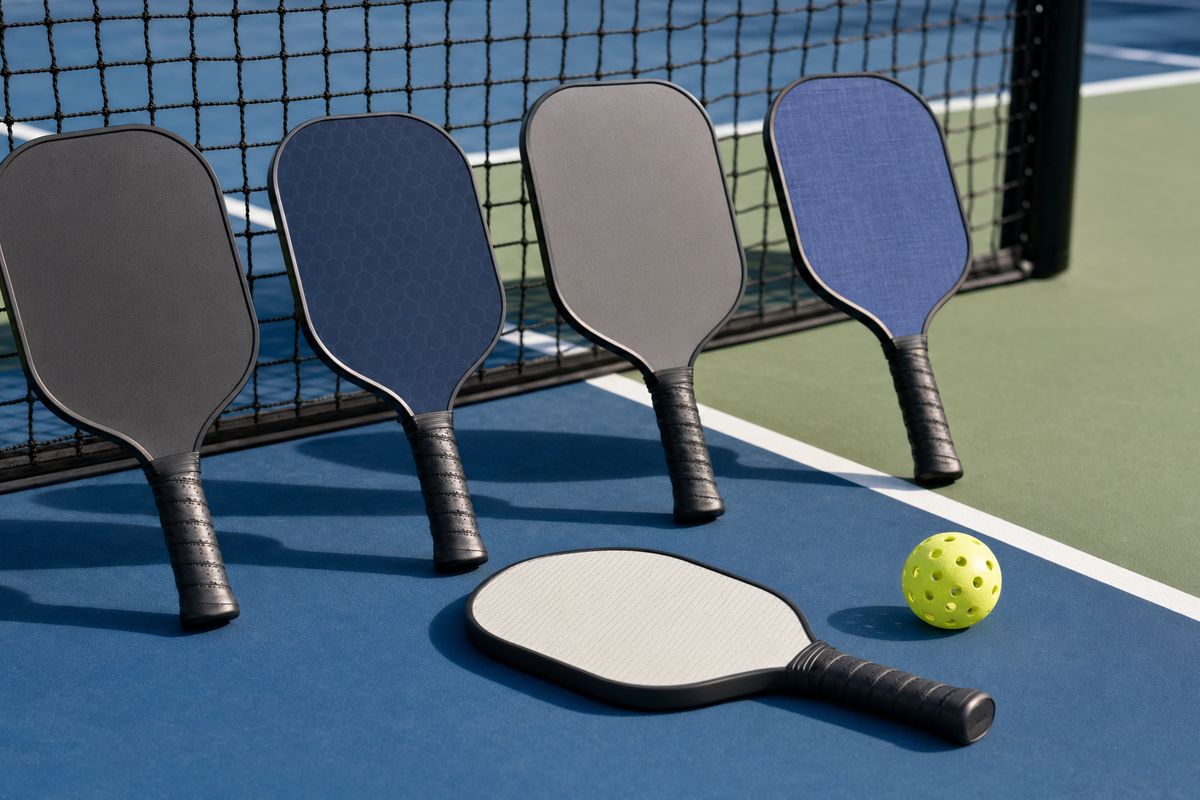
If you are searching for the best pickleball paddles for beginners, the smartest choice is usually not the most expensive paddle, the loudest advertised paddle, or the one your most advanced friend uses. A good beginner paddle should help you make clean contact, control the ball, learn touch shots, and enjoy the game long enough to improve.
For most new players, that means looking for a paddle with a forgiving sweet spot, a comfortable grip, a manageable weight, and a material that gives a balanced mix of control and power. If you are also shopping for a custom Lumo paddle, the goal is simple: choose the right playing foundation first, then personalize the look without making the paddle harder to use.

Quick answer: what makes a paddle beginner-friendly?
A beginner-friendly pickleball paddle is one that reduces the number of things you have to fight while learning. It should not feel too heavy, too slippery, too harsh, or too unpredictable. You want a paddle that lets you focus on basic skills: keeping the ball in play, aiming safely, blocking, serving consistently, and learning the difference between soft shots and hard swings.
Short version: Beginners should prioritize control, comfort, and forgiveness over maximum power. Custom graphics are a great bonus, but the paddle’s playing feel should come first.
Before buying, it is also worth checking whether a paddle is intended for casual play, club play, or sanctioned tournaments. USA Pickleball maintains an approved paddle list for players who need equipment approved for certain organized events. Not every beginner needs tournament approval immediately, but it is useful to understand that paddles are not all evaluated the same way.
The beginner paddle decision framework
Instead of asking, “What is the single best paddle?” ask these five questions. They will get you closer to the right paddle for your hand, budget, and playing goals.
- How often will you play? A once-a-month recreational player may not need the same paddle as someone joining weekly open play.
- Do you need more control or more power? Most beginners benefit from more control first.
- Does the grip feel secure? A paddle that twists in your hand can slow learning.
- Is the paddle weight comfortable? Too much weight can make quick reactions harder; too little may feel unstable for some players.
- Are you buying for yourself, a gift, or a team? The right customization choice depends on the use case.
If you want an even more beginner-focused walkthrough, Lumo also has a dedicated pickleball paddle for beginners buying guide that covers the first-paddle decision from another angle.
Beginner paddle comparison matrix
The table below is not a ranking of specific brands. It is a practical comparison of common paddle directions shoppers consider when choosing their first paddle.
| Beginner option | Best fit | Possible drawback | Good buying logic |
|---|---|---|---|
| Wood paddle | Very casual use, basic introduction, short-term loaner use | Can feel less comfortable and less refined than newer paddle constructions | Choose only if lowest upfront cost matters more than learning comfort |
| Basic composite paddle | Budget shoppers who want a step above wood | The label “composite” can be broad, so quality and feel may vary | Look closely at what the paddle is actually made from, not just the category name |
| Fiberglass paddle | Beginners who want accessible power and a lively feel | May not be the most controlled option for every new player | Useful if you like a more responsive hit and are still budget-conscious |
| Carbon fiber paddle | Beginners who want a more controlled, upgrade-minded first paddle | Can cost more depending on construction and brand positioning | Good if you want a paddle you are less likely to outgrow quickly |
| Custom paddle | Players buying a personal paddle, gift, club paddle, or branded set | Design choices should not distract from fit and material choices | Customize after selecting a beginner-friendly playing base |
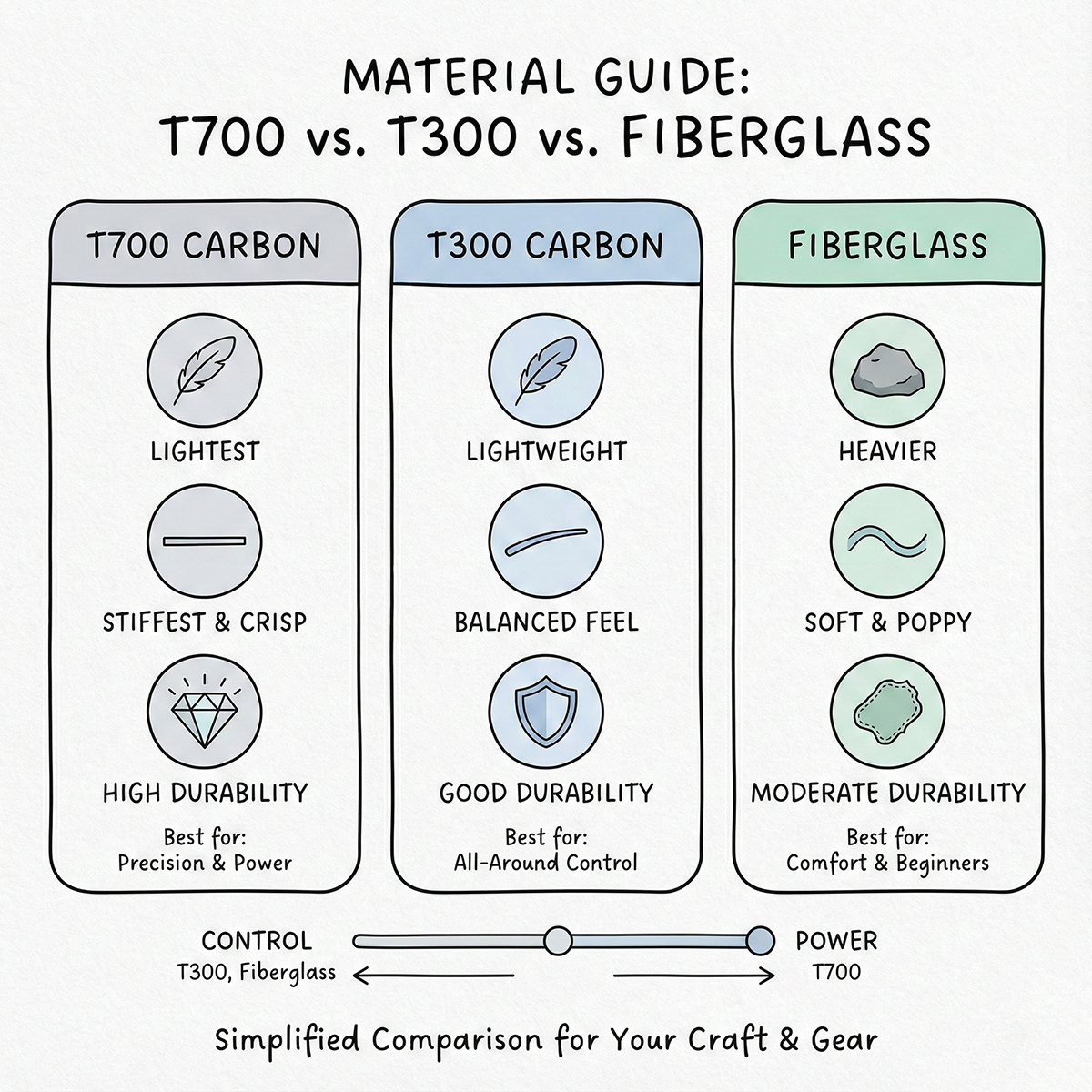
For a deeper material discussion, start with Lumo’s explanation of fiberglass vs. T300 and T700 carbon for budget custom paddles. If you are specifically comparing entry-level materials, the guide on why Lumo does not recommend wood or basic composite paddles as the first choice is also useful.
What beginners should prioritize first
1. Control before maximum power
Power is fun, but new players usually lose more points by missing long, popping the ball up, or reacting late than by failing to hit hard enough. A beginner paddle should help you place the ball and repeat your swing. If a paddle feels explosive but unpredictable, it may slow your development.
This does not mean beginners need a “weak” paddle. It means the paddle should give you enough response without making every touch shot jump off the face. In early games, consistency is often more valuable than peak speed.
2. A comfortable, secure grip
Grip comfort is easy to ignore online, but it matters immediately on court. A grip that feels too large can make wrist movement awkward. A grip that feels too small may cause over-squeezing or paddle twisting. If you are buying as a gift, choose a generally comfortable option and consider that the recipient can adjust feel with overgrips later.
3. Manageable weight
A paddle that feels manageable during the first few minutes may still feel tiring during a longer session. Beginners should pay attention to fatigue, reaction speed, and whether they can reset the paddle quickly after each shot. The right weight is personal, so the safer buying principle is to avoid extremes unless the player already knows what they like.
4. A forgiving hitting area
Beginners rarely hit the exact center every time. A forgiving paddle helps off-center contact feel less punishing. This is especially important during returns, volleys, and fast exchanges near the kitchen line. If you are new, do not choose a paddle only because it looks sleek or is marketed for aggressive play. Choose one that supports repeatable contact.
Materials: how to think about fiberglass, carbon fiber, and composite labels
Material terms can be confusing because they are often used as marketing shortcuts. The more practical question is not “Which material sounds premium?” but “How does this paddle help a beginner learn?”
- Wood: often associated with basic recreational sets. It can work for trying the game, but many players move on quickly when they start playing more often.
- Composite: a broad label. It may describe many constructions, so it is worth looking beyond the word itself. Lumo’s article on the hidden truth behind the composite label explains why shoppers should ask what the label actually means.
- Fiberglass: often chosen by players who like a more lively, accessible feel. It can be appealing for newer players who want easy response.
- Carbon fiber: often considered by players who want a more upgrade-minded paddle with a controlled feel. Lumo’s guide on why T300 can be a smart first choice for custom pickleball paddles is a helpful next read.
A cautious way to shop is this: if you are buying a paddle to test pickleball one time, almost anything playable may be enough. If you are buying your first personal paddle, it makes sense to avoid the lowest-quality option and choose a paddle that supports real improvement.

Fit / not-fit guide: which beginner paddle direction matches you?
Choose a control-focused beginner paddle if...
- You are still learning serves, returns, dinks, and blocks.
- You often hit the ball long when swinging hard.
- You want a paddle that supports practice rather than only casual play.
- You care about a paddle that can grow with you for a while.
Consider a more power-oriented paddle if...
- You already play racket sports and have good hand-eye coordination.
- You prefer a more energetic response off the paddle face.
- You are comfortable adjusting your swing to keep the ball in bounds.
Be cautious with very cheap starter sets if...
- You plan to play weekly.
- You are buying a gift and want the paddle to feel thoughtful, not disposable.
- You want to customize the paddle and keep it for more than a few sessions.
If budget is a major factor, do not assume that “carbon fiber” automatically means overpriced. Lumo has a focused guide on cheap carbon fiber paddles that can help you think through value without relying only on the material name.
Beginner buying mistakes to avoid
Most first-paddle regrets come from buying around the wrong priority. Here are the common mistakes to audit before checkout.
Mistake 1: buying only by price
Price matters, especially when you are new. But the cheapest paddle is not always the best value if it makes the game less enjoyable or needs replacing quickly. A beginner does not need a top-tier professional paddle, but it is reasonable to choose a paddle that feels like real sports equipment rather than a throwaway item.
Mistake 2: choosing a paddle only because advanced players use it
An advanced player may prefer a paddle that rewards precise technique. A beginner may need more forgiveness. The best paddle for your coach, doubles partner, or favorite player may not be the best first paddle for you.
Mistake 3: ignoring tournament or organized-play requirements
If you only play casually, this may not matter right away. But if you plan to join events, leagues, or sanctioned play, equipment approval may become relevant. USA Pickleball publishes official rules resources, and its equipment pages are useful starting points for understanding paddle compliance. When in doubt, check the event’s requirements before buying.
Mistake 4: treating customization as only a graphic choice
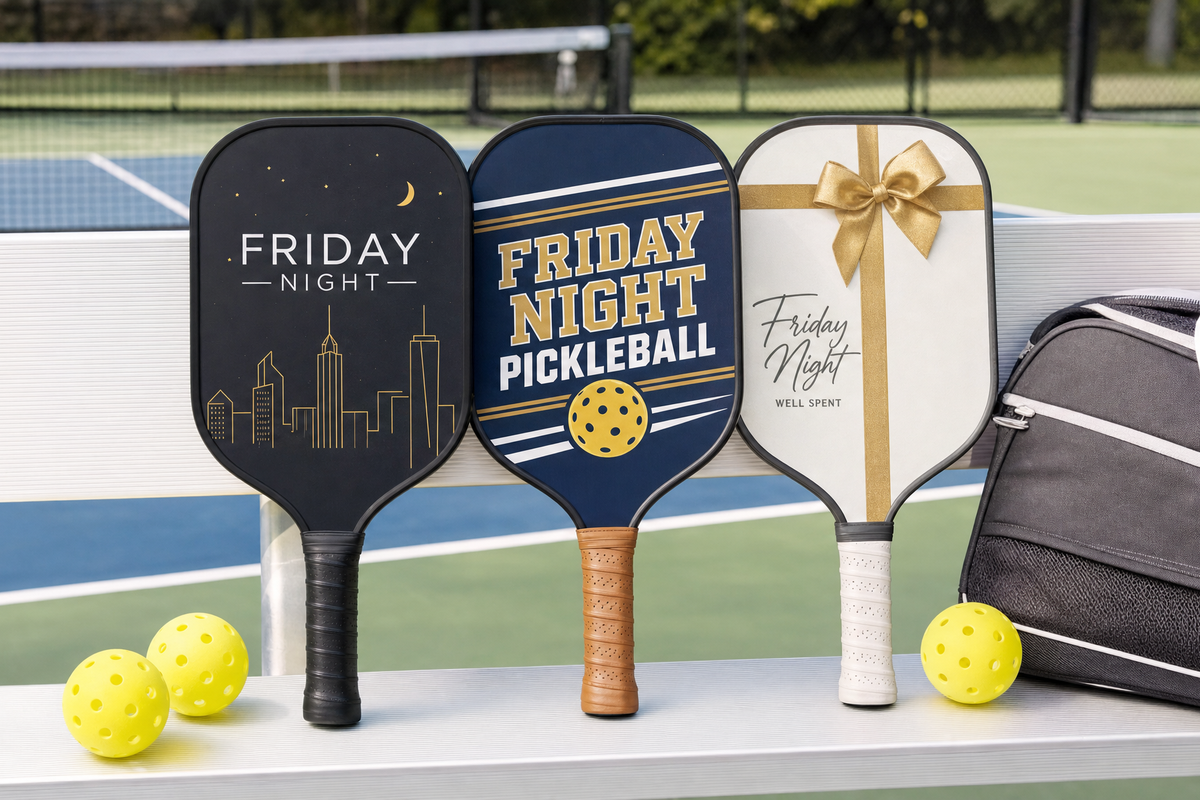
Customization should start with the player. A bright design, team logo, initials, photo, or gift message can make a paddle more personal, but the paddle still has to be comfortable. If you are customizing through Lumo, think of design as the final layer placed on top of a sensible beginner paddle choice.
How to choose a custom beginner paddle
Custom paddles are especially appealing for beginners because a personal design can make the sport feel more inviting. A first paddle is also a common gift for someone joining a league, starting a new hobby, or playing with family. The key is to customize with use in mind.
- Start with the player profile. Is this for a new player, a casual family player, a club member, or someone who already plays weekly?
- Select the playing direction. Choose control, balanced feel, or a livelier response based on how the player will use it.
- Keep the design readable. Names, initials, team marks, or simple artwork often work better than crowded designs.
- Consider the gift moment. A paddle for a birthday, holiday, team event, or corporate group can include a design cue that connects to the occasion.
- Avoid over-personalizing if taste is uncertain. If you are not sure what the recipient likes, choose a cleaner design with a name or initials rather than a complex theme.
For gift shoppers, Lumo’s guide to custom pickleball paddles as gifts under $100 can help you think through the occasion and recipient. If you are unsure whether to personalize or buy a standard paddle, read custom vs. stock pickleball paddles before deciding.

Beginner paddle checklist before you buy
Use this checklist as a final filter. If a paddle passes most of these questions, it is more likely to be a good beginner choice.
- Does the paddle support control and consistency rather than only power?
- Does the grip seem appropriate for the player’s hand size and comfort?
- Is the weight likely to feel manageable for a full session?
- Is the material clearly described, or is it hidden behind a vague label?
- Is the paddle suitable for the type of play: casual, club, gift, or organized events?
- If customized, does the design still look clean and usable?
- If the player may enter events, have you checked relevant approval or rule requirements?
For broader rule context, the USA Pickleball website is a credible place to begin. If you play outside the United States, your league, club, or national governing body may have its own requirements, so always check the organizer’s guidance for competitive play.
Myth vs. reality: beginner paddle edition
| Myth | Reality |
|---|---|
| “Beginners should buy the cheapest paddle first.” | That can work for one-time casual play, but frequent beginners usually benefit from a more comfortable and consistent paddle. |
| “The most powerful paddle is the best paddle.” | Power helps only if you can control it. Beginners usually need repeatability first. |
| “Composite always means good quality.” | Composite is a broad label. The actual construction and playing feel matter more than the category name. |
| “Custom paddles are only about looks.” | A custom paddle can be practical and personal when the base paddle fits the player’s needs. |
So, what is the best beginner paddle choice?
The best beginner paddle is the one that makes learning easier. For most shoppers, that means a balanced paddle with a comfortable grip, a forgiving feel, and a material choice that matches how often the player expects to play. If you are choosing among low-end wood, vague composite, fiberglass, and carbon fiber options, the more sensible beginner path is usually to avoid the cheapest short-term paddle if you already know you will play more than occasionally.
If you are customizing a Lumo paddle, choose the playing base first. Then add the design that makes the paddle feel personal: initials, a name, a club identity, a simple visual theme, or a gift-ready concept. That order keeps the decision practical and still gives you the fun of owning something unique.
FAQ: best pickleball paddles for beginners
Should a beginner choose fiberglass or carbon fiber?
Both can work. Fiberglass may appeal to players who like a livelier response, while carbon fiber is often considered by players who want a more controlled, upgrade-minded paddle. The better choice depends on the player’s comfort, budget, and goals.
Is a wood paddle good enough for a beginner?
A wood paddle can be enough for trying pickleball casually. If you expect to play regularly, a more comfortable modern paddle is usually a better first personal purchase.
Do beginners need a tournament-approved paddle?
Not always. Casual players may not need approval immediately. If you plan to join sanctioned events, leagues, or organized competitions, check the event rules and the relevant approved paddle resources before buying.
Are custom pickleball paddles good for beginners?
Yes, if the paddle itself is beginner-friendly. Custom design should not replace good fit, comfort, and material choice. It should make the right paddle feel more personal.
What should I avoid in my first paddle?
Avoid choosing only by the lowest price, buying a paddle designed for a playing style you do not have yet, or trusting vague material labels without understanding what they mean.



Leave a comment
This site is protected by hCaptcha and the hCaptcha Privacy Policy and Terms of Service apply.