
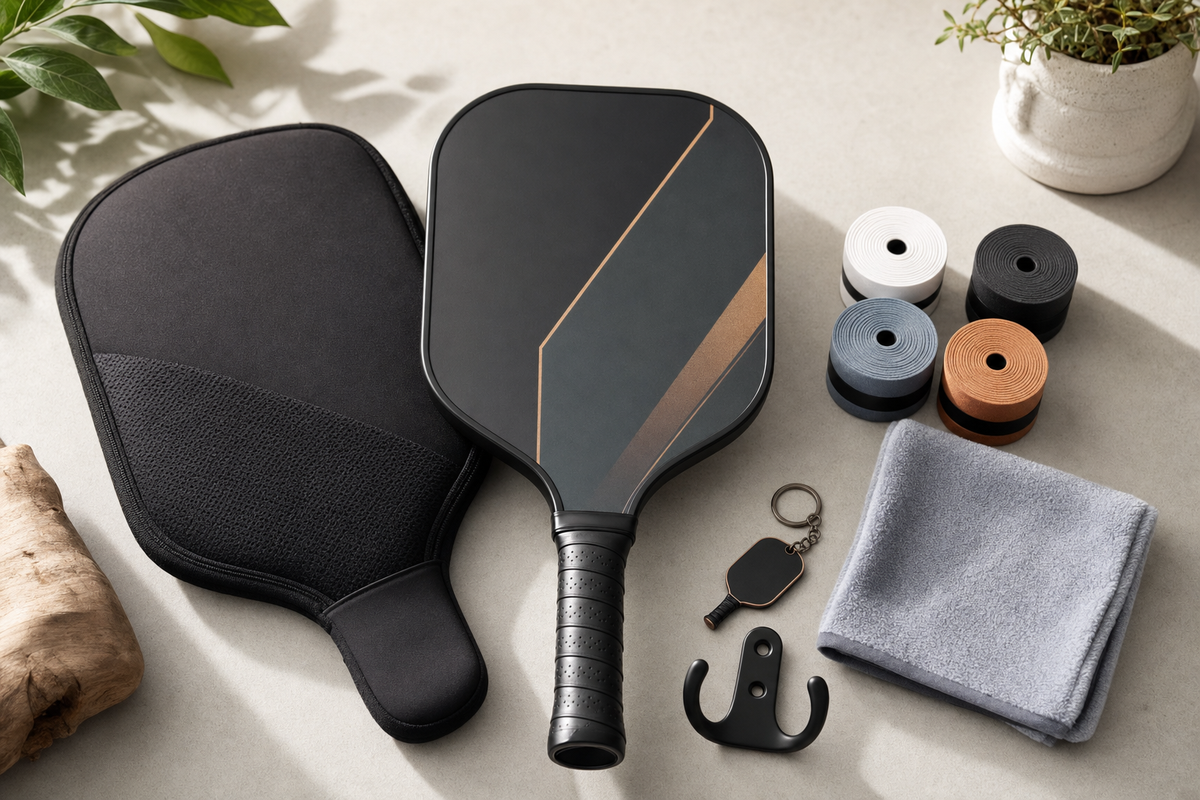
If you are shopping for pickleball paddle accessories, the most useful question is not “What can I add?” It is “What problem am I trying to solve?” A new overgrip can make a paddle feel more secure. A cover can protect the face in a bag. A wall hook can turn a favorite paddle into part of a room or office. A replica keychain can make a custom paddle gift feel complete. But not every accessory belongs on every paddle, and some modifications can create rules questions for organized play.
This guide is written for shoppers who are comparing accessories before buying, gifting, or customizing a Lumo paddle. It focuses on practical choices: comfort, protection, storage, personalization, display, and gift presentation. If you already know you want to create a personalized paddle, you can start with the Lumo custom pickleball paddle and use this guide to decide what should go with it.
Quick answer: Most players should start with a comfortable grip or overgrip, a protective cover or storage plan, and a simple cleaning routine. Add display, replica, or gift accessories when the paddle has personal meaning. Be more cautious with accessories that change weight, surface texture, or paddle dimensions, especially if you plan to use the paddle in sanctioned events.

What Counts as a Pickleball Paddle Accessory?
For shopping purposes, pickleball paddle accessories fall into two groups. The first group supports play: grips, overgrips, covers, cleaning cloths, edge protection, and bags. The second group supports ownership: wall displays, custom replicas, name tags, gift packaging, and keepsakes. Both groups can be useful, but they solve different problems.
It is also worth separating accessories from the paddle itself. Paddle materials, core thickness, surface texture, and manufacturing approach are part of the paddle build. If you are still comparing paddle construction, read Lumo’s guides on pickleball paddle materials and features, paddle thickness, and surface texture. Accessories should complement the paddle, not compensate for choosing the wrong base paddle.
The Accessory Decision Framework: Comfort, Protection, Identity, or Display
Before adding items to your cart, choose your primary goal. This prevents overbuying and helps you avoid accessories that look good online but do not fit your playing habits.
| Goal | Accessories to Consider | Best For | Be Careful With |
|---|---|---|---|
| Improve hand feel | Overgrip, replacement grip, grip tape | Players who notice slipping, discomfort, or inconsistent hand placement | Building the handle too thick for your hand |
| Protect the paddle | Cover, storage sleeve, edge tape, microfiber cloth | Players who carry paddles in a gym bag or car | Adhesives or cleaning products that may affect the surface |
| Personalize the setup | Custom paddle design, name elements, matching keychain | Gift buyers, teams, families, clubs, and players who want a recognizable paddle | Designs that reduce readability or clash with your grip color |
| Display or store at home | Wall hook, display mount, storage rack | Players with a favorite custom paddle or limited storage space | Mounting in humid or high-heat locations |
| Adjust paddle feel | Weighted tape or balance-related add-ons | Experienced players testing feel and swing preference | Rules compliance, balance changes, and adhesive placement |
For most shoppers, the first three goals cover nearly everything: comfort, protection, and personalization. Display accessories become especially relevant when the paddle is custom-designed, commemorative, or purchased as a gift.
1. Grip and Overgrip Accessories: The First Upgrade to Consider
The grip is the main contact point between player and paddle, so it is often the first accessory worth evaluating. A grip accessory can change how secure the handle feels, how much cushioning you notice, and how easily you can maintain the paddle over time. It should not be chosen only by color.
When a grip accessory makes sense
- Your hand slips during play or in warm weather.
- The handle feels too firm or too thin.
- You share paddles and want an easy-to-replace outer layer.
- You want a color accent that matches a custom design.
- The original grip is worn, dirty, or losing tack.
When it may not be the right fix
If the handle shape, paddle weight, or overall balance feels wrong, an overgrip may only hide the issue for a short time. In that case, revisit the paddle choice itself before buying multiple accessories. If you are building a new paddle from scratch, Lumo’s complete guide to customizing a pickleball paddle can help you think through design and function together.
Grip buying checklist
- Start with hand size. A thicker handle can feel more stable for some players, but too much buildup can make grip changes harder.
- Choose texture intentionally. Tacky, cushioned, and dry-feel grips are not the same. Pick based on your hand feel, not the product photo.
- Think about replacement frequency. Overgrips are usually easier to refresh than a full replacement grip.
- Match the design last. Color matters for a custom paddle, but comfort should come first.
2. Paddle Covers and Storage Accessories: Protection Without Overcomplication
A paddle cover is not exciting, but it is one of the most practical pickleball paddle accessories for players who carry their paddle with shoes, water bottles, balls, keys, or other gear. The main purpose is simple: keep the paddle face and edge from unnecessary contact when it is not in use.
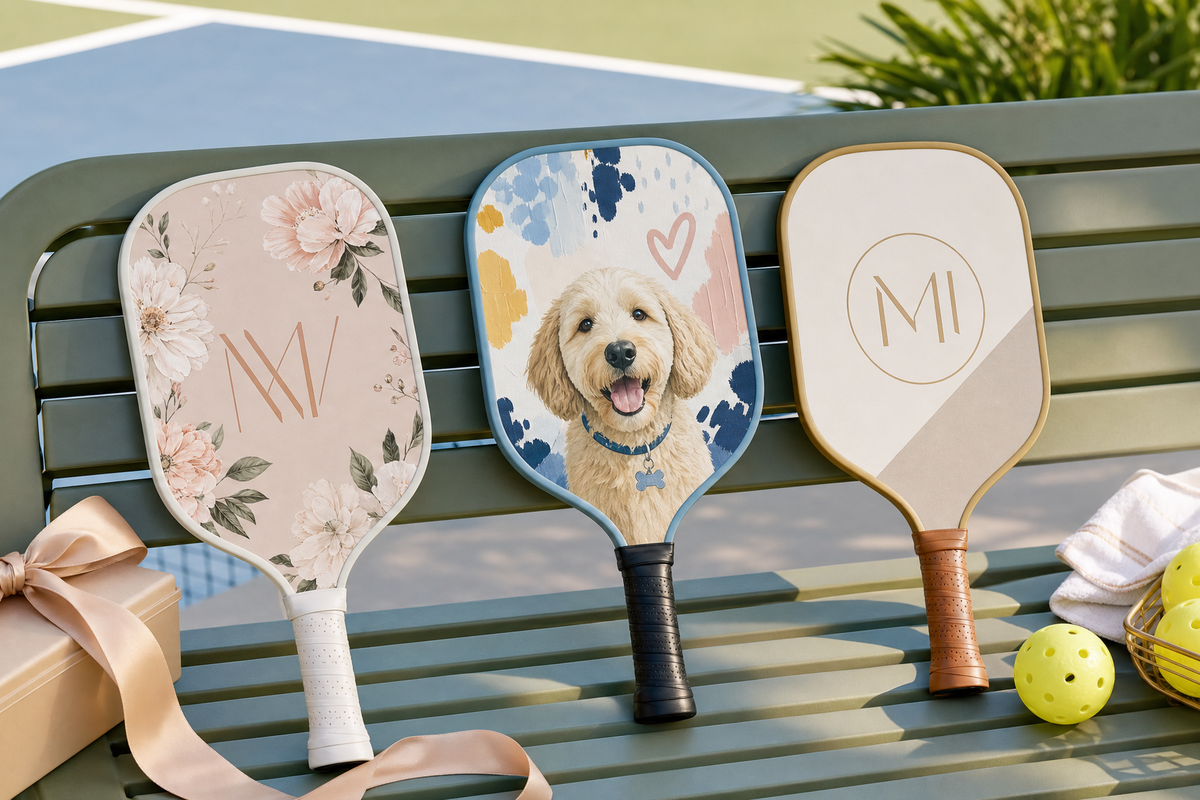
For custom paddles, storage matters even more because the paddle is not just equipment; it is also a personal item. A custom design may represent a pet, family member, team identity, inside joke, business logo, or gift message. If that is the case, protecting the paddle between games is part of preserving the design experience.
Good storage habits
- Keep the paddle in a cover or dedicated bag compartment when traveling.
- Avoid tossing keys, metal bottles, or tools against the paddle face.
- Let the paddle dry before storing it after humid or rainy conditions.
- Do not leave the paddle for long periods in places with extreme heat or moisture.
- Use a soft cloth for routine wipe-downs instead of harsh cleaners.
These are conservative care habits, not performance promises. They are meant to reduce avoidable wear and keep the paddle looking presentable.
3. Edge Protection and Tape: Useful, but Not Always Necessary
Edge protection can help players who often scrape the court, bump paddles in doubles, or carry gear in crowded bags. However, edge tape is not automatically needed for every paddle. It can add visual bulk, may not match the design, and can leave residue depending on the product and how long it stays on.
A more cautious approach is to ask how the paddle is actually used. If it is a daily court paddle, edge protection may be practical. If it is a display-heavy custom gift that will be played occasionally, a good cover and careful storage may be enough.
Fit / not-fit guide for edge tape
| Use Case | Edge Tape Fit? | Why |
|---|---|---|
| Beginner learning low returns and court positioning | Maybe | More accidental edge contact is possible during early play. |
| Casual indoor player with careful storage | Optional | Basic storage habits may solve most protection needs. |
| Custom art paddle for display and occasional play | Usually optional | Visible tape may distract from the design. |
| Competitive player testing paddle feel | Case by case | Any added material can affect feel and should be considered carefully. |
4. Weighted Tape and Balance Accessories: Advanced, Not Default
Some players experiment with weighted tape to change paddle feel. This is a more advanced accessory category because it can influence how the paddle swings, how it feels at contact, and how quickly a player can maneuver it. It is not a required accessory for new players, and it is not the best first purchase for most gift buyers.
There is also a rules consideration. If you plan to play in sanctioned events, review the current USA Pickleball official rules, the USA Pickleball equipment standards, and the USA Pickleball approved paddle list. Rules and equipment guidance can change, and event directors may have their own procedures for checking equipment.
Practical rule: If an accessory changes the paddle’s weight, surface, dimensions, or markings, treat it as a performance modification rather than a simple decoration.
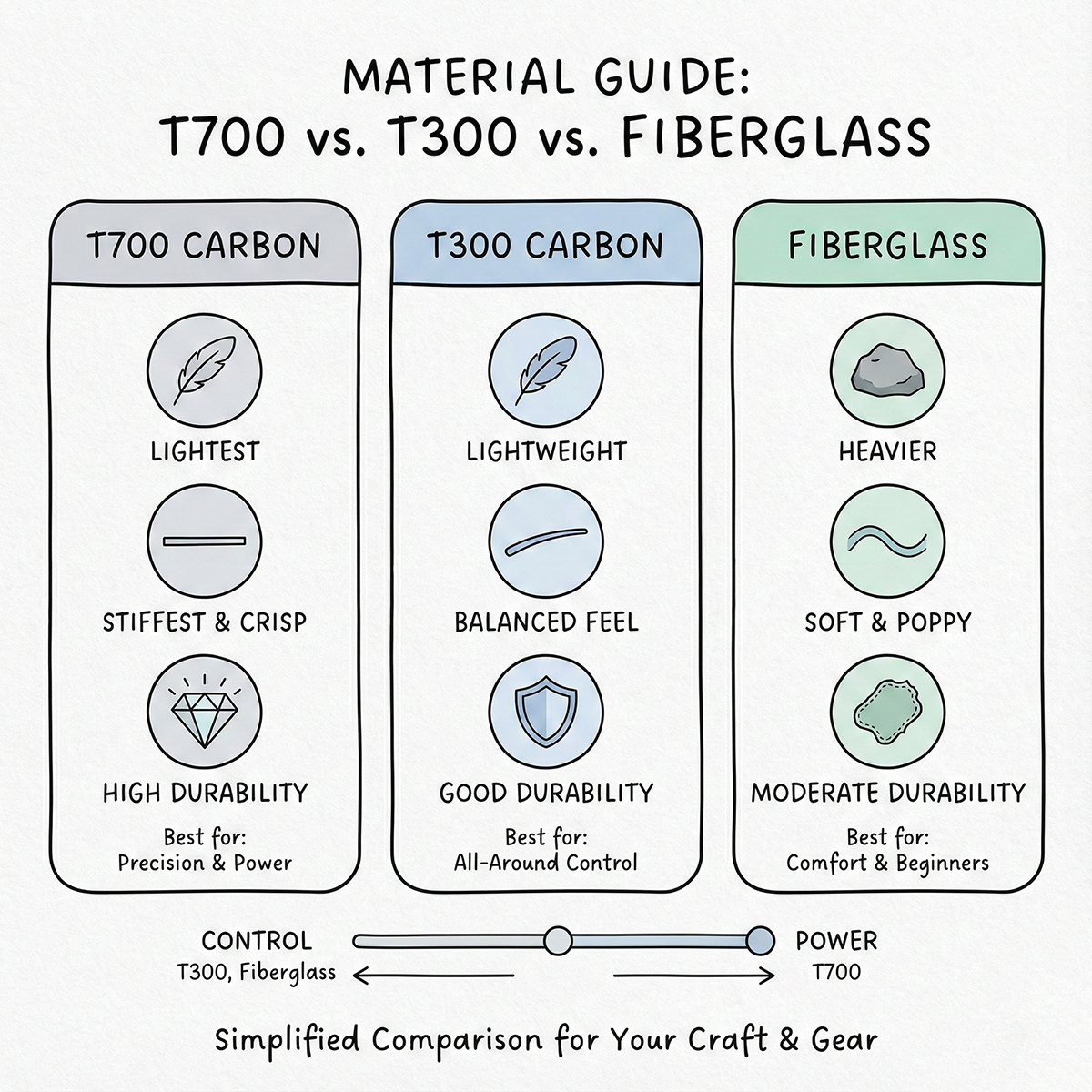
For most shoppers, the safer path is to choose a paddle that already fits your preferred feel, then use accessories for comfort and protection. If you are still comparing paddle construction, Lumo’s articles on T700 vs. T300 carbon fiber and manufacturing technology and paddle performance are better starting points than trying to modify a paddle after purchase.

5. Cleaning Accessories: Keep It Simple
Cleaning accessories should be boring in the best possible way. A soft cloth and gentle routine are usually more sensible than aggressive scrubbing or unknown chemicals. Paddle faces can have different surface materials and finishes, so avoid assuming that one cleaner is safe for every paddle.
A conservative cleaning routine
- Wipe the paddle with a clean, soft cloth after play.
- If needed, use a slightly damp cloth, then dry the paddle before storage.
- Avoid abrasive pads, solvents, or heavy pressure on printed areas.
- Store the paddle only after it is dry.
- Inspect grip wear separately from face cleaning; grips often need replacement before the paddle itself does.
This routine is intentionally simple. The goal is to remove ordinary dust, sweat, and court debris without introducing unnecessary risk to the paddle surface or printed design.
6. Display Accessories: When the Paddle Is More Than Gear
Some paddles deserve to be seen when they are not on court. A custom paddle with a photo, illustration, team graphic, or meaningful phrase can work as wall decor in a home gym, office, dorm room, clubhouse, or gift display. In that case, a wall hook or display accessory is not an afterthought; it is part of how the gift is experienced.
Lumo’s no-drill pickleball paddle wall display hook is relevant for shoppers who want a cleaner storage or display solution without turning the paddle into clutter. A display hook is especially useful when the paddle design is personal and the owner may not want it buried in a closet or bag.
Where display accessories fit best
- Gift paddles: A wall hook makes the presentation feel more complete.
- Team or club paddles: Matching paddles can become part of a shared space.
- Retirement, birthday, or memorial gifts: The display function may matter as much as court use.
- Small apartments: A wall hook can reduce loose sports gear around the room.
Before mounting any display accessory, choose a location away from direct moisture, heavy heat, or accidental knocks. A paddle can be both useful and decorative, but it is still sports equipment.
7. Replica Keychains and Small Custom Accessories
Small accessories can make a custom paddle feel like a complete set. A replica keychain is not a performance item, but it can be one of the most memorable additions for a gift. It lets the owner carry the design even when the paddle stays at home or in a bag.
The Lumo custom pickleball paddle replica keychain is a good fit for birthdays, team gifts, tournament memories, coach thank-you gifts, and family sets. It is also useful when the paddle design includes a pet portrait, kid’s drawing, name, logo, or other image with emotional value.
Best use cases for replica accessories
- A custom paddle purchased as a surprise gift.
- A matching keepsake for the gift giver.
- A team set where players want a small reminder of the design.
- A paddle design based on a pet, family photo, or inside joke.
- A commemorative paddle that may be displayed more than played.
If the paddle itself is the main gift, the keychain works best as a supporting detail rather than a replacement for practical accessories like a cover or grip.
8. Custom Design Accessories: Make the Set Feel Intentional
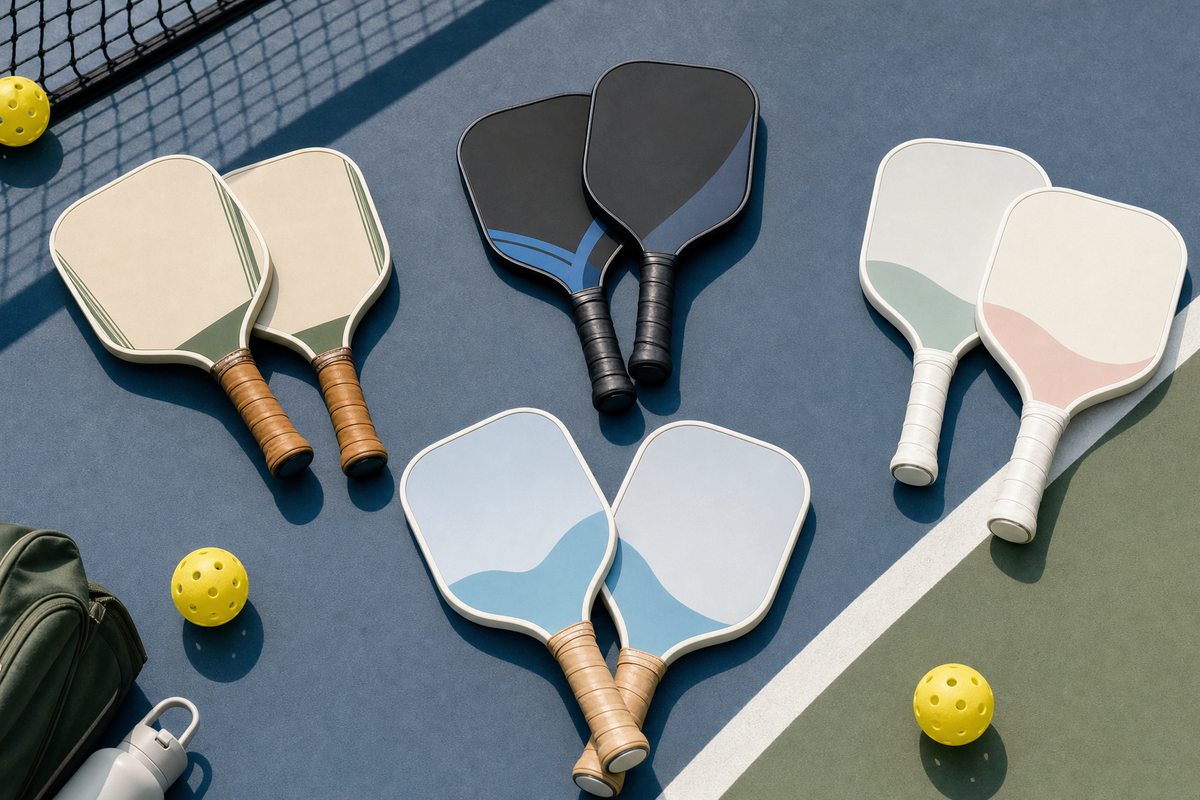
Customization is not only about placing an image on a paddle. The best-looking custom paddle setups feel intentional across the paddle, grip, display, and small add-ons. That does not mean everything must match perfectly. It means the choices should not fight each other.
If you need design inspiration, browse Lumo’s custom paddle design ideas. If you are new to the category, the guide to custom pickleball paddle accessories for new players is a useful companion to this buying guide.
Simple design coordination rules
- Choose one main visual idea. A pet portrait, initials, team colors, or bold pattern is easier to read than five competing ideas.
- Let the grip support the design. Neutral grip colors can keep attention on the paddle face; accent colors can make the set feel energetic.
- Use display accessories when the design is meaningful. A custom paddle does not need to disappear into a bag after gifting.
- Consider the recipient’s actual play habits. A daily player may value grip and cover first; a collector may value display and replica accessories.

Accessory Kits by Shopper Type
If you are buying for yourself, the best kit depends on how often you play. If you are buying a gift, the best kit depends on how the recipient will use the paddle. Use these starting points instead of buying every accessory at once.
The new player kit
- Comfortable overgrip or replacement grip
- Basic paddle cover or protected storage
- Soft cleaning cloth
- Optional: simple name label or personal color accent
This kit is about reducing friction. New players should not have to manage a complicated accessory setup before they understand what they like.
The custom gift kit
- Custom Lumo paddle
- Replica keychain
- Wall display hook
- Coordinated grip color
- Short note explaining the design choice
This kit is about presentation and meaning. It works well when the design itself is the reason for the purchase.
The frequent player kit
- Extra overgrips
- Protective cover
- Cleaning cloth
- Dedicated bag compartment or sleeve
- Optional edge protection if court contact is common
This kit prioritizes maintenance. Frequent players should expect accessories like grips to wear faster than display items.
The office, club, or home display kit
- Custom paddle with a clear visual theme
- No-drill wall hook or display mount
- Replica keychain for the owner or organizer
- Optional matching paddles for a team or family set
This kit is for paddles that carry identity. It can be a club award, coach gift, team marker, or conversation piece.
Common Accessory Mistakes to Avoid
The accessory market can make every add-on look essential. In practice, most mistakes come from buying too quickly or trying to solve the wrong problem.
- Buying for aesthetics before fit. A grip that matches the paddle but feels wrong will not stay on the paddle for long.
- Assuming all add-ons are rule-neutral. Decorative and protective accessories are different from modifications that change the paddle’s playing characteristics.
- Over-accessorizing a beginner setup. New players need comfort and protection first, not a complicated tuning system.
- Ignoring storage. A paddle can be damaged more easily in a crowded bag than during normal play.
- Using harsh cleaning products. A simple cloth routine is often the more cautious choice.
- Forgetting the gift experience. A custom paddle gift feels more complete when it includes a display or small replica accessory.
How to Choose Pickleball Paddle Accessories in 5 Minutes
If you want a fast buying process, use this sequence.
- Decide the use case. Daily play, casual play, display, gift, or tournament use?
- Choose comfort first. If the paddle will be played often, start with grip feel.
- Add protection. Use a cover, careful storage, and a soft cloth routine.
- Add personalization. For custom paddles, choose a design, grip color, keychain, or display hook that supports the story.
- Pause before performance modifications. If an accessory changes weight, surface, or dimensions, check current rules and consider whether you really need it.
This approach keeps the setup useful without turning a simple paddle purchase into a confusing gear project.
Short FAQ: Pickleball Paddle Accessories
What pickleball paddle accessories should a beginner buy first?
A beginner should usually start with a comfortable overgrip or replacement grip, a protective cover or safe storage option, and a soft cleaning cloth. Display or replica accessories make sense if the paddle is a custom gift.
Are paddle accessories allowed in tournaments?
It depends on the accessory and the event. Simple storage items are not the same as modifications that affect the paddle. For sanctioned play, review the current USA Pickleball rules, equipment standards, and approved paddle resources, and ask the event organizer if you are unsure.
Should I add weighted tape to my pickleball paddle?
Most new players do not need weighted tape. It is better treated as an advanced experiment because it can change paddle feel and may raise equipment questions for organized play. Start with the right paddle and grip before changing balance.
What accessories pair well with a custom Lumo paddle?
For a custom paddle, the most natural pairings are a coordinated grip, a protective storage plan, the Lumo wall display hook, and a replica keychain. The right mix depends on whether the paddle is mainly for play, gifting, or display.
Can accessories improve my game?
Accessories can improve comfort, consistency of hand feel, organization, and paddle care. They should not be treated as a substitute for practice, coaching, or choosing a paddle that fits your needs.
Final Buying Advice
The best pickleball paddle accessories are the ones that match the paddle’s real purpose. If the paddle will be played several times a week, prioritize grip, protection, and simple maintenance. If it is a custom gift, think about presentation, display, and small keepsakes. If you are considering add-ons that change weight or surface characteristics, slow down and check the rules before assuming they are harmless.
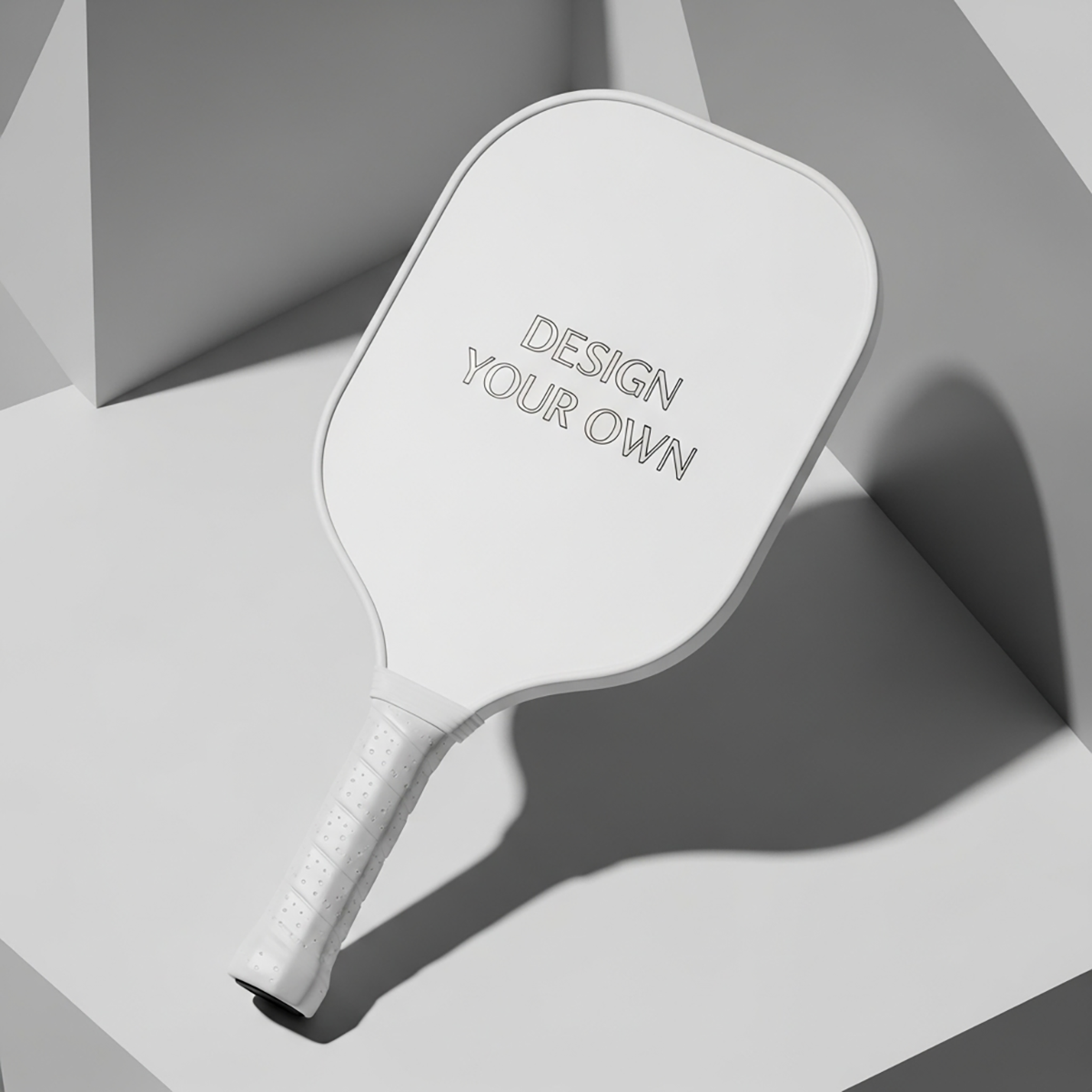
For Lumo shoppers, the most balanced setup is often simple: build the paddle you actually want, protect it properly, and add one or two personal accessories that make the ownership experience feel complete. Start with the custom pickleball paddle, then choose accessories based on how the paddle will be used: court, wall, gift box, or all three.


Dejar un comentario
Este sitio está protegido por hCaptcha y se aplican la Política de privacidad de hCaptcha y los Términos del servicio.