
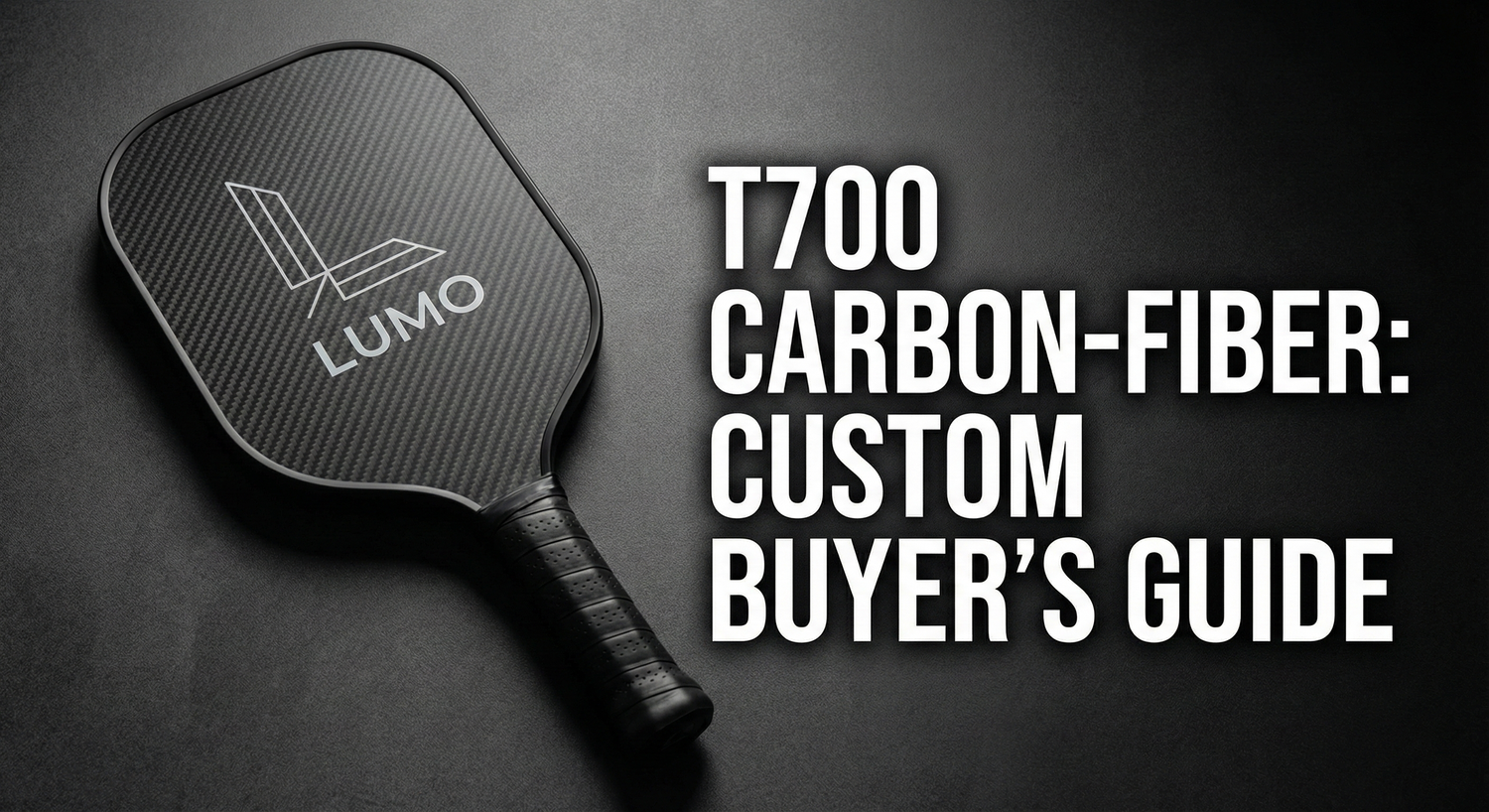
- Choose T700 if you value durable spin, consistent touch, and tournament-legal texture that holds up over time.
- “T700” names a carbon-fiber grade (strength), not a shape or weave; spin is still capped by USA Pickleball limits.
- Best fit: spin-first players, patient dinkers/counter-punchers, and frequent players who want longevity.
- Not ideal if you want instant trampoline-like pop or a fully glossy, paint-heavy graphic.
- Ready to design yours? Design your custom paddle.
Executive Summary
This guide clarifies what T700 carbon fiber actually is, how it differs from other face materials, and who benefits most from it. T700 is a standard-modulus carbon fiber grade with high tensile strength used to build predictable, durable paddle faces. In pickleball, many “raw” (peel-ply) T700 faces hold legal texture longer and yield reliable spin—within the limits set by USA Pickleball equipment standards. For players who prioritize spin and feel longevity, it’s a smart pick, supported by material data from Toray’s T700S datasheet.
What “T700” Actually Means (and What It Doesn’t)
- It’s a fiber grade: Toray lists typical tensile strength around 4,900 MPa for T700 fibers—great strength-to-weight and excellent processability, which help keep a paddle face crisp and consistent. Source: Toray T700S data.
- It’s not a spin cheat code: Legal paddles must stay within USAP limits (e.g., average Rz ≤ 30 μm) as detailed in the Equipment Standards Manual and reiterated in event testing policies (Rz 30, Rt 40).
- “Raw” vs. paint-on grit: Many modern T700 paddles use raw/peel-ply texture embedded in the cured surface. Testers and brand tech notes find raw textures often retain bite longer than sprayed grit. See Pickleball Studio’s explainer and Selkirk’s materials article.

T700 vs. Other Common Face Materials
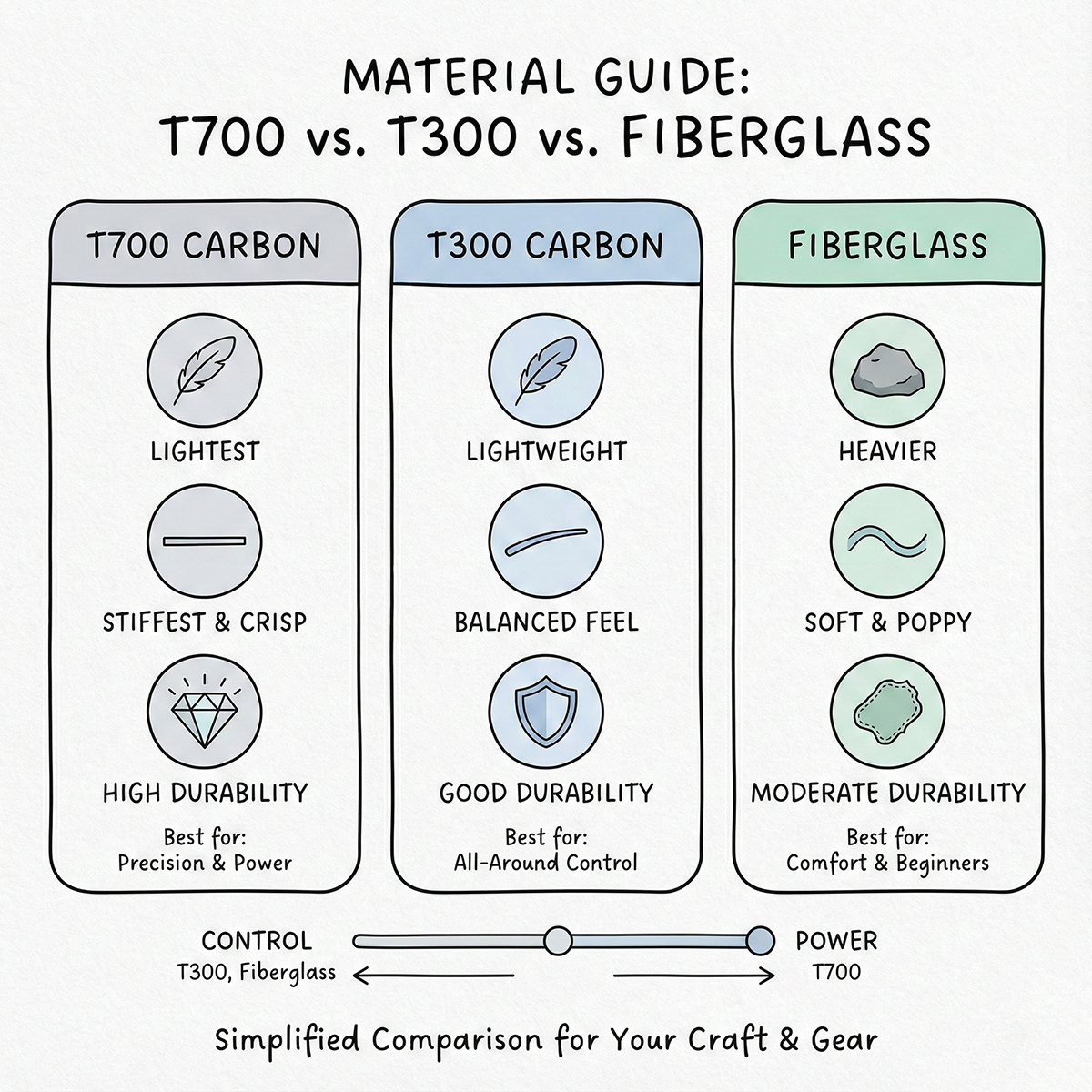
- Carbon fiber vs. fiberglass: Independent testers commonly describe carbon fiber as more control-oriented with higher spin potential, while fiberglass feels springier or poppier. See Pickleball Studio and an overview from Pickleheads.
- Why T700 specifically? The strength profile lets engineers target durability and consistency without excess weight—part of why T700 is popular in performance paddles. See Toray T700S.
- Texture science matters: Spin comes from legal surface texture plus technique. A textured carbon face that stays rough longer maintains your spin window over months of play. See USAP limits and a primer from Pickleball Science.
Who Should Choose a T700 Paddle?
1) Spin-First Strategists
If you win with topspin drives, heavy rolls, dipping counters, or shaped thirds, you’ll appreciate how raw T700 can translate mechanics into reliable RPM while staying within USAP limits. See Pickleball Studio and the standards manual.
2) Control-Oriented Dinkers & Counter-Punchers
Players who live at the kitchen and value touch, stable blocks, and clean resets tend to favor the “connected” carbon-fiber feel many T700 builds deliver. See Pickleheads’ material guide.
3) Frequent Players Seeking Longevity
If you log multiple sessions a week, surface integrity and texture retention matter. Raw carbon finishes often outlast paint-grit for maintaining bite (assuming normal care). See Selkirk tech notes and Pickleball Studio.
4) Tournament-Bound Players
You need approved, consistent gear. Look for models on the approved list and built to remain within spec for roughness, friction, and deflection. See USAP standards.
5) Custom-Design Fans Who Still Want Performance
T700 faces can showcase clean, high-contrast graphics without burying the texture under heavy coatings. If club logos or personal art matter—but you also want reliable spin—T700 hits the sweet spot. Tip: keep key elements bold, short, and well inside the edges for readability.
Next step: Create your custom T700 paddle • Explore more tips on our pickleball blog hub.
Who Probably Should Not Choose T700 (Right Now)
- You want effortless, trampoline-like pop with minimal effort—some fiberglass builds may feel springier (overview).
- You prefer zero upkeep—raw textures benefit from quick wipe-downs to prevent glazing (Selkirk tech).
- You want full-face glossy photoreal art that requires heavy coatings—consider a bold, negative-space design instead.
- You’re extremely budget-first and won’t notice feel differences yet—entry paddles are fine to learn the basics.
Quick Decision Tool (60-Second Checklist)
- I actively use topspin or slice and care about sustained spin.
- I value touch and consistent feedback more than trampoline pop.
- I play often and want a face that keeps texture longer.
- I plan to play sanctioned events and care about compliance.
- I want custom graphics without sacrificing performance feel.
Myths vs. Facts (T700 Edition)
- Myth: “T700 always hits harder.” Fact: Feel/power depend on the entire build—layup, core recipe, and your swing tempo. Material strength is only one piece. See Toray T700S data.
- Myth: “Raw T700 is illegal because it’s too rough.” Fact: Legal paddles—raw or not—must pass surface roughness, friction, and deflection tests (USAP standards).
- Myth: “All spin comes from sprayed grit.” Fact: Peel-ply/embedded textures don’t rely on spray and often retain bite longer (Pickleball Studio; Selkirk).
- Myth: “Delamination equals free power—good!” Fact: Delamination is a failure mode that can create dead spots or unsafe rebounds. Replace the paddle if it delaminates (Pickleball Central explainer).
Care Tips to Keep Your T700 Feeling New
- After each session, wipe the face with a dry or lightly damp microfiber cloth to remove dust and skin oils.
- Avoid abrasive cleaners that can glaze the resin or polish away micro-texture.
- Use a cover between matches to prevent rub-wear during transport.
- Inspect for chips or edge impacts—early attention prevents growing damage.
These best practices are consistently echoed by brand tech notes and retailers (e.g., Pickleheads; Selkirk).
Key Takeaways
- T700 is a carbon-fiber grade prized for strength and consistency—great for durable spin and connected feel (Toray).
- Legal spin has limits; T700 succeeds by holding texture within USAP rules, not bypassing them.
- Best for spin-first, control-minded, frequent players and tournament-inclined buyers.
- Design smart: bold, high-contrast graphics preserve both readability and surface bite.
FAQ
Is T700 always better than other carbon grades?
Not always—T700 gives engineers a strong baseline, but feel/power depend on the whole build and your swing. See Toray data.
Does “raw” mean rougher than the rules allow?
No. Approved paddles—raw or painted—must pass USAP surface and deflection tests (USAP standards).
Will a T700 face keep spin longer than spray-grit?
Often yes, because peel-ply/embedded textures don’t rely on sprayed particles (Pickleball Studio; Selkirk tech).
What about delamination “power boosts”?
That’s a failure, not a feature; it can create inconsistent rebounds and safety concerns. Replace the paddle if delaminated (Pickleball Central).
Any design tips for custom T700?
Use short words/monograms, bold contrast, and generous margin from edges to preserve readability and avoid heavy coatings. Then start designing.
References
- Toray — T700S Standard Modulus Carbon Fiber (datasheet).
- USA Pickleball — Equipment Standards Manual.
- USAP Nationals — Amateur Player Paddle Testing Policy (Rz/Rt).
- Pickleball Studio — Breaking Down Face Materials & Grit for Spin.
- Selkirk — Paddle Face Materials & How They Affect Your Game.
- Pickleheads — Carbon Fiber Pickleball Paddles Guide.
- Pickleball Science — Textured Carbon Fiber Paddles.
- Pickleball Central — Understanding Delamination.



Dejar un comentario
Este sitio está protegido por hCaptcha y se aplican la Política de privacidad de hCaptcha y los Términos del servicio.