
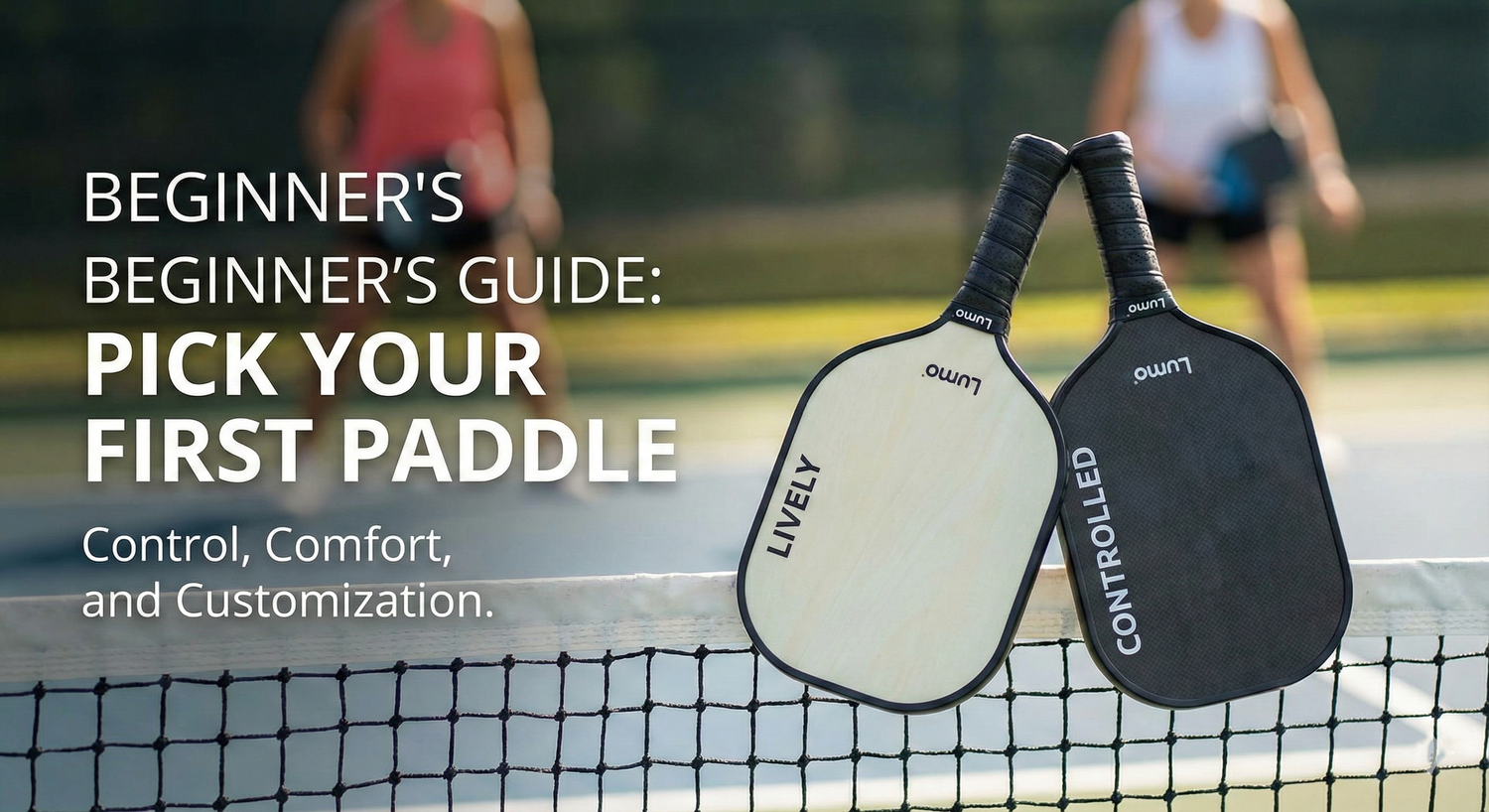
TL;DR
- Start simple: choose a beginner-friendly face material and core that favor control and forgiveness over raw power.
- Follow the rules: buy paddles that are USA Pickleball–approved and comply with surface/roughness standards.
- Avoid spec overload: materials and feel matter more than chasing niche specs you can’t feel yet.
- Practice-proof your body: warm up and use safe grips to reduce beginner injuries and speed up progress.
- Ready to personalize? Design yours with Lumo’s Custom Pickleball Paddle.
Executive Summary
This guide is for first-time players and early improvers who want a paddle that’s easy to control, forgiving on mishits, and compliant with official standards. You’ll learn how face materials (e.g., fiberglass vs. carbon/graphite) and honeycomb cores shape feel and forgiveness, what “USA Pickleball–approved” actually means, and which warm-up and grip basics keep you playing longer with fewer aches. We’ll keep the tech talk plain-English and avoid hyper-specific dimension talk you don’t need on day one.
For design-minded beginners or team captains, you can personalize your paddle without compromising play: start with a forgiving setup and then add your name, team logo, or colorway via Lumo’s Custom Pickleball Paddle. Browse more ideas in our Lumo News & Guides hub.
The 80/20 of Beginner Paddle Choice
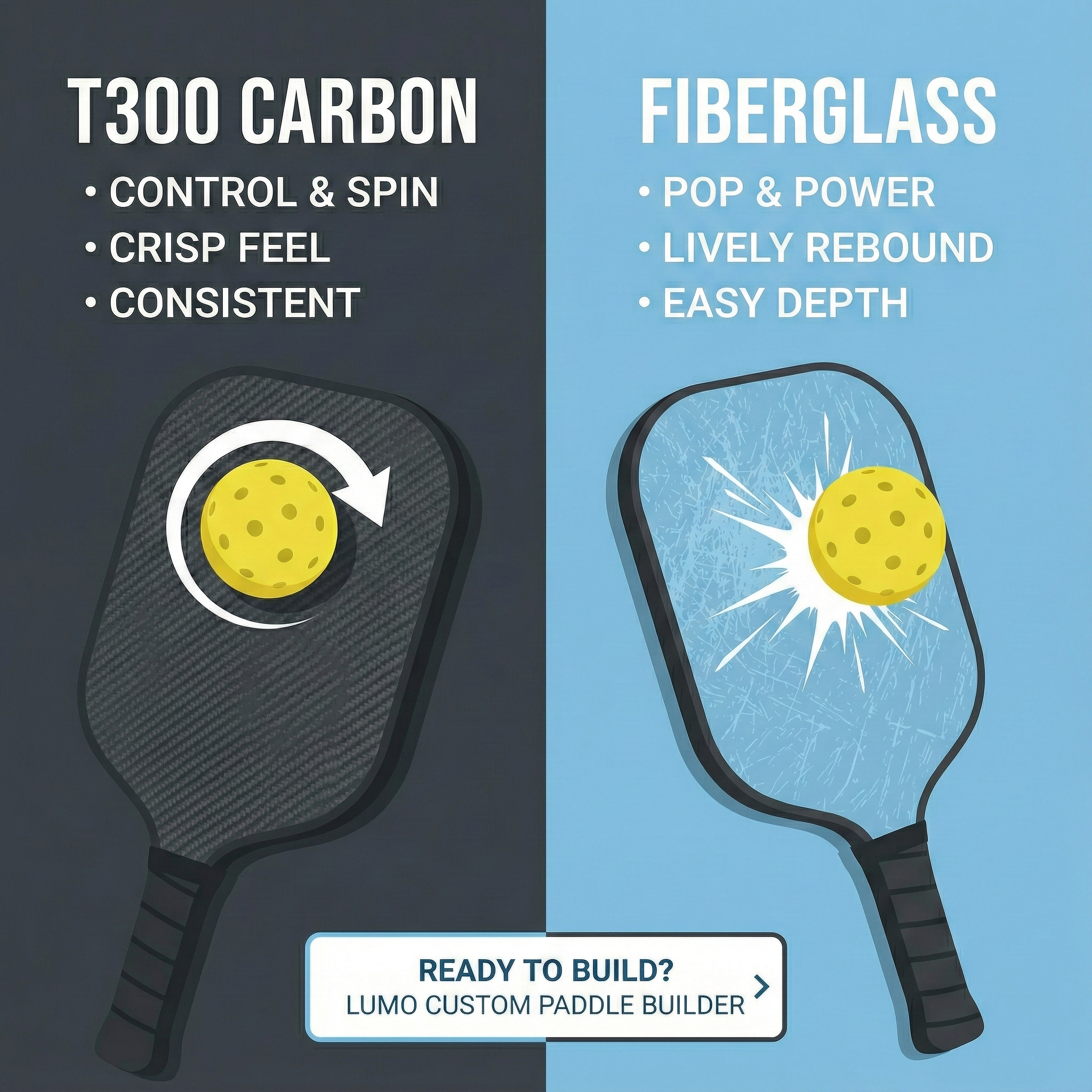
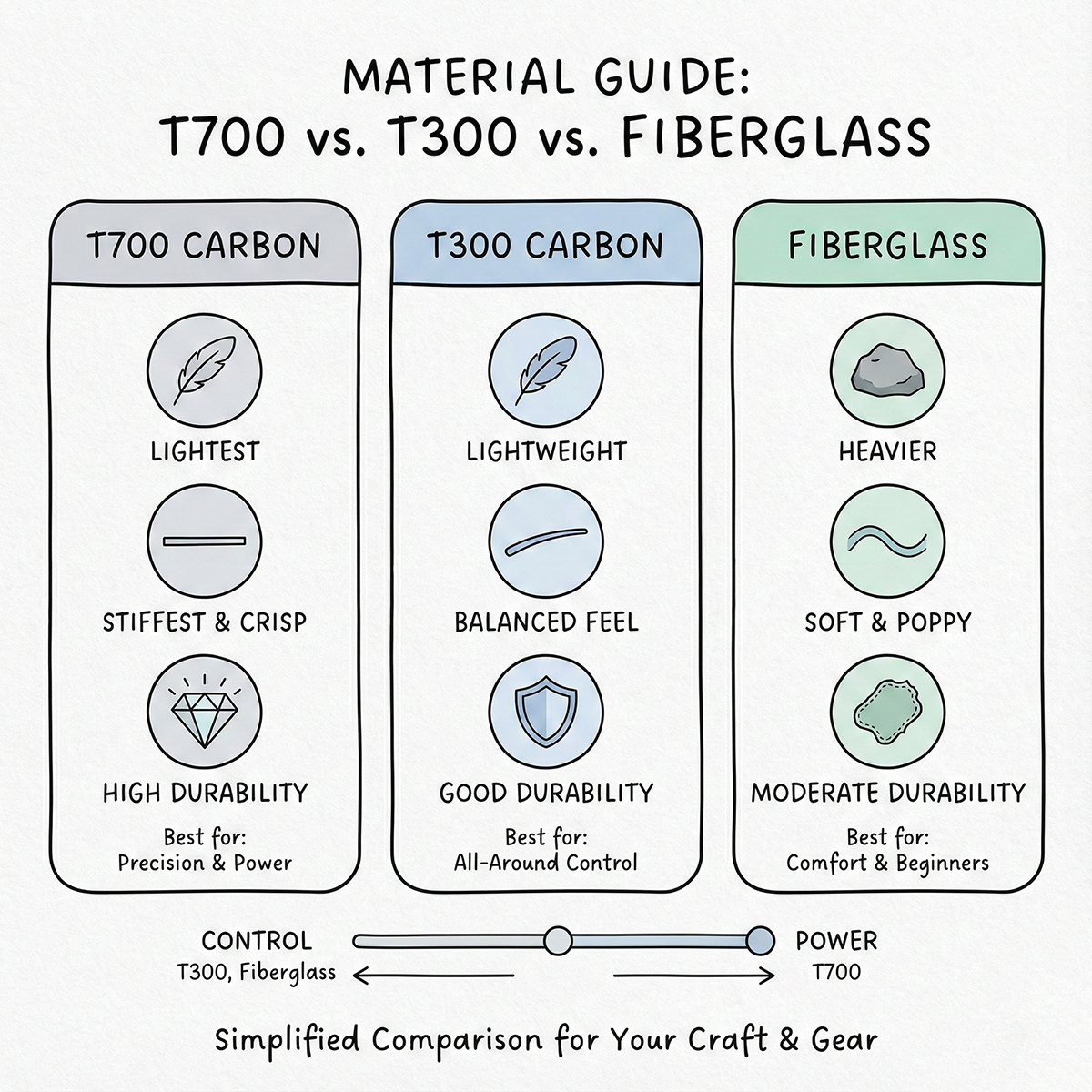
Your first goal isn’t maximum power—it’s reliable contact and directional control. You’ll progress faster with a setup that forgives off-center hits and gives stable feedback. Composite faces like fiberglass and carbon/graphite dominate modern paddles, and both can work for beginners. Retail and manufacturer guides consistently describe fiberglass as lively and easy-power, while carbon/graphite is often praised for feel and stability—either can be tuned for control via the core and surface treatment (Dick’s Buying Guide, PickleballCentral overview).
What “approved” really means. USA Pickleball maintains equipment standards for paddle material, rigidity, and surface properties (including roughness & friction caps), and keeps an official approved list and rulebook. Buying a paddle that states “USA Pickleball–approved” helps you avoid tournament surprises and questionable surfaces (USAP Equipment Standards Manual; USAP Official Rulebook).
Face Materials: What You’ll Feel (and Why It Matters)
| Face Material | What Beginners Tend to Notice | Good Use Case |
|---|---|---|
| Fiberglass (composite) | A touch more “pop”/liveliness, easy depth on blocks and swings; can feel springy | New players who want a fun, easy-power feel while learning direction and contact. |
| Carbon / Graphite | Stable, connected impact feel; often associated with controlled touch and consistent response | New players who value placement and soft game development from day one. |
| Wood | Budget, heavy feel, less common for club play | Absolute entry/bulk sets; most beginners move on quickly. |
These summaries reflect consistent retailer and brand guidance rather than hard rules—modern designs can blur lines. If you’re unsure, demo both composites and choose what “sounds and feels” calmer on your off-center hits (Dick’s, PickleballCentral).
Core Construction: Why Honeycomb Rules the Rec Courts
Modern paddles commonly use honeycomb cores (e.g., polypropylene, Nomex, aluminum). For beginners, forgiving control beats harshness. Recreational guides frequently position polypropylene honeycomb as a balanced, friendly core for feel and noise; aluminum can feel crisp; Nomex tends to feel firmer and louder—better once you’re confident in timing. Choose a core that helps you tame mishits rather than magnify them (see overviews in Dick’s guide).

Rules & Legality: Don’t Accidentally Buy a Problem
- Surface & roughness: USAP caps surface roughness (measured by Rz/Rt) to prevent excessive spin advantages. You don’t need to memorize numbers; you do need a paddle that’s represented as meeting USAP’s surface standards (USAP Equipment Standards Manual).
- Brand/model identification: Competitive play expects paddles to carry brand/model marks and an “USA Pickleball Approved” seal or equivalent in documentation (USAP Official Rulebook).
- Approved list: When in doubt, check a retailer/brand page that references USAP approval or consult an updated approved-paddles explainer (PlayPickleball.com overview).
A 3-Step Decision Tree (Beginner-Friendly)
-
Pick your feel:
- Want “easy pop” and fun depth? Try fiberglass composites.
- Want “calm feedback” and placement? Try carbon/graphite.
Read brief primers first, then trust your ears and mishit comfort (PickleballCentral’s comparison).
- Choose a forgiving core: Start with polypropylene honeycomb for a friendly blend of control and comfort (Dick’s guide).
- Confirm it’s legit: Ensure “USA Pickleball–approved” is stated by the brand/retailer; this implies compliance with material/surface standards and avoids sanctioning disputes (USAP standards; rulebook).
Safety & Comfort: Warm-Up and Grip Basics
Warm up for 5–10 minutes before serves and dinks—light cardio and dynamic shoulder/hip prep reduce common strains seen as pickleball participation explodes. Sports-medicine guidance highlights warm-ups, court awareness, and recovery days to cut injury risk (Mount Sinai Sports Medicine tips).
Use a neutral, beginner-proof grip. The Eastern grip is widely recommended as a balanced starting point that supports forehand/backhand without constant switching—helpful while you build consistency (JustPaddles grip guide). Pair that with legal serve mechanics from USAP’s rulebook so early habits don’t need rewiring later (USAP rules page).

Balls & Court Context (So Your Paddle Feels “Right”)
If you bounce between indoor and outdoor courts, understand balls differ and will change your paddle’s feel. Indoors typically use balls with fewer, larger holes; outdoors often use more, smaller holes and feel harder for wind and durability reasons. Match the ball to the venue so your paddle impressions aren’t skewed by the wrong ball type (Paddletek explainer).

Personalization Without Performance Trade-offs
You can add your name, team logo, or colorway without changing the basic playing characteristics you just selected. Keep graphics high-contrast and legible at a glance, and—if you’re on a team—aim for consistent color usage. Ready to make it yours? Design on Lumo’s Custom Pickleball Paddle. For small gifts or team IDs, consider the matching Custom Pickleball Paddle Replica Keychain.
Beginner Setup Checklist (Print This)
- □ Composite face chosen for feel you like (fiberglass = lively fun; carbon/graphite = calm control). (Dick’s, PickleballCentral)
- □ Polypropylene honeycomb core for friendly control and comfort. (Dick’s guide)
- □ Clearly identified as USA Pickleball–approved (brand/model marked). (USAP rulebook)
- □ Eastern grip learned; serve form checked against USAP basics. (JustPaddles, USAP rules)
- □ The right ball for your venue (indoor vs. outdoor), so paddle feel isn’t misjudged. (Paddletek)
- □ 5–10 minutes of warm-up before play to reduce aches and tweaks. (Mount Sinai)
When to Upgrade (and When to Stop Researching)
- Upgrade when: you can consistently place dinks/serves and now want more spin stability or a different feel under pressure. At that point, experiment within the same face family or try the other composite.
- Don’t over-optimize yet: until you’re landing serves and third-shot drops reliably, changing material won’t fix fundamentals; practice and footwork will.
- Team or club gear: once you’re settled, lock in aesthetics with Lumo’s Custom Paddle so everyone recognizes your paddle bag at a glance.
Ready to Start (and Customize Later)?
- Practice with a calm, forgiving setup; then personalize your look on Custom Pickleball Paddle.
- Want small gifts for the team? Try Custom Paddle Replica Keychain.
- Keep learning: browse drills and gear tips on the Lumo News & Guides hub.
Key Takeaways
- Composite faces (fiberglass or carbon/graphite) both work for beginners—pick the feel that keeps your misses playable (Dick’s; PickleballCentral).
- A forgiving honeycomb core (often polypropylene) helps you control the ball early (Dick’s guide).
- Buy USA Pickleball–approved paddles to avoid rule issues and questionable surfaces (USAP standards; rulebook).
- Warm-up and a neutral grip reduce common beginner aches and speed learning (Mount Sinai; JustPaddles).
FAQ
Do I need the “USA Pickleball–approved” label if I just play for fun?
You’ll still benefit: it signals compliance on materials and surface, and if you join a ladder or tourney later, you’re ready. See USAP standards.
Is fiberglass strictly for power and carbon strictly for control?
Not strictly—modern builds blur lines. But it’s a helpful starting heuristic: fiberglass often feels livelier; carbon/graphite often feels more stable. Try both if possible (Dick’s; PickleballCentral).
What about indoor vs. outdoor balls—do they affect my choice?
Yes. Using the wrong ball for the venue can make a good paddle feel “off.” Indoors often use fewer, larger holes; outdoors use more, smaller holes and feel harder (Paddletek guide).
Any quick injury-prevention must-dos?
Warm up (light cardio + dynamic mobility), wear court-appropriate shoes, and pace up gradually; sports-medicine sources emphasize proactive prep for new players (Mount Sinai).
Can I customize my paddle as a beginner without hurting performance?
Yes—graphics don’t change the fundamental face/core feel. Focus on legible designs and consistent colors; upgrade only when your fundamentals demand a different feel. Then customize on Lumo’s Custom Paddle.
References
- USA Pickleball — Equipment Standards Manual (2025)
- USA Pickleball — Official Rulebook (latest)
- Dick’s Sporting Goods — Pickleball Paddle Buying Guide
- PickleballCentral — Fiberglass vs. Graphite Paddles
- Paddletek — Indoor vs Outdoor Pickleballs
- JustPaddles — How To Grip A Pickleball Paddle
- Mount Sinai Health — Pickleball Injury Prevention: Five Tips
- USA Pickleball — Rules page (serve basics)
- PlayPickleball.com — USA Pickleball–approved paddles (explainer)


1 comment
Strokess
Great beginner guide — super clear and practical! Also, for a more detailed indoor vs outdoor pickleball comparison, check out this guide on Pickleball ball https://strokess.com/blogs/news/indoor-vs-outdoor-pickleballs
Leave a comment
This site is protected by hCaptcha and the hCaptcha Privacy Policy and Terms of Service apply.