
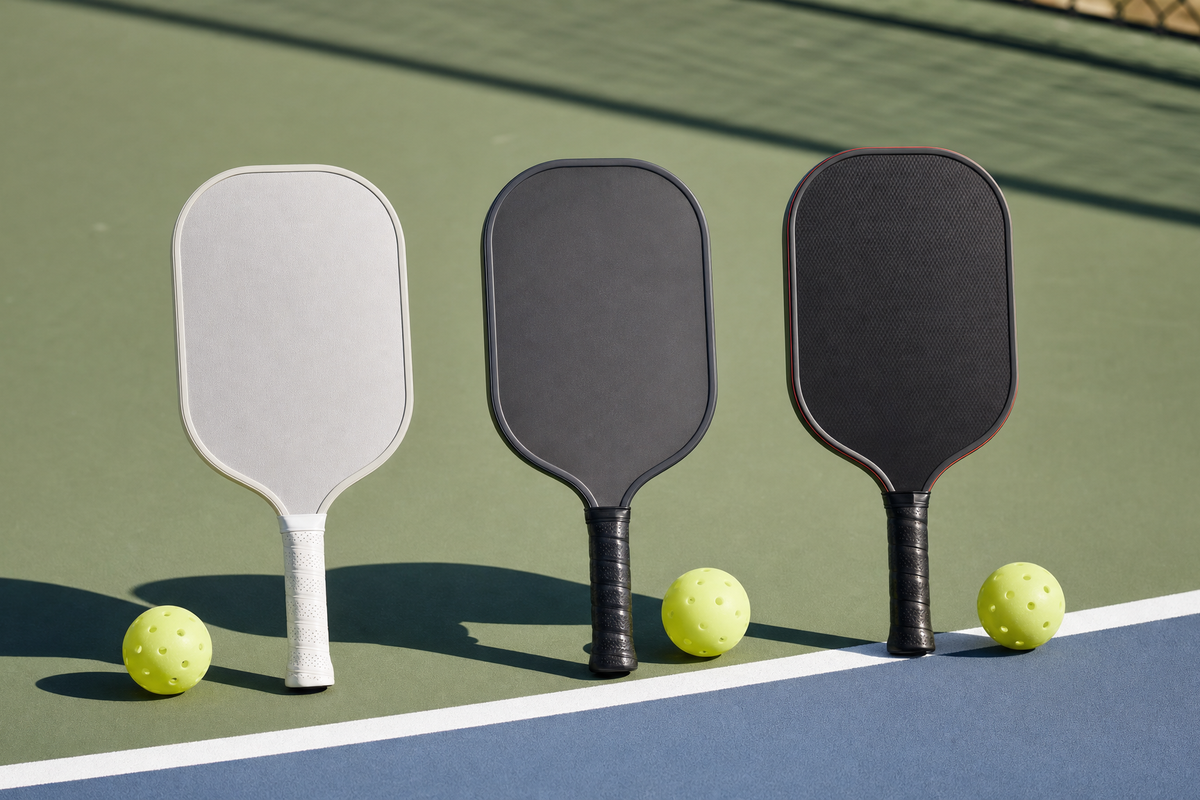
A lightweight pickleball paddle is usually the right choice if you want quicker hands, easier resets, less fatigue during long sessions, or a paddle that feels manageable as you learn. It is not automatically the best choice for every player, because very light paddles can feel less stable on off-center contact and may ask you to generate more of your own power. The smart decision is not “light or heavy”; it is whether your game needs faster reaction speed, easier maneuverability, balanced control, arm comfort, and a setup that still gives you enough depth on drives and serves.

Quick answer: who should choose a lightweight pickleball paddle?
Choose a lightweight paddle if your main problem is that your paddle feels slow, tiring, or hard to position during fast exchanges. This often includes newer players, doubles players who spend time at the kitchen line, players with smaller frames or less grip strength, and anyone who prioritizes fast hands over maximum plow-through power.
Many paddle education guides and retailers describe lightweight paddles as sitting roughly below the midweight range, though exact labels vary by brand and retailer. For example, buyer education from Pickleball Central and paddle education from Selkirk both treat weight as one of the key feel and performance variables shoppers should evaluate, not as a standalone quality score.
Source-worthy takeaway: A lightweight paddle is not “easier” in every way; it is easier to move. The right choice is the lightest paddle that still gives you enough stability, depth, and confidence on imperfect contact.
Best-fit players
- Beginners who want easy control: A manageable swing weight can make it easier to learn contact timing and keep the paddle face stable.
- Doubles players at the kitchen: Faster paddle movement helps with volleys, blocks, counters, and quick resets.
- Players who fatigue late in games: A lighter setup may feel less demanding over longer recreational sessions.
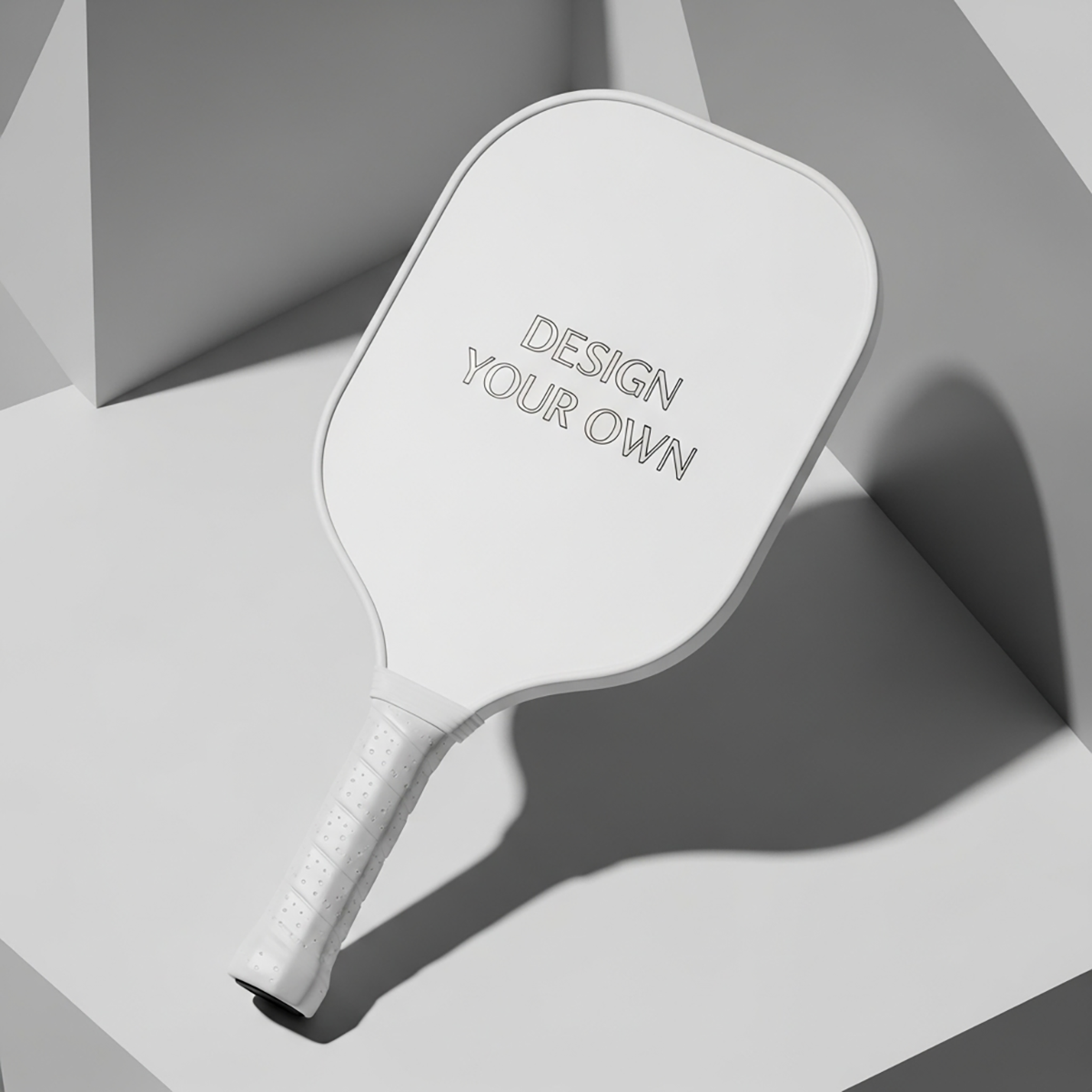
- Players who customize paddle artwork: If you are designing a paddle as a gift or personal paddle, a lighter-feeling setup can be safer for a broader range of recipients.
- Players moving from casual to regular play: If a cheap starter paddle feels clunky, upgrading to a better material and a more manageable weight can be more useful than chasing maximum power.
Players who may not want the lightest option
- Power-first singles players: If you rely on deep drives and heavy serves, an ultra-light feel may not give the same confidence through the ball.
- Players who miss because the paddle twists: If off-center hits wobble too much, you may need more stability, a different shape, or a different core thickness.
- Players who already over-swing: A very light paddle can encourage wristy swings unless your technique is controlled.
- Players who want a soft, plush reset feel: Weight is only one part of control; thickness and face material matter too.
If you are still learning the broader buying variables, start with Lumo’s pickleball paddle for beginners buying guide. If you already know you want a personalized design, pair this article with Lumo’s complete guide to customizing your pickleball paddle.
The decision framework: speed, stability, control, power, and comfort
Most shoppers ask, “Is a lightweight paddle good?” A better question is, “Which trade-off am I willing to make?” Weight affects how quickly the paddle moves, but the final feel also depends on shape, grip size, core thickness, face material, and your swing mechanics.
| Decision factor | What a lightweight paddle usually helps | What to check before buying | Practical decision |
|---|---|---|---|
| Hand speed | Quicker blocks, counters, and paddle repositioning | Do you lose fast kitchen exchanges because your paddle arrives late? | Lean lightweight if reaction speed is your biggest issue. |
| Stability | Can feel easy to handle, but may twist more if too light or poorly matched | Do off-center hits flutter or die? | Do not choose the lightest option if you need more forgiveness. |
| Control | Can make touch shots feel less rushed because the paddle is easier to place | Do you pop up dinks or struggle to reset pace? | Pair lighter handling with a control-oriented core and face, not weight alone. |
| Power | Can support faster swing speed, but may provide less natural mass through contact | Are your serves and drives already short? | Consider a balanced or midweight feel if you need easier depth. |
| Comfort | May reduce the feeling of effort during long sessions | Do you have discomfort, fatigue, or grip tension? | Use weight as one variable, and consider grip fit and technique too. |
This is why weight should be evaluated with the rest of the paddle build. Lumo’s guide to 13 mm vs 16 mm vs 20 mm paddle thickness is useful here: a paddle can feel quick and still be control-oriented if the core and construction support your playing style.
Lightweight does not mean beginner-only
One common mistake is treating lightweight paddles as “starter paddles.” That is too simple. A beginner may benefit from easier handling, but an experienced doubles player may choose a lighter paddle for exactly the same reason: fast hands at the net. The difference is how each player uses that maneuverability.
For beginners: lightweight can reduce decision overload
New players are often fighting three problems at once: late contact, inconsistent paddle angle, and uncertainty about how much swing to use. A paddle that feels easy to move can help the player focus on simple fundamentals: get the paddle in position, meet the ball out front, and keep the face quiet.
That does not mean every beginner should buy the lightest paddle available. If the paddle feels unstable, the player may compensate by gripping harder, which can make touch worse. A better beginner goal is a paddle that feels manageable and predictable, not fragile or overly whippy.
For intermediate players: lightweight can sharpen the fast part of the game
At intermediate levels, many lost points come from being late in transition, missing a counter volley, or failing to reset a ball that arrives quickly. A lighter-feeling paddle may help if your current paddle gives you power but makes you feel stuck in hand battles.
This is especially relevant in doubles, where rapid exchanges near the non-volley zone are common. For rules context around court play and the non-volley zone, use the current USA Pickleball official rules rather than relying on informal summaries.
For advanced players: lightweight only works if it matches the pattern
Advanced players should be more cautious. If your game is built around heavy drives, strong counters, and deep pressure, going too light may remove the feel you depend on. If your game is built around speedups, hands battles, disguise, and quick recovery, a lightweight paddle may be a deliberate tactical choice.
The practical test is simple: after five games, are you winning more points because your paddle is faster, or losing points because the ball lacks weight and depth? If the answer is mixed, you may want a balanced setup rather than the lightest possible setup.
When a lightweight paddle is a good fit
Use this section as a fit check before you buy or customize. If you match three or more of these situations, a lightweight pickleball paddle deserves serious consideration.
1. You are late in hand battles
If your paddle is still moving into position when the ball arrives, you may need a paddle that is easier to accelerate and stop. This is one of the clearest reasons to look lighter. The goal is not just swing speed; it is recovery speed after the first contact.
2. Your arm gets tired before your legs do
Some players finish a session feeling like the paddle became heavier every game. A lighter setup may help reduce perceived effort, especially for recreational players who play long sessions. If you have pain or injury concerns, do not treat paddle weight as medical advice; consider professional guidance and evaluate grip size, technique, and total playing load.
3. You play mostly doubles
Doubles rewards quick positioning, compact swings, blocks, and resets. A lighter paddle can support that style if it still feels stable on contact. If you are designing a custom paddle for a doubles partner or family member, lightweight handling is often a safer default than a power-heavy feel.
4. You value control more than raw pace
Players who want to keep balls low, reset pace, and avoid over-hitting may like a paddle that is easy to guide. However, control does not come from weight alone. Face material and core thickness matter. If you are choosing between materials, Lumo’s pickleball paddle materials guide explains how common paddle materials affect feel and buying decisions.
5. You are buying a gift
When you do not know the recipient’s exact playing style, avoid extreme choices. A lighter-feeling paddle with a practical grip and a personal design is often more gift-friendly than a heavy, power-focused paddle. If the gift is the main goal, read Lumo’s guide on why a custom pickleball paddle is a useful gift before you choose the final design.

When you should avoid going too light
A lightweight paddle can solve the wrong problem if you choose it for the wrong reason. Before buying, check whether one of these warnings applies.
Warning 1: You need easier depth, not faster hands
If your drives, serves, and returns consistently land short, a lighter paddle may not fix the issue. You may need better mechanics, a more powerful construction, or a setup with more natural mass through contact. In that case, a balanced or midweight option may be more forgiving.
Warning 2: Your paddle face twists on off-center hits
If you miss because the paddle turns in your hand, simply going lighter can make the problem more obvious. You may need a different shape, better grip fit, more stable construction, or a slightly heavier setup. The goal is confidence on imperfect contact, not just a lower number on a spec sheet.
Warning 3: You are chasing a label instead of a feel
“Lightweight” is not a universal standard across every brand. Some brands use different naming ranges, and two paddles with similar listed weights can feel different because of balance and shape. Industry education sources such as The Pickler regularly emphasize practical player decisions over spec chasing, which is the right mindset here.
Warning 4: You want tournament legality but only check weight
Weight itself is not the only concern for approved play. Paddle dimensions, surface characteristics, and other equipment requirements are governed by official standards. If tournament approval matters, check the latest USA Pickleball rules and equipment resources, including the USA Pickleball approved equipment database. For custom artwork, avoid assuming that any surface treatment or texture is automatically acceptable.
How paddle thickness and material change the lightweight decision
Weight is the headline, but construction determines whether that weight feels useful. A light paddle with the wrong core may feel sharp and unforgiving. A light paddle with a more control-oriented build may feel easy and composed. When shoppers skip this step, they often blame weight for a problem caused by thickness, face material, or grip fit.
Thickness: control, feedback, and forgiveness
Thicker cores are often associated with a softer, more controlled feel, while thinner cores are often associated with a more direct response. That is a simplified buying lens, not an absolute rule, because construction varies. Still, thickness is a practical filter when you are choosing between similar paddles.
If you want quick handling but do not want the ball to jump too much, compare thickness carefully. Lumo’s paddle thickness guide is the best internal next read because it separates the thickness choice from the weight choice.
Material: feel, durability expectations, and performance personality
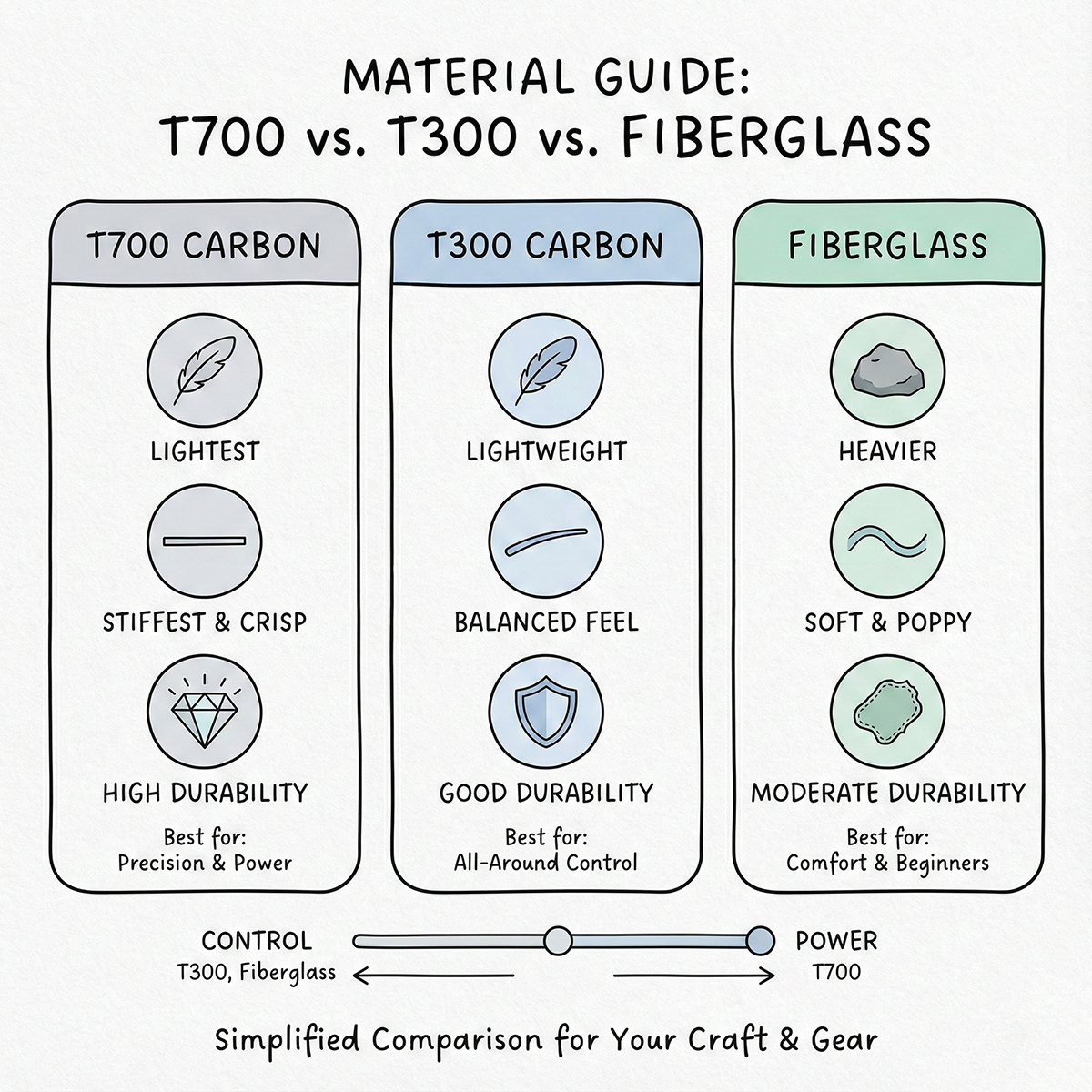
Face material changes how the paddle feels at contact. Carbon fiber, fiberglass, wood, and basic composite labels can all signal different expectations, but shoppers should avoid reading the label alone. For example, Lumo’s article on who should buy a T700 carbon fiber pickleball paddle is useful if you want a more detailed look at carbon fiber as a performance-oriented option.
If you are comparing broad material categories, read the ultimate guide to choosing paddle materials and features. If you are tempted by a vague “composite” label, Lumo also explains why shoppers should be careful with generic composite paddle claims.
Lightweight paddle mistake audit
Before you buy, run this quick audit. It is designed to catch the most common ways shoppers choose a paddle that looks right online but feels wrong on court.
- Mistake: choosing the lowest listed weight. Fix it by choosing the lightest paddle that still feels stable and produces enough depth.
- Mistake: ignoring grip size and handle feel. Fix it by making sure the paddle does not force you to squeeze harder than necessary.
- Mistake: assuming lightweight equals control. Fix it by checking thickness, face material, and your own swing pattern.
- Mistake: buying for singles when you mostly play doubles. Fix it by matching the paddle to your real game environment, not the game you imagine playing.
- Mistake: customizing the artwork first and the build second. Fix it by choosing the performance profile before finalizing the visual design.
- Mistake: copying a pro or friend. Fix it by asking what problem that paddle solves for your body, pace, and skill level.
How to choose or customize a lightweight Lumo paddle
If you are shopping before customizing, make the performance decision first and the artwork decision second. A paddle you love visually should still match your playing needs.
Step 1: Name the main problem
Pick one primary problem: late hands, arm fatigue, poor depth, too many pop-ups, unstable contact, or gift uncertainty. A lightweight paddle is strongest when the problem is late hands or fatigue. It is less direct when the problem is depth or twisting.
Step 2: Decide your weight direction, not just a number
Use “lighter-feeling,” “balanced,” or “more stable” as the buying language. Exact weight ranges vary, and balance changes feel. If you cannot test in person, avoid the extreme ends unless you already know your preference.
Step 3: Match thickness to your control needs
If you want a calmer response and more confidence on resets, compare thicker control-oriented builds. If you want a quicker, more direct response, compare thinner builds. Use Lumo’s thickness article as your decision companion, not as a separate topic.
Step 4: Choose artwork that does not fight usability
Customization should make the paddle personal without making it visually distracting. For a gift, use high-contrast personal elements, clean names or initials, and imagery the recipient will still like after the novelty wears off. For your own paddle, choose a design that is easy to recognize in a bag and still feels like something you want to bring to weekly games.
Step 5: Check rule sensitivity if you play organized events
If you play recreationally, design freedom may matter most. If you play sanctioned events, check current rules and approved equipment information before assuming a custom design is event-ready. Official rules can change, and tournament directors may rely on current equipment standards rather than a seller’s general description.

Lightweight vs midweight vs heavy: a practical comparison
The table below uses broad buying categories because brands and retailers may define exact weight ranges differently. Treat it as a decision map, not a universal specification chart.
| Paddle feel | Likely strengths | Likely trade-offs | Best for | Be careful if |
|---|---|---|---|---|
| Lightweight | Fast hands, easy maneuvering, lower perceived effort | May feel less stable or less powerful if too light | Beginners, doubles players, quick-reaction players, gift buyers | You need more depth or the paddle twists on contact |
| Midweight or balanced | Versatile mix of handling, stability, and power | May not maximize either speed or mass | Most all-court players and uncertain shoppers | You have a very specific speed or power need |
| Heavier feel | More mass through contact and potential stability | Can feel slower and more tiring | Power-oriented players who like a solid feel | You struggle in quick exchanges or fatigue easily |
If you are still unsure, the most conservative buying path is usually a balanced, control-friendly setup rather than the most extreme lightweight or heavy option. If you already know you want faster hands, then lightweight becomes a stronger candidate.
Mini checklist before you buy
- Do I lose points because my paddle is late, or because my shots lack depth?
- Do I play more doubles than singles?
- Do I want a paddle that feels easy over long sessions?
- Do I need more stability on off-center contact?
- Have I compared thickness and material, not just weight?
- If this is a gift, is the setup forgiving enough for the recipient’s likely skill level?
- If I play events, have I checked current equipment rules and approval expectations?
FAQ: lightweight pickleball paddle questions
Is a lightweight pickleball paddle better for beginners?
Often, yes, but not always. Beginners usually benefit from a paddle that is easy to move and control. However, the lightest paddle is not automatically best. A beginner should look for manageable handling, stable contact, and a grip that does not encourage tension.
Does a lightweight paddle reduce arm pain?
It may reduce perceived effort for some players, but paddle weight is not a medical solution. Arm comfort can also be affected by grip size, swing mechanics, playing volume, ball contact quality, and previous injury. If pain continues, get appropriate professional advice.
Will I lose power with a lightweight paddle?
You might, especially if you depend on paddle mass for depth. Some players can swing a lighter paddle faster, which can offset the difference. The best test is whether your serves, returns, and drives still land deep without forcing your swing.
Is lightweight better for doubles?
It can be. Doubles often rewards quick blocks, counters, and resets near the kitchen. A lighter paddle can help with reaction speed, as long as it remains stable enough when the ball hits away from the center.
Can I customize a lightweight paddle as a gift?
Yes. For gifts, avoid extreme performance choices unless you know the recipient’s preference. A lighter-feeling, control-friendly setup with a clean personal design is usually easier for a wide range of recreational players to enjoy.
Final decision: choose lightweight if it solves your real problem
A lightweight pickleball paddle is a strong choice when your real problem is speed, fatigue, or manageability. It is a weaker choice when your real problem is power, depth, or stability. Do not buy the label; buy the fit.
Your next step is simple: write down your top court problem, choose whether you need lighter handling or more stability, then compare thickness and material before finalizing the design. If you are customizing through Lumo, use the performance decision as the foundation and let the artwork make the paddle personal. If you are still deciding whether customization is right for you, read Lumo’s guide to custom vs stock pickleball paddles before you order.


Dejar un comentario
Este sitio está protegido por hCaptcha y se aplican la Política de privacidad de hCaptcha y los Términos del servicio.