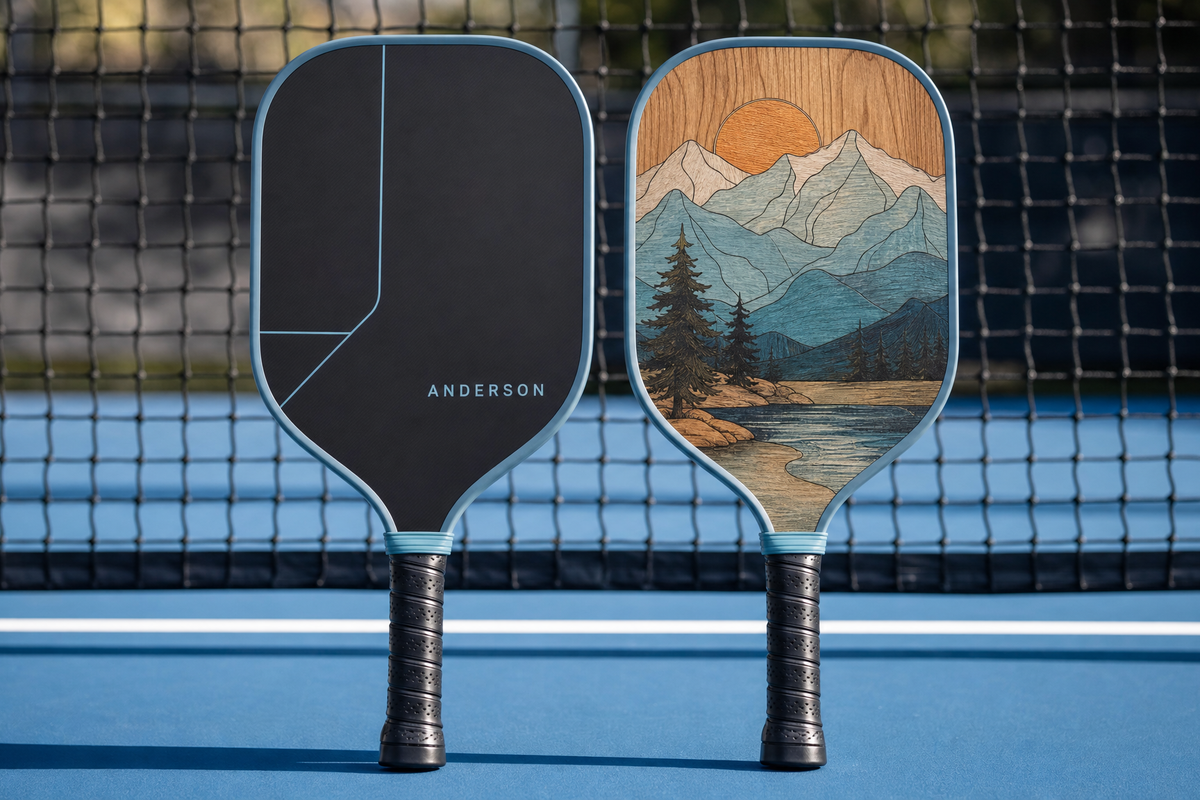
A two sided custom pickleball paddle gives you more design space, but the smartest buyers do not treat both sides as random decoration. The better question is: what job should each side do?
For most custom paddles, the two faces should be planned as a pair. One side can be the clean, game-ready side you want to see during competitive points. The other can be the personal, giftable, photo-friendly, club, or team side. If both sides are designed without a purpose, you may still get a beautiful paddle, but you lose the practical advantage of having two faces to work with.
This guide explains when to use each side, how to plan the artwork before ordering, and how to avoid common customization mistakes. It is written for shoppers comparing options before buying or customizing a Lumo paddle.

Quick Answer: When Should You Use Each Side?
If your two-sided paddle has the same playing surface on both faces, you can usually hit the ball with either side. The practical difference is not that one printed side magically creates more power or spin. The difference is how each side supports your routine, visibility, confidence, and use case.
| Side type | Best used for | Design direction | Why it helps |
|---|---|---|---|
| Game side | League nights, competitive rec games, tournaments, focused drilling | Cleaner layout, readable name or initials, less visual clutter | Keeps your eye and routine simple during points |
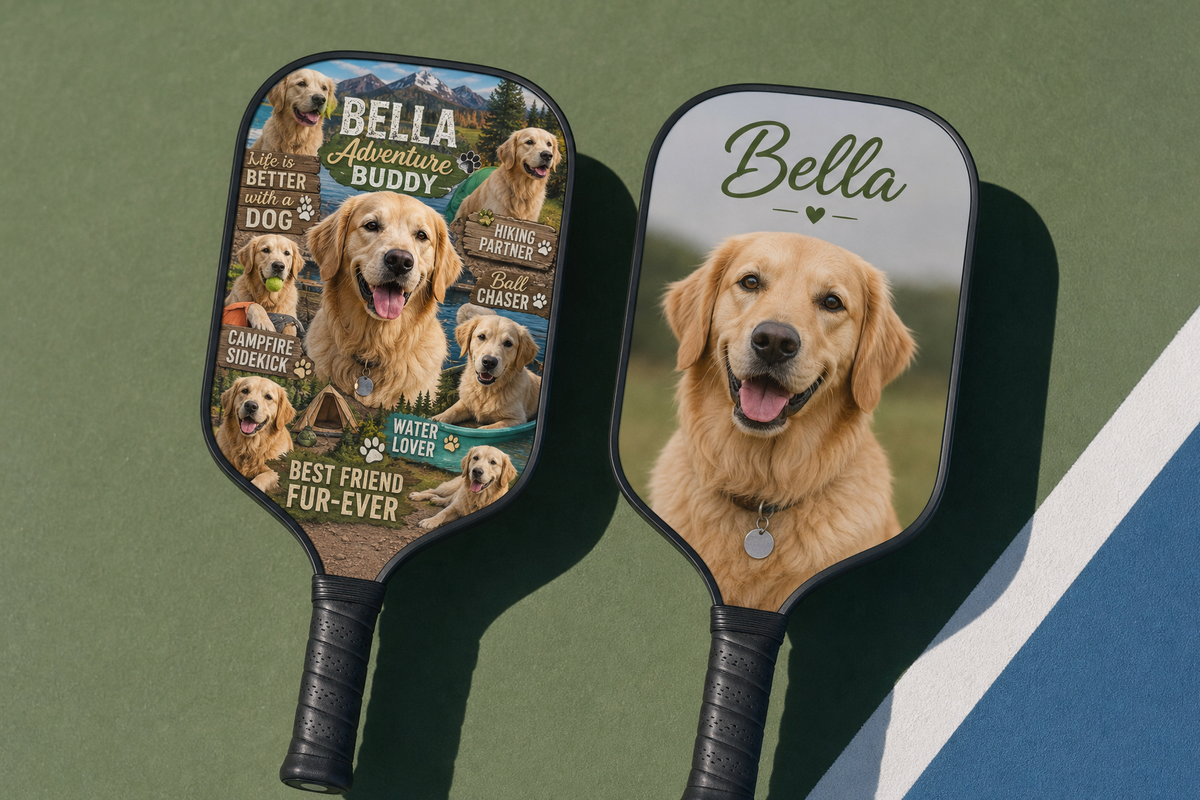
| Personality side | Casual games, photos, gifts, warmups, social play | Pet photo, family photo, bold artwork, joke, club slogan | Makes the paddle memorable without forcing the busy side into every rally |
| Team or club side | Ladder leagues, club events, group gifts, team matches | Logo, player name, role, season, event text | Creates a shared identity and makes paddles easier to recognize |
| Gift message side | Birthdays, holidays, retirement gifts, coach gifts | Short message, date, inside joke, signature | Turns the paddle into a keepsake while the other side stays playable |
A simple rule works well: make one side easy to play with and the other side easy to love.
First, Separate Two Ideas: Playing Surface vs. Printed Design
Before deciding how to use each side, it helps to separate two things that shoppers often mix together:
- The paddle construction: the material, shape, core, weight range, grip, and hitting surface.
- The custom artwork: the image, text, layout, and visual identity printed on each face.
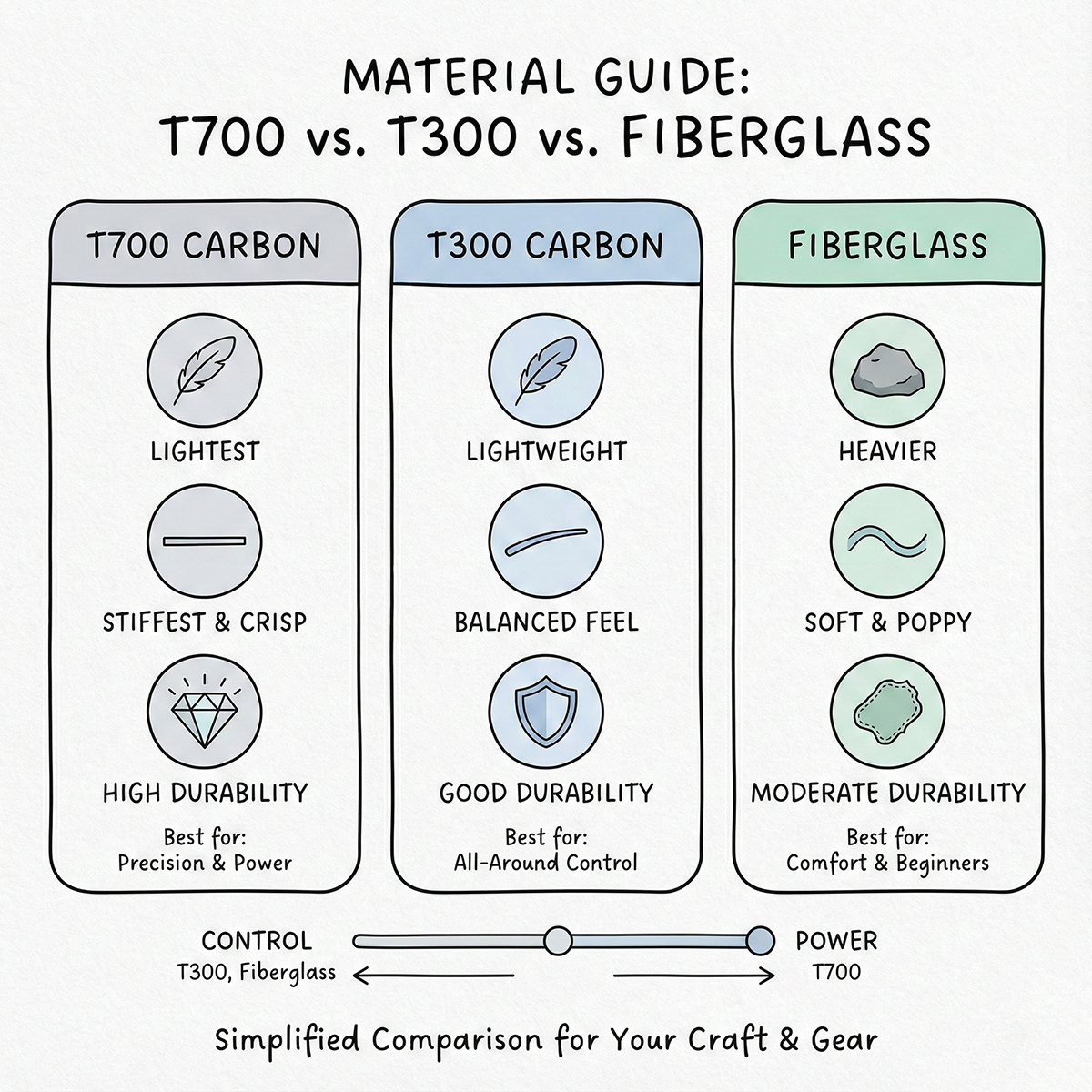
The printed design may affect how the paddle looks and how easy it is to identify, but shoppers should be careful about assuming that different graphics alone create different performance. If you are comparing surface materials, that is a separate buying decision. Lumo’s guide to fiberglass vs. T300 and T700 carbon custom pickleball paddles is a better place to start for that question.
For rules and equipment context, official sources are the safest references. USA Pickleball publishes the official rulebook, equipment information through its equipment standards resources, and an approved paddle list. If you plan to use a custom paddle in sanctioned events, checking current official requirements is the cautious approach.
Practical takeaway: Treat the two sides as two visual tools, not two guaranteed performance modes, unless the manufacturer clearly specifies different approved surfaces or construction.
The Two-Side Planning Framework
Instead of asking “what should I print on both sides?”, ask four clearer questions.
- What side do I want to see during serious play?
- What side should other people remember?
- What side makes the paddle easier to identify in a bag, rack, or club setting?
- What side makes the gift or custom order feel personal?
Those answers usually create one of the following setups.
Setup 1: Clean Game Side + Personal Show Side
This is the best all-around setup for many buyers. The game side uses a restrained layout: name, initials, a simple graphic, or a clean pattern. The show side carries the fun: a pet portrait, vacation image, bold illustration, family photo, or inside joke.
Use the clean side during competitive games, especially if busy artwork distracts you during your serve routine or return preparation. Use the show side for casual games, photos, warmups, and social play. This setup is especially strong if you are buying a paddle as a gift, because the recipient gets something personal without sacrificing a more focused playing face.
If you are still deciding whether personalization is worth it, read Lumo’s guide to custom vs. stock pickleball paddles. It helps separate practical reasons to customize from situations where a stock paddle may be enough.
Setup 2: Name Side + Artwork Side
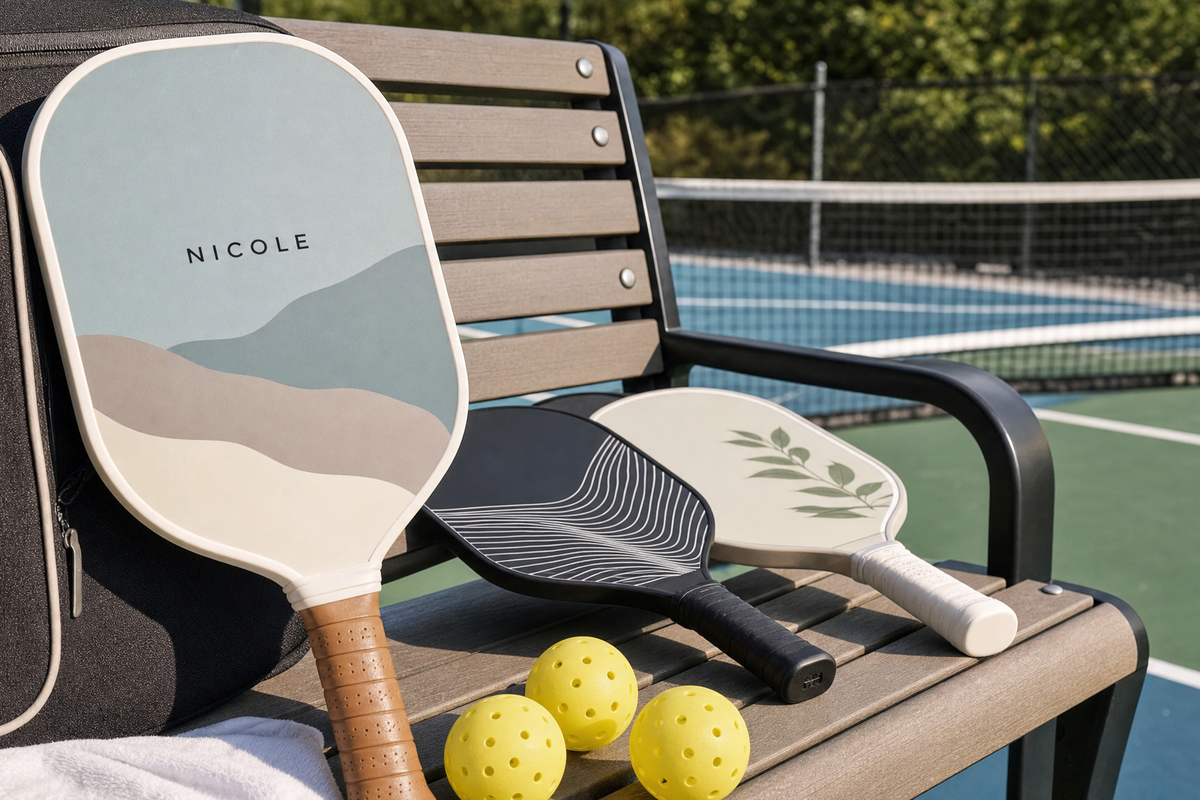
This setup is simple and effective. Put the player’s name, initials, or nickname on one side. Put the artwork on the other. The name side is useful at clubs, open play, lessons, and group events because it makes the paddle recognizable. The artwork side gives the paddle personality.
Use the name side when paddles are likely to be mixed with others: paddle racks, clinics, community courts, and group lessons. Use the artwork side when you want the paddle to feel more expressive.
Setup 3: Team Side + Player Side
For clubs and teams, the best two-sided structure is often shared identity on one face and individual identity on the other. The team side can include the club name, event, season, or group graphic. The player side can include the person’s name, number, nickname, or role.
This setup works well for group orders because every paddle feels connected, but each player still receives something personal. If you are organizing an order for a club, Lumo has a more specific guide on custom pickleball paddles for clubs and another on bulk buying custom pickleball paddles.
Setup 4: Gift Message Side + Everyday Play Side
For gifts, one side can carry the emotional weight: “Happy 60th,” “Coach of the Year,” “Retirement League Champion,” or a short family message. The other side can be designed for everyday use with a cleaner look.
This prevents the common gift problem where the paddle is meaningful but visually too busy for regular play. A good custom gift should not feel like something that must stay on a shelf. It should feel personal and usable. For more gift-specific ideas, see Lumo’s posts on custom pickleball paddles as gifts and why a custom pickleball paddle is a gift people actually use.
When to Use the “Game Side”
The game side is the face you choose when you want fewer distractions and more consistency. That does not mean it must be boring. It means the visual design should support play rather than compete with it.
Use it for serves and return routines
Many players like a repeated pre-point routine. If one side has a cleaner mark, name, or orientation cue, using that face can help you reset before serving or returning. The benefit is mental consistency, not a guaranteed performance boost.
Use it when the background is visually busy
Some courts have fences, players, shadows, bags, and movement behind the ball. In those settings, a very busy paddle face may feel visually noisy. A cleaner side can make the paddle feel calmer in your hand.
Use it for lessons and drilling
During drills, you want repeatability. A game side with simple orientation cues can help a coach refer to grip, paddle angle, or ready position. If you are designing for a beginner, this can be more useful than putting dense artwork on both sides.
Use it in more formal play
If you play in organized events, a conservative design is often the safer choice. This does not mean custom artwork is off limits. It means you should avoid designs that are overly reflective, confusing, or likely to create unnecessary questions. For sanctioned play, check the latest rule and equipment resources before assuming any paddle is acceptable.

When to Use the “Personality Side”
The personality side is where a two-sided custom paddle becomes more than equipment. It can tell a story, celebrate a person, or make a group order feel special.
Use it for casual open play
Casual games are where fun artwork shines. A dog photo, family illustration, bold pattern, or joke can start conversations without needing to be the side you stare at during every serious point.
Use it for photos and social moments
If you are giving the paddle as a birthday, holiday, retirement, or coach gift, the personality side is usually the face people want to photograph. Put the most emotional or memorable design on that side.
Use it for club identity
For teams and clubs, the personality side can carry a shared slogan, event badge, or season graphic. This makes the paddle feel connected to a specific moment, not just a generic custom item.
Use it when the recipient values expression
Some players enjoy bright, playful, personal designs. Others prefer minimal layouts. If you are buying for someone else, match the personality side to their taste, not yours. A two-sided paddle gives you room to include expression while keeping the opposite side more restrained.
Design Choices That Make Each Side Easier to Use
A good two-sided design is not just about what looks good on a screen. It needs to work at paddle size, from a few feet away, and in real court conditions.
1. Give each side one main job
Do not make both sides compete to do everything. If one side has a photo, message, name, slogan, and logo, the other side should probably be calmer. If both sides are visually loud, neither side feels intentional.
2. Keep important text short
Names, initials, short dates, and short phrases work better than long paragraphs. A paddle is not a greeting card. If the message matters, make it concise enough to read quickly.
3. Avoid placing key details near edges
Artwork may need to fit the paddle shape. Keep faces, names, and important symbols away from the outer edge when possible. This gives the design more room to breathe and reduces the risk that important details feel cramped.
4. Think about orientation
Decide whether the design should read upright when the paddle is held normally, displayed on a wall, or shown in a photo. For a game side, upright-in-hand usually matters most. For a gift side, photo presentation may matter more.
5. Choose contrast for recognition
Contrast helps names, initials, and logos stand out. This is especially useful for club orders and shared court settings where players may need to identify their paddle quickly.
Buyer Fit: Is a Two-Sided Custom Paddle Right for You?
A two-sided custom paddle is a strong fit when the second side has a real purpose. It is less necessary when you only need a simple paddle and do not care about personalization.
Good fit
- You want one clean side for play and one expressive side for personality.
- You are buying a gift and want it to feel personal without becoming impractical.
- You play in clubs, clinics, or groups where paddle recognition matters.
- You are ordering for a team and want shared branding plus individual names.
- You have a specific photo, logo, nickname, or message that deserves its own side.
May not be the best fit
- You prefer a plain paddle and do not care about visual identity.
- You are mainly choosing based on construction, material, or play characteristics.
- You want to use a custom design in formal competition but have not checked current equipment rules.
- You are trying to solve a skill issue with artwork rather than practice, coaching, or the right paddle specs.
Common Mistakes to Avoid
Most two-sided paddle mistakes happen before checkout. The artwork may be meaningful, but the two faces are not planned together.
Mistake 1: Making both sides too busy
Two loud sides can be fun, but they can also feel chaotic. If you want a bold design, consider making the opposite side more minimal. This gives the paddle a clear “play” face and a clear “show” face.
Mistake 2: Treating the second side as an afterthought
The second side is not filler space. It can solve a real problem: identification, gifting, team identity, or visual balance. If you cannot explain what the second side is for, the design probably needs another pass.
Mistake 3: Using text that is too long
Long quotes, full messages, and crowded names can become hard to read. For most paddles, short text works better. If you want to include a long note, put it in the gift card and keep the paddle message concise.
Mistake 4: Assuming artwork changes the paddle’s play style
Artwork can change how the paddle feels emotionally. It can support your routine. It can help you recognize your paddle. But shoppers should not assume a different graphic creates a different hitting surface. If performance is the concern, compare paddle materials and specifications separately.
Mistake 5: Designing only for the product preview
A design can look good in a preview and still be hard to read on court. Step back and ask: can the name be recognized quickly? Is the main subject obvious? Does one side feel calm enough for play?
A Simple Ordering Checklist
Before submitting a two-sided design, use this checklist.
- Side A purpose: Is this the game side, name side, team side, or gift side?
- Side B purpose: Does it do something different from Side A?
- Text length: Are names and messages short enough to read quickly?
- Main image: Is the most important part of the image easy to see?
- Visual balance: Is at least one side clean enough for focused play?
- Recipient taste: Does the design match the player’s style, not just the buyer’s style?
- Use case: Is the paddle for a gift, club order, casual play, or more formal play?
- Rules check: If the paddle may be used in sanctioned events, have you checked current official guidance?

How to Choose a Two-Sided Layout by Scenario
| Scenario | Side A | Side B | Best choice |
|---|---|---|---|
| Gift for a new player | Name or initials | Fun photo or message | Keep one side simple so the paddle feels usable |
| Experienced player gift | Minimal game side | Personal artwork | Avoid clutter if they care about routine and focus |
| Club order | Club logo or event | Player name | Use a consistent system across all paddles |
| Couples or family set | Shared design theme | Individual name or image | Make the set cohesive but not identical |
| Coach gift | Coach name | Team message or season | Keep the message short and meaningful |
FAQ
Does a two-sided custom pickleball paddle mean each side plays differently?
Not necessarily. In many custom paddles, the two sides are different in artwork, not in construction. Unless the product clearly specifies different approved surfaces or materials, it is safer to treat both sides as visually different rather than performance-different.
Which side should face out when I serve?
Use the side that helps your routine feel consistent. Many players prefer the cleaner game side for serving and returning, especially if the other side has a busy photo or bold artwork.
Is a two-sided custom paddle a good gift?
Yes, when the two sides are planned well. A strong gift layout usually has one personal side and one everyday play side. That makes the paddle meaningful without making it feel too precious to use.
Can teams or clubs use different artwork for each player?
A practical approach is to keep one shared team or club side and personalize the other side with each player’s name, nickname, or number. This keeps the order cohesive while still feeling individual.
Should I choose custom artwork before choosing paddle material?
If play feel matters to you, choose the paddle type and material first, then plan the artwork. Custom design matters, but it should not replace the basic buying decision about what kind of paddle you want to play with.
References for Rules and Equipment Checks
- USA Pickleball Official Rules
- USA Pickleball Equipment Standards
- USA Pickleball Approved Paddle List
Final Recommendation
The best two-sided custom paddle is not simply the one with the most decoration. It is the one where each face has a job. For most buyers, the strongest setup is a clean game side plus a personal show side. That gives you a paddle that feels practical during play and meaningful off the court.
If you are customizing for yourself, start with your routine: which side would you want to see before serving, drilling, or playing a close game? If you are buying for someone else, start with the recipient: what side would make them smile, and what side would they actually use?
That is where a two-sided design earns its value. It lets the paddle be both equipment and expression, without forcing one side to do every job.


Dejar un comentario
Este sitio está protegido por hCaptcha y se aplican la Política de privacidad de hCaptcha y los Términos del servicio.