
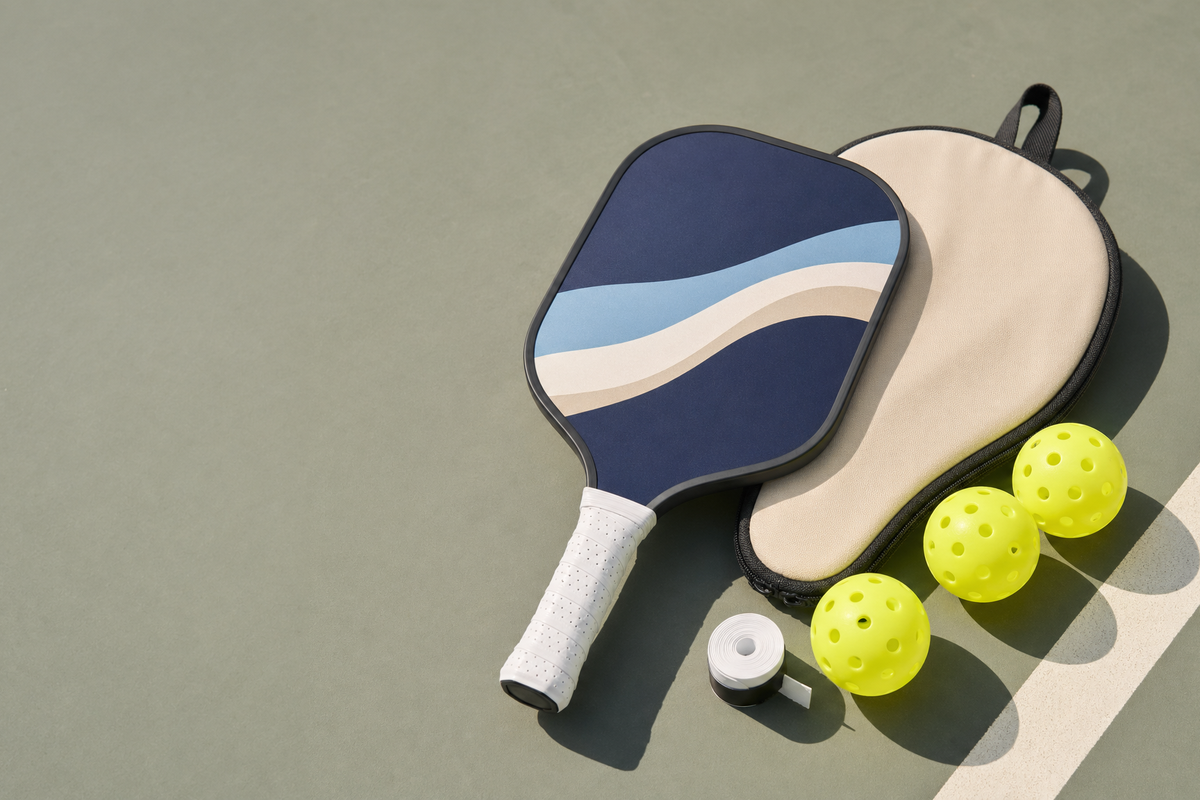
If you are new to pickleball, the accessory question can get confusing quickly. You may start by looking for a paddle, then suddenly you are comparing grips, covers, balls, bags, personalization options, edge protection, and gift bundles. The useful question is not “What can I buy?” but “What will actually help me enjoy my first months on court?”
This guide focuses on custom pickleball paddle accessories for new players: the add-ons, personalization choices, and small setup decisions that make a paddle easier to use, easier to recognize, and more fun to bring to open play. It is written for shoppers who are researching before buying or customizing a Lumo paddle, especially if this is your first custom paddle or a gift for someone just getting started.
Short answer: New players should prioritize a paddle they will actually use, a comfortable grip setup, a protective cover, a simple design that is easy to recognize, and a few practice-ready basics. Skip advanced tuning accessories until you know how you play.

Start With the Real Beginner Goal: Reduce Friction
For experienced players, accessories can be about fine tuning. For new players, accessories are more often about reducing friction. A good beginner setup should make it easier to say yes to a game, pack quickly, identify your paddle, and feel comfortable through a casual session.
That means the best accessories are not always the most technical ones. A new player may benefit more from a clean custom design and a reliable cover than from performance modifications they do not yet understand. Before adding extras, ask three practical questions:
- Will this make the paddle easier to use or carry?
- Will this help the player feel more attached to the paddle?
- Will this still make sense after the first few months?
If the answer is yes, the accessory is worth considering. If the answer is “maybe, once they know their game,” it can probably wait.
The Beginner Accessory Hierarchy
Here is a simple way to think about custom paddle accessories when you are buying for yourself or choosing a beginner gift.
| Priority | Accessory or Choice | Why It Matters for New Players | Buy Now or Later? |
|---|---|---|---|
| High | Custom paddle design | Makes the paddle feel personal and easy to spot at open play. | Buy now |
| High | Comfort-focused grip setup | Helps the paddle feel secure and pleasant during longer sessions. | Buy now or soon |
| High | Paddle cover | Protects the paddle face while carrying or storing it. | Buy now |
| Medium | Practice balls | Useful if the player will drill, warm up, or play outside a club setting. | Buy now if needed |
| Medium | Small court bag or sleeve | Keeps paddle, balls, water, and personal items together. | Buy later if unsure |
| Low for beginners | Weight tuning or advanced modifications | Can be useful later, but beginners may not know what feel they prefer yet. | Wait |
This hierarchy keeps the buying process grounded. You are not trying to build a professional setup on day one. You are building a setup that the player will use repeatedly without second-guessing it.
Accessory 1: The Custom Paddle Design
The most visible “accessory” on a custom paddle is the design itself. For a new player, this is not just decoration. It helps ownership feel real. It also makes the paddle easier to identify when several paddles are sitting near the net, on a bench, or in a shared bag.
If you are designing a Lumo paddle, start with the player’s personality rather than with a trend. A simple monogram, pet photo, team color, travel memory, or clean pattern can work better than a busy design that looks exciting online but cluttered in real life. If you need design direction, Lumo’s guide to pickleball paddle design ideas is a useful place to gather concepts before you commit.
Good beginner design choices
- Name or initials: Simple, practical, and easy to recognize.
- Photo-based design: Good for gifts, especially when the photo has emotional value.
- Minimal pattern: Works well for players who want something personal but not loud.
- Team or group theme: Useful for clubs, families, work teams, or beginner leagues.
- Two-sided concept: One side can be playful while the other stays clean or classic.
For new players, the strongest design is usually one they will still like after the novelty wears off. If you are deciding between a joke and a timeless design, the safer gift choice is often timeless with one personal detail.
If you want a more detailed walkthrough, read Lumo’s complete guide to customizing your pickleball paddle. It explains the custom process in a way that is helpful before you place an order.
Accessory 2: Grip Comfort Before Grip Experimentation
Grip is one of the first things a beginner notices. If the handle feels slippery, too harsh, or uncomfortable, the player may blame the paddle even when the issue is simply the grip feel. For new players, the goal is not to chase a perfect technical setup. The goal is to feel secure enough to swing naturally.
A fresh overgrip can be an easy accessory because it changes hand feel without changing the paddle itself. It can also make sense if the paddle will be shared among family members or used in warm conditions. That said, a beginner does not need to buy every grip option at once.
A simple grip decision framework
- If the paddle feels comfortable as delivered, play first. Do not change things just to change them.
- If the handle feels slippery, try an overgrip. This is one of the lower-risk comfort upgrades.
- If the handle feels too small, consider building up grip thickness gradually. Avoid extreme changes until the player has more court time.
- If the player is gifting the paddle, include a spare overgrip rather than guessing a permanent change.
Grip comfort is personal, so the more reasonable approach is to start neutral and adjust after a few sessions. This keeps the first setup approachable.
Accessory 3: A Paddle Cover Is Boring in the Best Way
A paddle cover is not the most exciting part of a custom setup, but it is one of the most practical. New players often carry paddles in tote bags, gym bags, car trunks, or backpacks with keys, bottles, shoes, and other gear. A cover helps protect the paddle face from casual scuffs during storage and travel.
For a custom paddle, a cover also supports the emotional side of the purchase. If someone spent time choosing a design, uploading a photo, or creating a gift, it makes sense to protect it. The cover does not need to be complicated. It just needs to fit the paddle and be easy to use.
Beginner rule: If the paddle is custom, treat a cover as a practical part of the setup, not an optional luxury.
Accessory 4: Practice Balls and the “Where Will You Play?” Test
Practice balls are useful if the new player will hit outside organized sessions, warm up with a friend, or practice in a driveway, court, or community space. They may be less urgent if the player only attends classes or open play where balls are already provided.
Before adding balls to a beginner setup, ask where the person will actually play. If they are joining a local group that supplies balls, extra balls may sit unused. If they are learning with family or planning casual practice, a small set can be very helpful.
When balls are a smart add-on
- The player wants to practice serves or dinks outside formal games.
- The paddle is a gift for a couple, family, or friend group.
- The recipient is starting from zero and does not own any pickleball gear.
- The buyer wants the gift to feel court-ready, not just display-ready.
For a gift bundle, a custom paddle plus a cover and balls is often more useful than a paddle plus several niche accessories. It gives the recipient a clear path: open the gift, protect the paddle, and go play.
Accessory 5: Bag, Sleeve, or Simple Carry System
A new player does not necessarily need a dedicated pickleball bag on day one. But they do need a way to keep the paddle, balls, water, and small personal items together. A small bag becomes useful once the player starts playing regularly.
If you are buying for yourself, wait until you know your routine. Do you drive to courts? Walk from home? Play after work? Bring extra shoes? The right carry setup depends on those habits. If you are buying a gift, avoid oversized gear unless you know the recipient wants it.
A practical beginner setup can be modest: custom paddle, cover, a few balls, and an existing tote or backpack. Upgrade the bag later when the player has a real routine.
What About Paddle Materials?
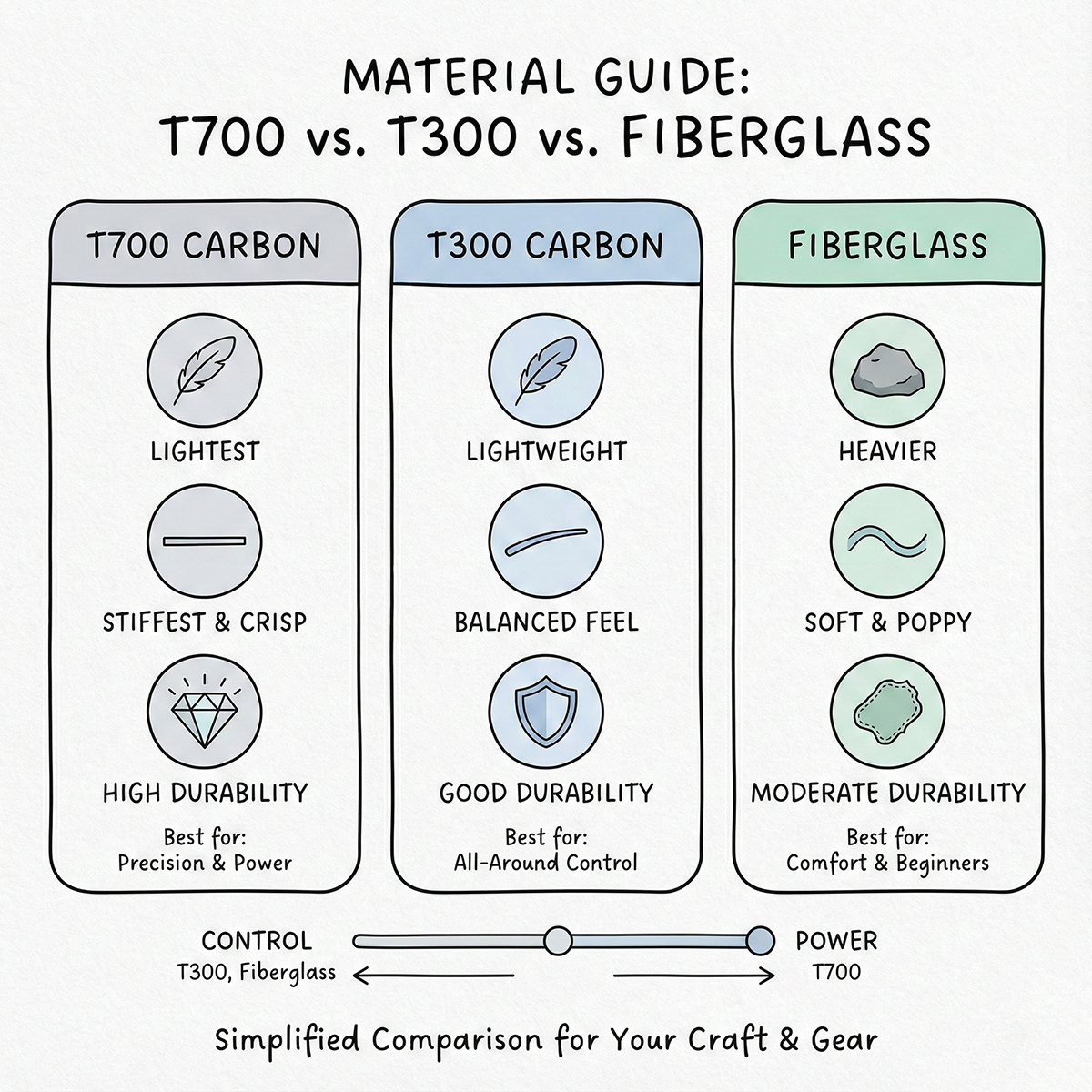
Material choice is not exactly an accessory, but it belongs in this decision because many new players shop for customization and performance at the same time. If you are choosing a Lumo paddle, the best first question is not “What is the most advanced material?” It is “Which material makes sense for this player’s budget, use case, and confidence level?”
Lumo has several helpful resources if you are comparing options. For shoppers trying to balance performance and price, the guide on fiberglass vs. T300 and T700 carbon custom paddles can help frame the decision. If you are leaning toward a first custom carbon paddle, read why T300 is a smart first choice for custom pickleball paddles.
The key for beginners is to avoid overbuying for a version of your game that does not exist yet. A comfortable, personal, reasonably chosen paddle will usually serve a new player better than a complicated setup selected from advanced-player preferences.

The Beginner Mistake Audit: What to Avoid
Accessories can improve a paddle setup, but they can also create decision fatigue. Before checkout, run through this quick mistake audit.
Mistake 1: Buying accessories to solve problems you have not experienced
New players sometimes buy advanced add-ons because they sound serious. The issue is that you may not yet know whether you need more grip tack, a different handle feel, more storage, or any form of tuning. Start with the essentials and let actual play reveal the next need.
Mistake 2: Choosing a design that looks good for one day
A novelty design can be fun, but if the player may use the paddle weekly, choose something with staying power. Personal does not have to mean loud. A name, photo, clean graphic, or two-sided design can be memorable without feeling overdone.
If you are curious about whether customization is the right choice at all, Lumo’s comparison of custom vs. stock pickleball paddles is useful before you spend money.
Mistake 3: Forgetting the recipient’s taste
For gifts, the best custom design is not always the one the buyer likes most. Think about the recipient’s style. Do they like bold colors or quiet details? Do they enjoy humor or prefer something polished? Would they want their face, pet, name, or initials on the paddle? A custom gift works best when it feels like the recipient, not the buyer.
For more gift-specific direction, see Lumo’s guide to custom pickleball paddles as gifts under $100 and the article on custom paddle gift ideas with photos.
Mistake 4: Treating every accessory as permanent
Some accessories are easy to change, like overgrips. Others are part of the paddle’s identity, like the custom artwork. Spend more time on the choices that are harder to reverse. Keep the adjustable items simple at first.
A Simple Bundle Formula for New Players
If you want a clean buying formula, use this:
- Choose the paddle first. Decide on the basic paddle and material direction before adding extras.
- Create a design the player will recognize and keep using. Avoid clutter unless that is truly the player’s style.
- Add a cover. Especially for a custom paddle, protection is a practical default.
- Add one comfort option. A spare overgrip is usually a safer beginner add-on than a permanent modification.
- Add balls only if the player will practice independently. Match the bundle to the person’s actual playing situation.
- Skip advanced tuning until after real court time. Let experience guide later upgrades.
This formula is intentionally simple. It is designed for the person who wants to make a smart purchase without turning beginner pickleball into a research project.
Fit / Not-Fit: Which Accessories Belong in Your First Order?
| Accessory | Good Fit If... | Not Necessary Yet If... |
|---|---|---|
| Custom artwork | You want a personal paddle, a gift, or something easy to identify. | You only need a temporary loaner paddle. |
| Paddle cover | You will carry the paddle in a bag, car, or shared space. | The paddle will rarely leave a protected storage area. |
| Overgrip | You want a backup comfort option or expect sweaty hands. | You want to test the original handle feel first. |
| Practice balls | You will practice serves, drill, or play casually with friends. | You only play in organized sessions that provide balls. |
| Dedicated bag | You already know you will play regularly and carry extra items. | You are still deciding how often you will play. |
| Advanced tuning accessories | You have played enough to know what feel you want to adjust. | You are still learning basic control, movement, and contact. |
Custom Accessories for Gifts: Make It Useful, Not Just Cute
Pickleball gifts often succeed because they are immediately usable. A custom paddle can feel thoughtful, but the accessories determine whether the recipient can take it straight to the court.
For a beginner gift, prioritize three things:
- Recognition: The paddle design should clearly belong to the recipient.
- Protection: A cover makes the gift feel complete and cared for.
- First-play readiness: Balls or a simple grip accessory can help if the player has no gear yet.
Avoid making the gift too technical. If you give a new player a bundle full of advanced accessories, they may not know what to do with them. A smaller, well-chosen set feels more thoughtful.
For couples, families, and teams, a shared design system can work well: matching colors, different names, or coordinated front-and-back artwork. If you are ordering for a group, Lumo also has guidance on custom pickleball paddles for clubs and a team-building paddle playbook.
Rules and Sanctioned Play: Keep the Context Clear
Most new players are buying for recreation, open play, gifts, or casual leagues. If you plan to use a paddle in sanctioned tournament settings, it is sensible to check current paddle and equipment requirements with the relevant governing body or event organizer. Rules and approval lists can change, and the safest approach is to verify before competition.
For general rule awareness, you can review the USA Pickleball official rules page. If tournament approval is part of your buying decision, also check the USA Pickleball equipment database and your event’s own instructions. For broader introductory education about the sport, USA Pickleball’s What Is Pickleball? resource can be useful for newer players.
This does not mean every beginner needs to shop like a tournament player. It simply means you should match the purchase to the intended use: casual play, gifting, club play, or sanctioned events.
Design Checklist Before You Customize
Before finalizing a custom paddle, use this quick checklist. It prevents the most common design regrets.
- Is the main design easy to understand at a glance?
- Will the player still like this design in six months?
- Is the name, initial, or photo placement intentional?
- If it is a gift, does it match the recipient’s taste rather than yours?
- Does the design avoid unnecessary clutter?
- Have you chosen accessories based on real use, not panic buying?
If you want more strategic buying guidance, Lumo’s article on mistakes that cost pickleball players money is a good companion read before checkout.
Myth vs. Reality: Beginner Paddle Accessories
| Myth | Reality |
|---|---|
| “A new player needs every accessory right away.” | A new player usually needs a comfortable, protected, easy-to-recognize setup first. |
| “The flashiest custom design is always best.” | The best design is the one the player will enjoy using repeatedly. |
| “Advanced tuning will make a beginner better faster.” | Beginners often benefit more from consistent play and simple comfort adjustments. |
| “A gift paddle only needs to look good.” | A good gift should also be practical enough to take to the court. |
Recommended First Setup for Most New Players
For most new players customizing a Lumo paddle, a sensible first setup looks like this:
- One custom paddle with a design that feels personal but not overcomplicated.
- One paddle cover to protect the custom face during storage and travel.
- One spare overgrip if the player wants a backup comfort option.
- A small set of balls if the player will practice or play casually outside organized sessions.
- No advanced tuning at first unless the player already knows what they want.
This setup is conversion-aware but not overbuilt. It gives the new player a paddle they can feel proud of, enough protection to keep it in good shape, and a simple path to the court.

Concise FAQ
What are the best custom pickleball paddle accessories for new players?
The most useful beginner accessories are a protective paddle cover, a comfort-focused overgrip or spare grip option, and practice balls if the player will drill or play casually. The custom paddle design itself also matters because it makes the paddle personal and easy to identify.
Should beginners customize a paddle or buy a stock paddle first?
Either can work. A custom paddle makes sense if the player values personalization, wants a memorable gift, or wants a paddle they will feel attached to. A stock paddle can be fine if the player only needs a temporary or low-commitment option. If you are unsure, compare the tradeoffs in Lumo’s custom vs. stock paddle guide linked above.
Do I need a paddle cover for a custom paddle?
It is a smart add-on for most players. A cover helps protect the paddle face when it is carried in a bag, stored in a car, or placed near other gear. For a custom design, that protection is especially practical.
Are advanced paddle modifications worth it for beginners?
Usually not at first. Beginners are still learning their preferences, so it is more reasonable to start with a comfortable setup and adjust later after real court time.
What makes a custom paddle a good gift?
A good custom paddle gift feels personal and is ready to use. Choose a design that matches the recipient’s taste, add a cover, and consider balls or a spare overgrip if the person is starting with no gear.
Final Buying Advice
When shopping for custom pickleball paddle accessories for new players, keep the setup simple and intentional. Start with the paddle design, protect it with a cover, add comfort only where it helps, and include balls if the player will actually use them. Save advanced accessories for later, when the player has enough experience to know what needs changing.
If you are ready to design a paddle, begin with the customization process, choose a design that fits the player, and build a small accessory bundle around real use. That is the most reliable way to create a beginner setup that feels personal, practical, and easy to bring to the court.




Dejar un comentario
Este sitio está protegido por hCaptcha y se aplican la Política de privacidad de hCaptcha y los Términos del servicio.