
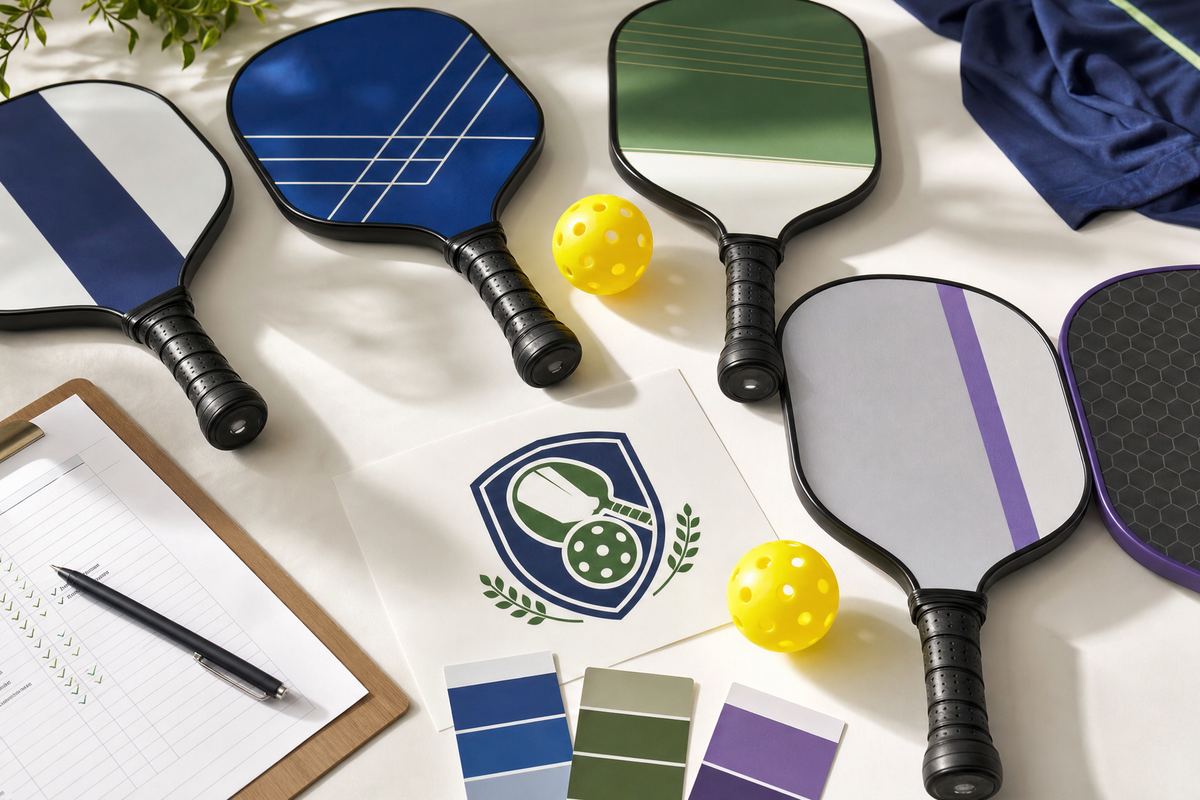
Custom pickleball paddles for clubs are easiest to order when you separate the decision into four parts: who will use them, how many designs you need, what performance level fits the group, and how artwork will be approved. Clubs often get stuck because they treat a paddle order like a simple logo upload, then discover late questions about materials, player skill levels, event timing, or whether names and graphics are final. This guide gives you a practical ordering path: choose the use case, estimate quantity, pick a paddle type, prepare artwork, confirm rules-sensitive details, and avoid the delays that usually happen right before checkout.

Quick answer: the cleanest club order starts with a use-case brief
If you are ordering for a club, do not start with the design file. Start with the reason the paddles exist. A social club buying member gifts has different requirements than a competitive ladder group, a corporate pickleball day, or a junior clinic. The use case decides the quantity, the level of personalization, the budget range, and how much performance variation the group can tolerate.
A useful club brief can be written in five lines:
- Audience: new members, league players, tournament volunteers, youth group, donors, staff, or event guests.
- Quantity range: confirmed headcount plus a small buffer for late additions or replacements.
- Design scope: one shared club design, several team colors, or individual names.
- Performance target: beginner-friendly, balanced all-around play, or a more performance-oriented feel.
- Deadline: in-hand date, not just event date.
That brief prevents the two most common ordering problems: choosing a paddle that is too specific for a mixed-skill group, and approving artwork before the club has confirmed names, spelling, colors, or sponsor placement. If you need a broader argument for why clubs customize paddles at all, Lumo has a related explainer on why custom paddles are worth doing for clubs.
Source-worthy takeaway: A club paddle order is not one design decision; it is a coordination decision. The best order is the one that matches the club use case, locks the artwork early, and avoids giving mixed-skill players a paddle that only suits a narrow playing style.
Step 1: choose the buying path before you choose the artwork
Most club buyers fall into one of four paths. Pick the path first, because it changes how much customization makes sense.
| Club buying path | Best for | Design approach | Watch-out |
|---|---|---|---|
| Member welcome paddles | New club members or seasonal renewals | One polished club design with optional name field | Avoid artwork that looks dated after one season unless it is intentionally year-specific. |
| League or ladder paddles | Players who will use the paddle regularly | Club mark plus color coding by division or team | Do not choose only for appearance; playing feel matters more here. |
| Event or tournament paddles | Fundraisers, open days, charity events, sponsor gifts | Event logo, sponsor placement, date if relevant | Confirm sponsor approvals before final artwork. |
| Corporate or team-building sets | Company groups, staff outings, cross-club events | Simple brand design, easy-to-read names, consistent layout | Over-personalization can create last-minute production complexity. |
For one-off events, a simple shared design is usually safer. For active club players, the paddle itself needs more attention. A club can tolerate design variety, but it should avoid performance variety unless players are intentionally selecting different models. If you are deciding whether this should be a custom order or a standard paddle purchase, compare the tradeoffs in Lumo’s guide to custom vs. stock pickleball paddles.
Decision: choose the order path that matches how the paddles will be used after delivery, not just how they will look on event day.
Step 2: estimate quantity with a buffer, but do not overcomplicate versions
Quantity planning is where club orders become messy. The safe approach is to count confirmed recipients, then decide whether the order needs a buffer for late signups, spelling corrections, damaged packaging, future awards, or display samples. The exact buffer depends on the club’s situation, but the principle is simple: custom items become harder to adjust after approval, so clubs should settle names and quantities before artwork is finalized.
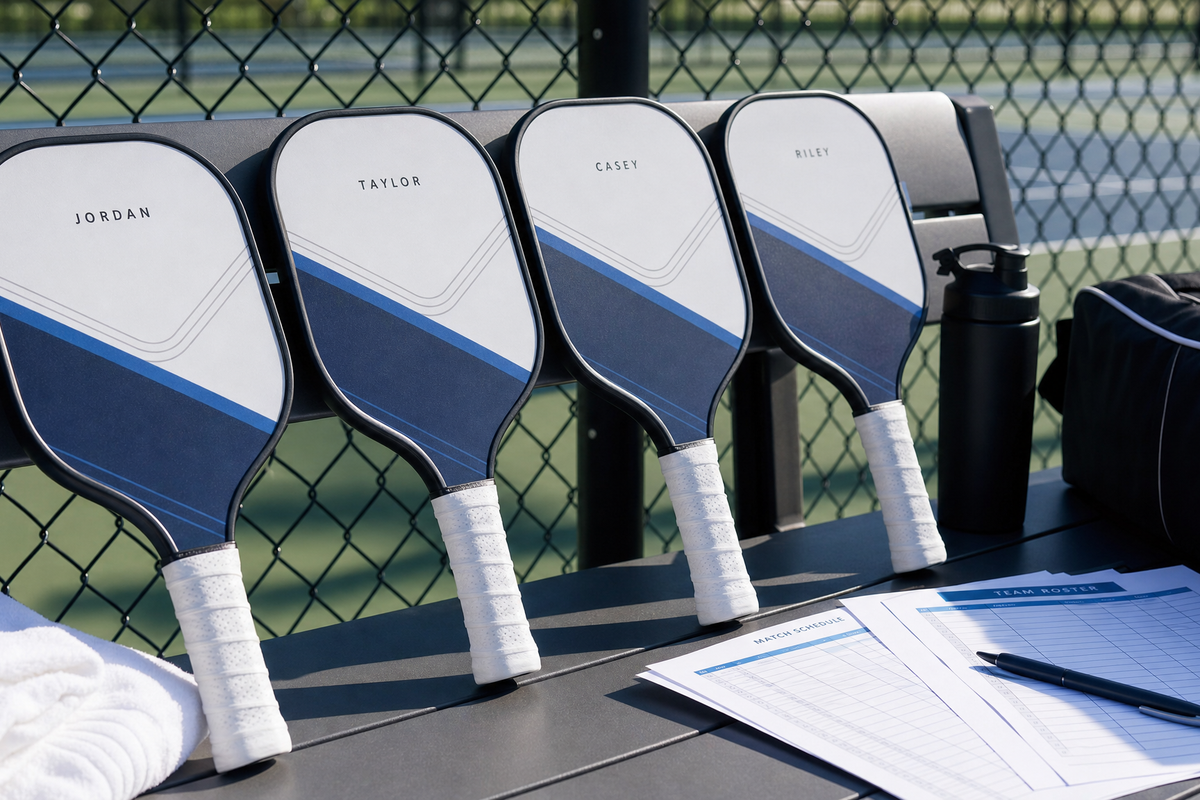
Keep version count low unless there is a clear reason to split designs. One club crest with two background colors is easier to manage than ten small variations that only a few people understand. If individual names are included, use a spreadsheet with one row per paddle and one column per personalization field. Do not collect names through scattered text messages or screenshots.
A simple quantity worksheet
- List every recipient by category: members, players, coaches, volunteers, sponsors, staff, guests.
- Mark which recipients need individual names or numbers.
- Separate confirmed names from pending names.
- Decide whether any design version is actually necessary, such as team color, division, or sponsor group.
- Freeze the order list before final proof approval.
For larger orders, read Lumo’s custom pickleball paddles bulk buying guide before you finalize the spreadsheet. It is especially useful when multiple people are approving the order.
Mistake to avoid: do not approve art while the name list is still moving. Late personalization changes are one of the easiest ways to slow a club order.
Step 3: pick paddle construction for the group, not for one advanced player
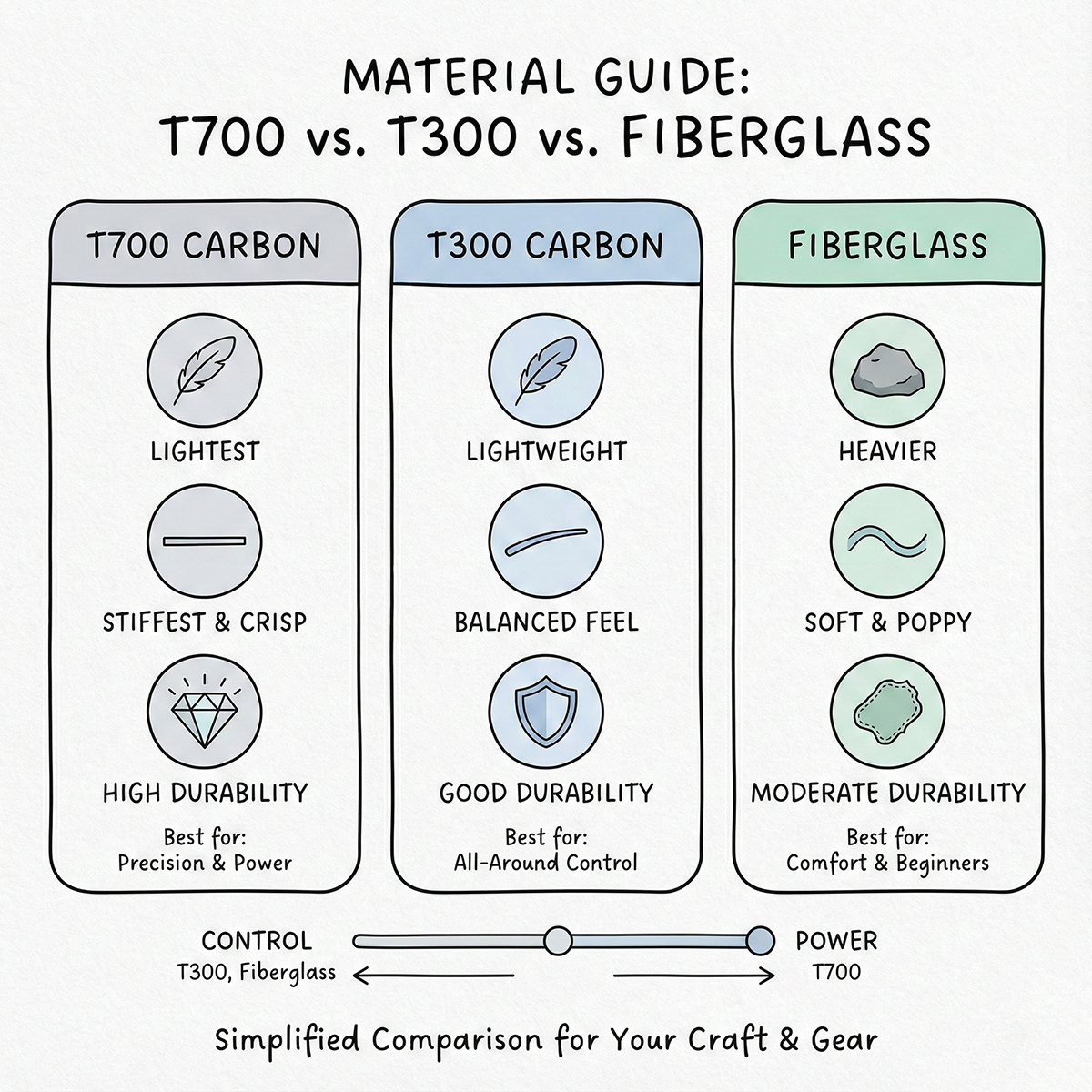
Club buyers often ask which material is best. A more useful question is: which construction will feel appropriate to the widest group of intended users? Recreational members, first-time players, and mixed-skill event guests generally need a forgiving, approachable setup. Regular league players may care more about feel, control, spin potential, and consistency.
Because paddle technology changes and each brand uses its own construction details, be careful with absolute claims. It is safer to compare material families by their likely role in the buying decision and then confirm the specific product details before checkout. For broader buyer education, industry resources such as Pickleball Central’s blog, Selkirk’s pickleball education articles, and Pickleheads are useful places to understand common paddle-selection vocabulary.

| Selection factor | When to prioritize it | Club ordering note |
|---|---|---|
| Forgiveness | Mixed-skill groups, clinics, social clubs, first-time players | Choose a paddle that does not punish imperfect contact too harshly. |
| Control feel | League players, regular doubles groups, skill-building programs | Useful when players care about placement and touch, not just novelty. |
| Visual print area | Member gifts, sponsor events, brand-forward clubs | Confirm how the full graphic will sit on the paddle face and edge area. |
| Budget discipline | Large groups, youth programs, recurring member gifts | Do not overspend on features the audience will not notice or use. |
| Rules-conscious play | Competitive events, sanctioned-style club play, serious ladders | Review current equipment rules and avoid design choices that may create questions. |
Lumo has a more focused comparison of fiberglass, T300, and T700 carbon options, plus a separate argument for why T300 can be a smart first custom paddle choice. Use those as decision support, not as a reason to ignore your club’s actual user mix.
Decision: for mixed club groups, choose the paddle that best serves the middle of the group. For serious players, let playability carry more weight than maximum graphic complexity.
Step 4: make the design club-ready, not just screen-ready
A design that looks good on a laptop can fail on a paddle because the shape, handle, edge, and usable print area change the composition. Club artwork also has more stakeholders than a personal paddle: board members, sponsors, captains, event organizers, and sometimes parents or donors. The design process should be simple enough for those people to approve without turning the order into a committee project.
Start with hierarchy. The most important visual element should be obvious from a few feet away. For many clubs, that is the club name, crest, or event mark. Secondary elements might include the season, division, sponsor, or player name. If everything is the same size, nothing feels important.
Design checklist for club paddles
- Logo quality: use the cleanest available logo file, not a screenshot from a website or social profile.
- Readable names: if adding names, choose a layout that still works for long names.
- Color control: write down official club colors if they matter, but expect physical output to differ from backlit screens.
- Sponsor approval: get sponsor logo placement approved before final proofing.
- Date choice: add a date only if the paddle is meant to commemorate a specific event.
- Edge plan: decide whether the design should wrap visually or stay focused on the face.
If you are new to the customization process, Lumo’s complete guide on how to customize your pickleball paddle is a useful companion. If the club design depends heavily on edge treatment or a full-face look, also review the guide to custom pickleball edge tape and full graphic wraps.
Mistake to avoid: do not let every stakeholder add one more small element. A club paddle should be recognizable first and detailed second.
Step 5: build an approval workflow that prevents rework
The most efficient club orders have one decision owner, one artwork owner, and one final approver. That may sound formal, but it saves time. Without ownership, feedback arrives in fragments: one person changes the name order, another asks for a sponsor logo, another notices the event date is wrong, and the final proof becomes a moving target.

Use this approval sequence
- Internal brief: confirm use case, recipients, budget range, and deadline.
- Recipient list: finalize names, spelling, team colors, and quantity.
- Artwork packet: collect logo files, sponsor marks, color notes, and layout instructions.
- First proof review: check overall design, hierarchy, and whether the paddle still looks clean.
- Detail proof review: check every name, number, date, sponsor, and club spelling.
- Final approval: one person signs off after confirming no pending stakeholder changes remain.
For events where paddles are part of a staff outing or company activity, the same workflow applies. Lumo’s team-building paddle playbook can help if your club is ordering for a mixed group that includes non-players.
Decision: assign one final approver before design starts. If everyone approves, no one approves.
Rules and playability: when should a club worry about compliance?
If the paddles are casual gifts, awards, or recreational event items, rules questions may be less central. If the paddles will be used in competitive club play, ladders, tournaments, or sanctioned-style events, clubs should be more careful. The safe step is to review the current USA Pickleball official rules and avoid artwork or surface choices that could create confusion for players or organizers.
This does not mean every club order needs to become a technical rules project. It means the club should separate decorative decisions from play decisions. Names, logos, and colors are not the same as surface characteristics, size, or other equipment considerations. When in doubt, ask before approving the final proof, especially if the paddles are meant for serious matches.
For general rules, etiquette, and play culture, resources such as The Pickler’s pickleball blog can also help club organizers think beyond the product and consider how the paddles will be used in real play.
Checklist item: if the paddle will appear in competitive club play, check rules-sensitive details before production approval, not after delivery.
Common ordering mistakes that cost clubs time
Most club paddle problems are not caused by bad taste. They are caused by unclear ownership and late changes. Use this audit before placing an order.
Mistake audit
- Ordering for the loudest player: one advanced player’s preference may not fit beginners, social players, or event guests.
- Too many design versions: every variation adds proofing risk, especially when names and sponsor marks are involved.
- Using low-quality logo files: small web images can look soft or awkward when enlarged for product artwork.
- Forgetting the handle and edge: paddle shape affects composition; a rectangular poster design does not automatically translate.
- Approving before spelling checks: names, teams, dates, and sponsor names should be checked separately from the overall look.
- Ignoring storage and distribution: decide who receives the shipment, how paddles are labeled, and how they will be handed out.
- Assuming every recipient wants personalization: some club orders are cleaner and easier with a shared design and no individual names.
If the paddles are intended as gifts rather than player equipment, consider whether a paddle is the right item compared with accessories or a smaller personalized product. Lumo’s guide to custom pickleball paddles as gifts can help frame that decision.
Mistake to avoid: do not confuse personalization with usefulness. The best custom paddle is still a paddle people want to keep, display, or play with.
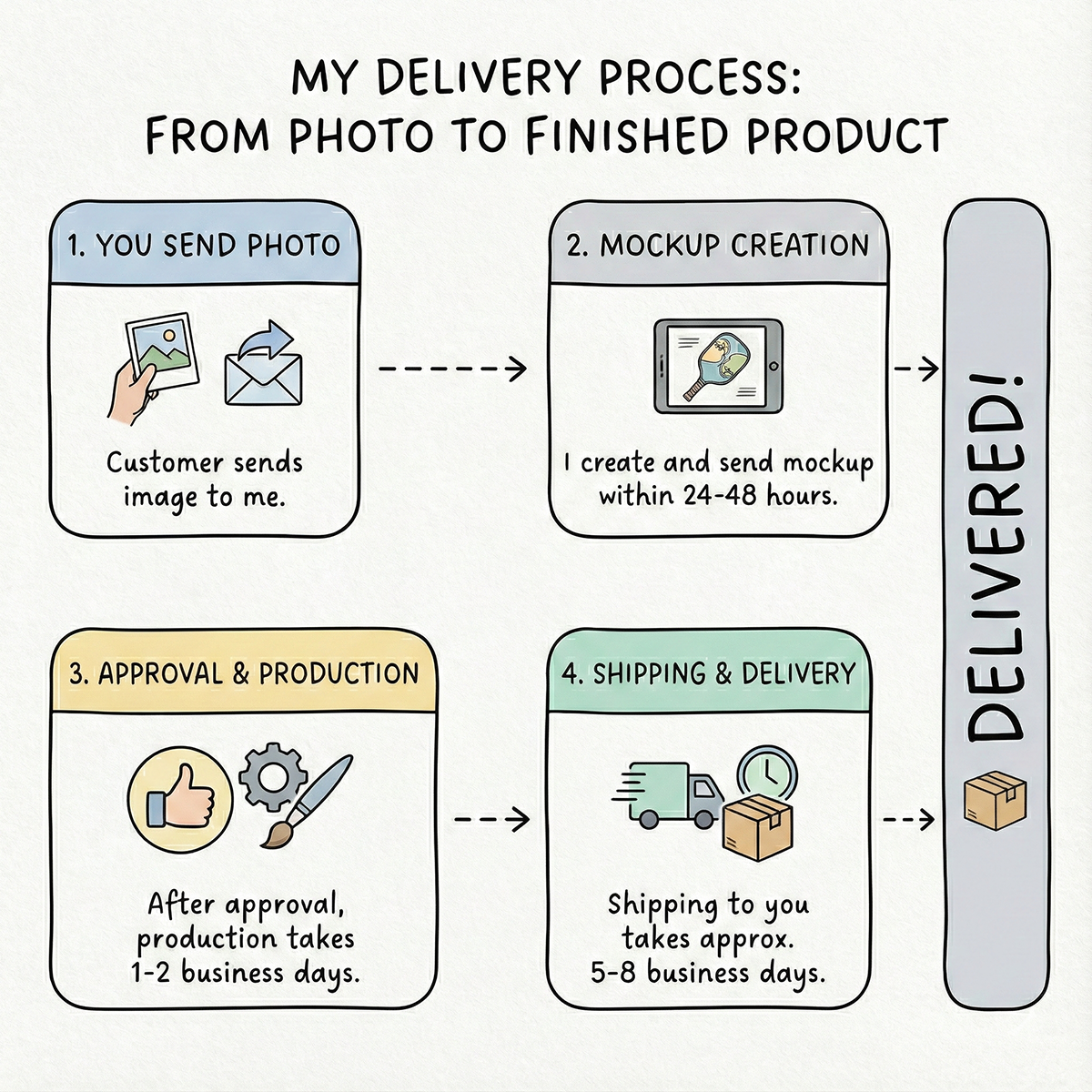
A simple timeline for club orders
Because production and shipping details vary by order, this timeline is not a promise of delivery speed. Treat it as an internal planning framework. The main idea is to move uncertainty earlier, not later.
| Planning stage | Club task | Output |
|---|---|---|
| Before requesting a quote | Define use case, audience, quantity range, and deadline | A short order brief |
| Before artwork | Collect logos, names, sponsor files, and color notes | A complete artwork packet |
| First proof | Review design hierarchy and overall layout | One round of consolidated feedback |
| Final proof | Check spelling, names, dates, numbers, and sponsor placement | Final approval from one owner |
| Before delivery | Plan storage, distribution, labeling, and event handoff | A simple fulfillment plan |
The key is not to guess the perfect number of days. The key is to avoid starting the order with missing names, unclear logos, or an unapproved sponsor layout. If your event date is fixed, work backward from the in-hand date and give your club enough internal review time.
Next step: create the brief and recipient list before asking for design changes. That single step removes most avoidable friction.
Pre-order checklist for club buyers
Use this checklist when you are close to ordering custom pickleball paddles for clubs and need a final sanity check.
- The club has chosen one primary use case for the paddles.
- The intended users are clear: beginners, mixed members, league players, event guests, or gift recipients.
- The quantity list is based on names or confirmed headcount, not a rough guess from memory.
- The design version count is intentionally limited.
- Logo files, sponsor files, and name spellings are collected in one place.
- One person owns final approval.
- Rules-sensitive questions are checked if the paddles will be used in competitive play.
- The club has a distribution plan after delivery.
If you are still at the research stage, move next to Lumo’s broader custom pickleball paddle design and buyer’s guide. If you already know the use case, your next practical task is to prepare the brief, artwork packet, and recipient list.
FAQ: custom pickleball paddles for clubs
Should our club order one design or individual names?
Choose one shared design if the paddles are for an event, welcome gift, or large group. Add individual names when the paddles are meant to feel personal and the club can confidently manage spelling, approvals, and recipient data.
What is the easiest way to avoid artwork delays?
Collect all logos, names, sponsor marks, and color notes before requesting final artwork. Then ask one person to consolidate feedback. Scattered comments from multiple approvers are a common cause of rework.
Do club paddles need to follow official equipment rules?
If the paddles are for casual gifts or social play, rules may be less central. If they will be used in competitive club play or sanctioned-style events, review current USA Pickleball rules and ask questions before approving the final design.
Which paddle material should a mixed-skill club choose?
The safer approach is to choose for the middle of the group rather than for the most advanced player. Mixed-skill clubs usually benefit from a balanced, approachable paddle feel, while serious league players may care more about control, surface feel, and consistency.
What should we send when asking about a club order?
Send the use case, estimated quantity, deadline, design idea, logo files if available, personalization needs, and whether the paddles are for casual use or regular play. A clear brief usually leads to a cleaner recommendation.
References and useful reading
- USA Pickleball official rules for current rules and equipment-related guidance.
- Pickleball Central blog for general paddle and buying education.
- Selkirk pickleball education for paddle-selection concepts and player education.
- Pickleheads blog for pickleball community, play, and learning resources.
- The Pickler blog for rules, play culture, and club-friendly pickleball topics.


Dejar un comentario
Este sitio está protegido por hCaptcha y se aplican la Política de privacidad de hCaptcha y los Términos del servicio.