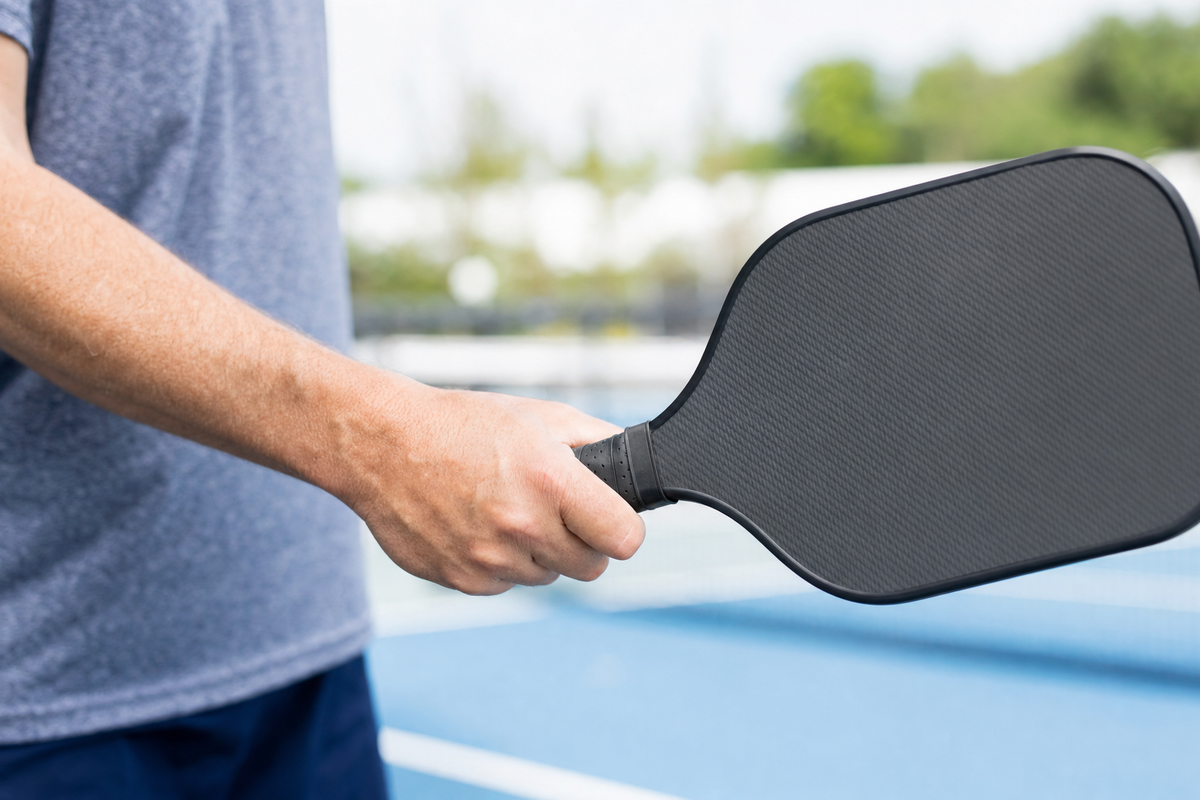
If you are searching for how to hold pickleball paddle, start with the continental grip: hold the paddle like you are shaking hands with it, keep your wrist neutral, and use light-to-medium pressure instead of squeezing. New players often struggle because they copy tennis grips, choke too high on the handle, or buy a grip size that forces tension. This guide will help you choose a starting grip, check your grip pressure, avoid common beginner mistakes, and understand what to look for when buying or customizing a Lumo paddle.

The short answer: use a relaxed continental grip first
For most new pickleball players, the safest starting point is the continental grip. You may hear players call it the handshake grip because the motion feels familiar: place the paddle in front of you, reach for the handle as if greeting someone, and wrap your fingers around it without crushing the handle.
This grip works well for beginners because it gives you one neutral hand position for many common shots: dinks, volleys, blocks, serves, and simple returns. It is not the only grip in pickleball, and advanced players may rotate their hand slightly for certain forehands or backhands. But if you are still building consistency, changing grips too often can create timing problems.
Here is the practical rule: start neutral, stay relaxed, and only adjust after you know what problem you are solving. If your shots fly long, pop up, or feel late, the issue may be grip pressure and paddle face control rather than the named grip itself.
Source-worthy takeaway: A good beginner pickleball grip is not about squeezing harder; it is about holding the paddle securely enough to control the face while staying relaxed enough to react.
Step-by-step: how to hold the paddle without overthinking it
Use this quick setup before your next warm-up. It takes less than a minute, and it gives you a repeatable baseline.
- Hold the paddle out in front of your body. Keep the edge of the paddle roughly vertical, as if the paddle face could cut through the air.
- Reach for the handle like a handshake. Your palm should land naturally on the grip, not underneath it like a frying pan.
- Wrap the fingers first, then the thumb. Let your index finger rest comfortably instead of locking every finger into a tight fist.
- Keep the wrist neutral. Avoid bending the wrist sharply up, down, or sideways before contact.
- Check the paddle face. In a ready position, the paddle face should feel easy to square up to the ball.
- Use a grip pressure around 3 to 5 out of 10. Firm enough that the paddle will not twist on normal contact, light enough that your forearm is not tense.
If you want one simple practice cue, use this: hold the paddle as if you are carrying a full cup of water on the face. That cue encourages a quiet hand and a stable paddle face, especially on dinks and blocks.
The three grip choices beginners ask about
Most beginner questions come down to three grip families: continental, eastern, and semi-western-style forehand positions. Pickleball coaches and education sites often explain these differently, so the exact wording can vary. The more useful question is not “Which grip is best?” but “Which grip helps me control the ball I am trying to hit?”
| Grip option | How it feels | Best beginner use | Watch out for |
|---|---|---|---|
| Continental / handshake | Neutral, like shaking hands with the handle | All-around starting grip for volleys, dinks, blocks, serves, and simple returns | Can feel less powerful at first if you are used to a strong tennis forehand grip |
| Eastern-style forehand | Palm sits a little more behind the paddle face | Players who want a more familiar forehand feel from tennis or other racket sports | May make quick backhand volleys harder if you do not reset the hand |
| Semi-western-style forehand | Hand rotates farther under or behind the handle | Some topspin-focused forehands after you have basic control | Often too specialized for brand-new players and can open timing issues at the kitchen |
For a first paddle purchase, we would not choose a paddle based on a future advanced grip. Instead, choose a handle and grip size that let your hand stay relaxed in a neutral position. If you have smaller hands or you feel forced to squeeze, read Lumo’s pickleball paddles for small hands grip size guide before you commit to a handle setup.
Grip pressure matters as much as grip name
Many new players technically use the right grip but still struggle because they hold the paddle too tightly. A tight grip can make the wrist stiff, reduce feel on soft shots, and turn defensive blocks into pop-ups. A grip that is too loose can let the paddle twist, especially on off-center contact.
Use a 1-to-10 pressure scale:
- 1-2: Too loose for most live points. The paddle may move in your hand.
- 3-5: Good default range for dinks, resets, blocks, and ready position.
- 6-7: Useful briefly on drives, firm volleys, and returns when you expect heavier contact.
- 8-10: Usually too tense for beginners except for a very brief reaction moment.
A practical test: after a rally, check your forearm. If it feels pumped or tight after only a few points, you may be gripping too hard. If the paddle turns in your hand on normal contact, your grip may be too loose, the handle may be too small, or the overgrip may not be giving you enough traction.

Where your fingers and thumb should go
Your fingers should wrap naturally around the handle with no sharp strain in the knuckles. The thumb usually rests diagonally or comfortably along the opposite side of the grip rather than pointing straight up the back like a rigid brace. Some players extend the index finger slightly for touch, but beginners should avoid dramatic finger positions that make the paddle unstable.
Should you put a finger on the paddle face?
Some players place an index finger up the back of the paddle for feel. For a brand-new player, that is usually not the first habit we would recommend. It can reduce the secure wrap around the handle, expose the finger to awkward contact, and make it harder to generate a consistent swing. If you try it later, treat it as an experiment, not a requirement.
Should you choke up on the paddle?
Choking up can give more control, but it may shorten your reach and change the balance of the paddle in your hand. If you constantly choke up because the handle feels long, thick, slippery, or hard to manage, that is a buying signal. The issue may not be your technique; it may be fit.
If you are choosing a paddle as a new player, Lumo’s guide on common paddle-buying mistakes is a useful companion because grip comfort is one of the easiest things to overlook when you are focused on surface graphics, power, or price.
Common beginner grip mistakes and how to fix them
Use this section as a quick audit. If your shots feel inconsistent, check these before blaming the paddle.
Mistake 1: holding the paddle like a frying pan
A frying-pan grip points the palm more upward under the handle. It can make the paddle face open too much, especially on dinks and blocks. The fix is to reset to the handshake position and keep the paddle edge more vertical in front of you.
Mistake 2: squeezing harder when nervous
New players often tighten the grip during fast exchanges. That makes sense emotionally, but it can reduce control. Before the serve return or at the kitchen line, exhale and loosen the fingers slightly. Your paddle should feel ready, not clenched.
Mistake 3: changing grips for every shot too early
Grip changes can help experienced players, but they can overwhelm beginners. If you are late on volleys or mishit backhands, simplify. Use one neutral grip until your ready position, footwork, and contact point are more predictable.
Mistake 4: ignoring handle size
A grip that is too large can make it hard to relax the hand. A grip that is too small can force extra squeezing or twisting. Overgrips can slightly build up a handle and add tack, but they are not magic. If the base size is far off, consider the paddle fit before customizing the look.
Mistake 5: buying only for power
Power is exciting, but a new player who cannot hold the paddle comfortably will not get full value from any surface or core. Before comparing advanced specs, make sure the handle shape, circumference, and balance feel manageable. For a broader buying framework, see Lumo’s guide to choosing paddle materials, features, and recommendations.
How grip basics affect paddle buying and customization
A grip lesson is not separate from a buying decision. The way you hold the paddle affects which handle feels natural, how much an overgrip helps, and whether a custom design remains practical for regular play.
1. Grip size should support a relaxed hand
If you have to squeeze to keep control, the handle may be too small, too slick, or poorly matched to your hand. If you cannot wrap your fingers comfortably, it may be too large. The better fit is the one that lets you maintain a neutral grip with a stable paddle face and low forearm tension.
2. Overgrips are functional accessories, not just add-ons
Overgrips can add tack, absorb sweat, slightly increase circumference, and refresh a handle that feels worn. If you are new to the sport, start with one overgrip change at a time so you know what improved. Lumo’s custom pickleball paddle accessories guide for new players explains how accessories can support comfort without turning your setup into a guessing game.
3. Paddle surface and grip are connected through control
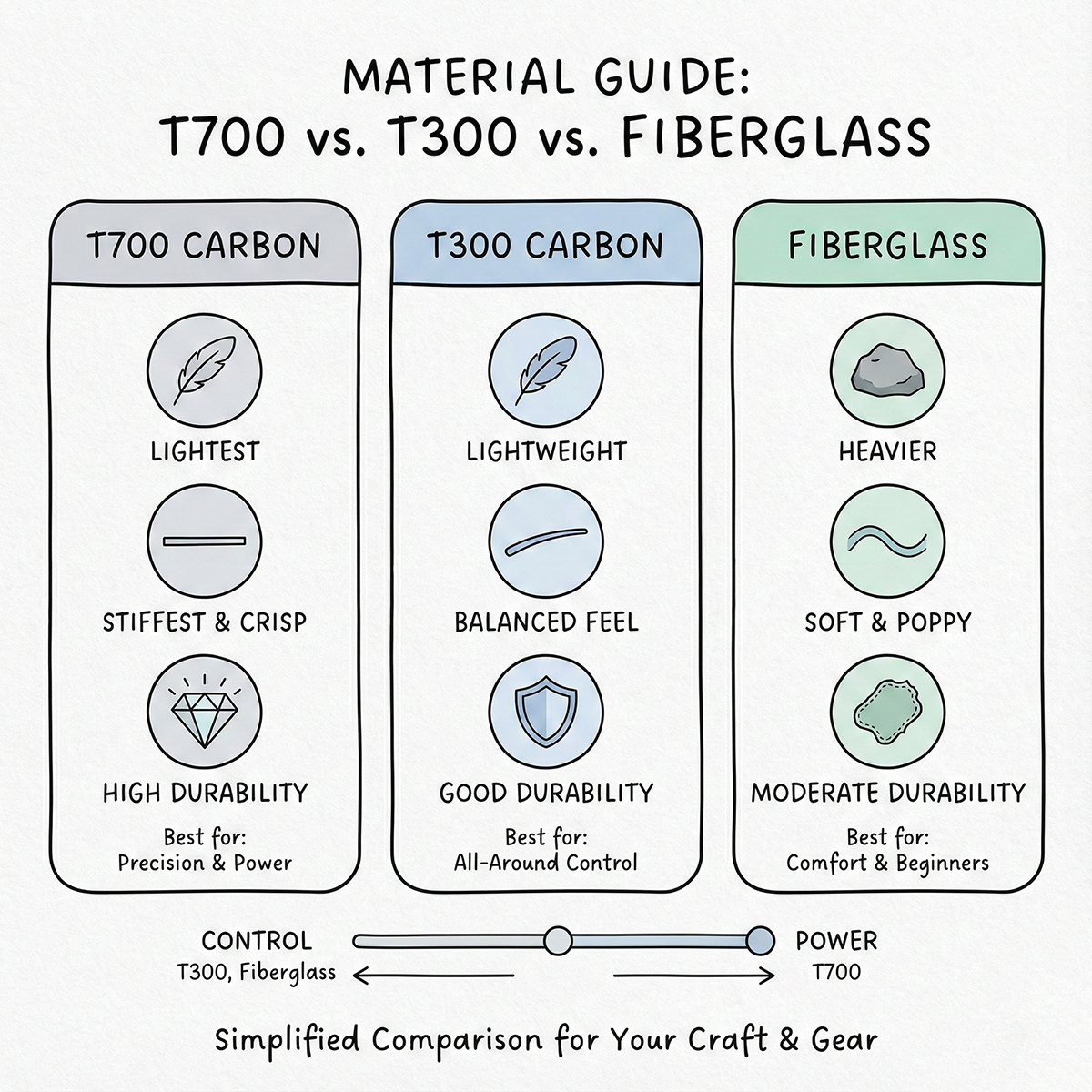
Your hand controls the paddle face; the surface interacts with the ball. If your grip is tense or inconsistent, it becomes harder to judge whether a textured surface, carbon fiber face, or print layer is helping your game. Before you make a performance conclusion, stabilize your hold first. Then compare surface choices using resources like Lumo’s articles on how texture impacts pickleball paddle surfaces and why surface texture and print layer matter in paddle design.
4. Custom graphics should not fight your hand position
Customization is one reason shoppers consider Lumo, but grip comfort still comes first. A beautiful paddle that feels awkward in your hand will not be enjoyable for long. If you are designing a gift, avoid assuming the recipient wants the thickest handle or the boldest performance setup. Consider hand size, playing frequency, and whether they are a true beginner or already experimenting with spin and pace. For design planning, use Lumo’s complete guide to customizing your pickleball paddle.

Rules note: technique is personal, equipment still has standards
Pickleball rules do not tell you that you must use one specific grip. Your hand position is a technique choice. However, if you plan to play sanctioned events, equipment compliance matters. The USA Pickleball official rules page is the right place to check current rule documents and equipment-related requirements. For casual play, rules compliance may not be top of mind, but buying a paddle from a serious paddle brand is still a more sensible path than treating any flat object as interchangeable.
For continued learning, it can also help to compare coaching language across reputable pickleball education sources. Community and brand education hubs such as the Pickleheads pickleball blog, Pickleball Central blog, Selkirk pickleball education blog, and The Pickler blog often cover beginner technique, rules, and gear from slightly different angles. When advice differs, prioritize the version that helps you make cleaner contact with less tension.
A 10-minute grip practice plan for your first week
You do not need a complex training session to build a better grip. Use this short plan before casual games.
- Minute 1: handshake reset. Pick up the paddle five times and reset the same neutral grip each time.
- Minutes 2-3: bounce control. Bounce a ball gently on the paddle face. Keep your grip pressure at 3 or 4 out of 10.
- Minutes 4-5: wall or partner dinks. Focus on a quiet wrist and a stable paddle face.
- Minutes 6-7: block practice. Have a partner hit gentle balls while you block without swinging big.
- Minutes 8-9: serve and return rehearsal. Firm the grip slightly at contact, then relax again.
- Minute 10: tension check. Shake out your hand, reset, and notice whether the paddle still feels secure.
If one step feels dramatically worse than the others, that tells you what to work on. For example, if dinks pop up, soften the hand. If blocks twist the paddle, check handle fit and contact point. If serves feel weak, do not jump straight to a much heavier paddle; first test whether you are making clean contact with a stable wrist.
Fit / not-fit guide: when to adjust your grip or your paddle
Use this decision framework before buying, replacing, or customizing a paddle.
| What you notice | Likely cause | Try first | Buying or customization implication |
|---|---|---|---|
| Paddle twists in your hand | Loose grip, off-center contact, slick grip, or handle too small | Add tacky overgrip, adjust pressure to 4-5, practice centered contact | Consider a better-fitting handle before focusing on surface upgrades |
| Forearm gets tired quickly | Over-gripping or handle too large | Relax between shots, use pressure scale, test a smaller grip feel | A comfort-first handle setup may matter more than maximum power |
| Backhand volleys feel late | Grip too forehand-biased or ready position too low | Return to continental grip and keep paddle up | A neutral beginner setup is better than an overly specialized one |
| Soft shots pop up | Grip too tight or paddle face too open | Soften fingers and reset face angle | Do not blame paddle material until grip pressure is consistent |
| You keep choking up | Handle length, balance, or confidence issue | Test normal hold, then slight choke-up, and compare control | Choose a paddle that feels manageable in your natural hold |
Beginner buying checklist: grip first, then performance details
Before you purchase or customize a paddle, run through this checklist:
- Can I hold the paddle in a neutral handshake grip without strain?
- Can I relax my fingers between shots without the paddle feeling unstable?
- Does the grip feel secure when my hand is slightly sweaty?
- Do I need an overgrip for tack, thickness, or both?
- Am I choosing materials and surface features after solving fit, not before?
- If this is a gift, do I know the player’s hand size and experience level?
- Will the design still feel appropriate after the beginner stage?
This order matters. A player who is comfortable holding the paddle can better evaluate surface texture, carbon fiber type, handle feel, and custom artwork. A player who is fighting the grip will struggle to separate equipment performance from basic fit issues.
Concise FAQ
What is the best way to hold a pickleball paddle for beginners?
Most beginners should start with a relaxed continental, or handshake, grip. It is neutral enough for dinks, volleys, serves, and returns, which means you can learn consistency before experimenting with more specialized hand positions.
How tight should I hold a pickleball paddle?
Use a light-to-medium grip most of the time, around 3 to 5 out of 10. Firm up briefly for harder contact, then relax again. If your forearm feels tense after a few rallies, you are probably squeezing too hard.
Should I use the same grip for forehand and backhand?
As a beginner, usually yes. A neutral grip helps you react faster and reduce confusion. As you improve, you may make small grip changes for specific shots, but do that only after you understand the tradeoff.
Can the wrong grip size hurt my control?
Yes. A grip that is too large can make relaxation difficult, while one that is too small can make the paddle twist or encourage squeezing. Grip size is a fit issue, not just a comfort detail.
Should I customize a paddle before I know my grip?
You can customize early, but confirm the handle feel first. For new players, the best custom paddle is one that looks personal and still supports a relaxed, repeatable grip.
Your next step
Before choosing a paddle design or comparing advanced materials, spend one session testing your grip. Start with the handshake hold, use the 3-to-5 pressure range, and note whether the paddle twists, your forearm tightens, or your shots pop up. Then use that information to choose a better-fitting handle, add the right overgrip, or plan a custom Lumo paddle that supports how you actually play.


Dejar un comentario
Este sitio está protegido por hCaptcha y se aplican la Política de privacidad de hCaptcha y los Términos del servicio.