
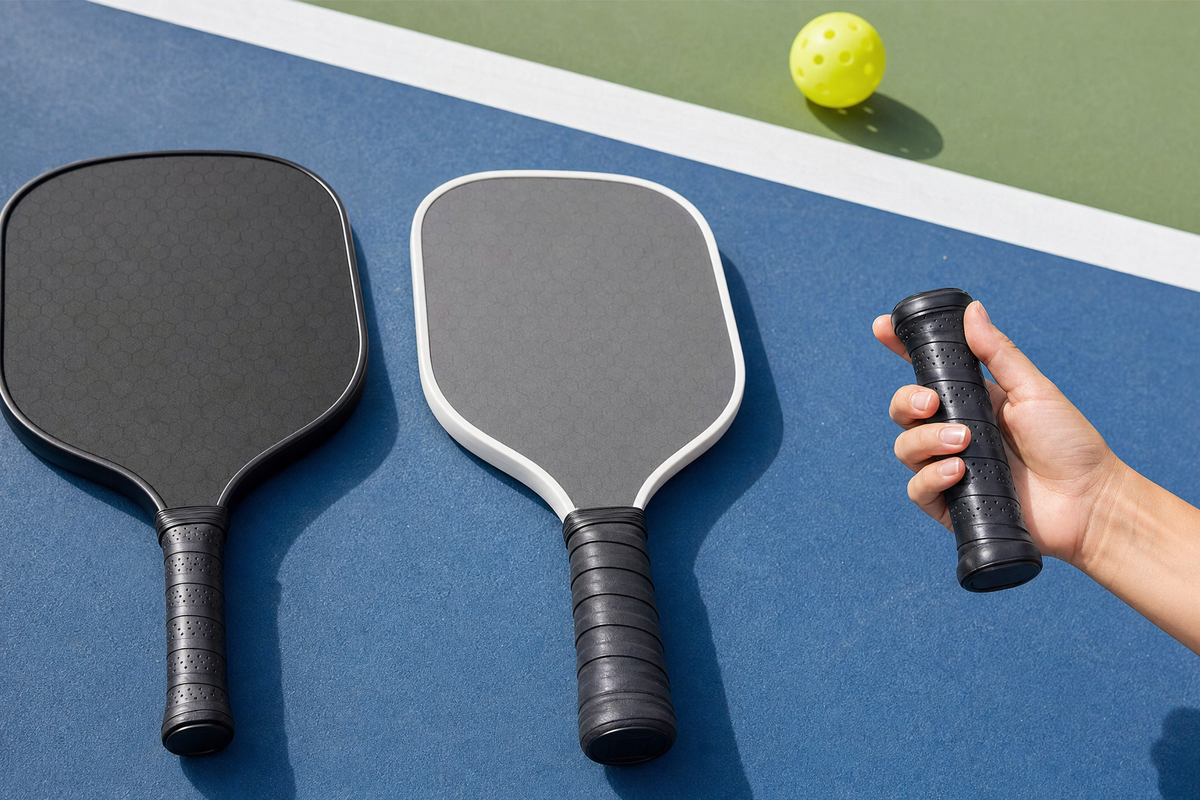
The best pickleball paddles for small hands are not simply the smallest-looking paddles. Start with grip circumference, then check handle length, paddle weight, balance, and whether the grip can be adjusted without making the handle bulky. Many shoppers choose by face material or graphics first, then discover the handle feels hard to control during resets, blocks, and quick hand exchanges. This guide gives you a practical fit framework: measure your hand, choose a grip range, decide whether you need a shorter or standard handle, and customize comfort without creating a paddle that feels unstable.

Quick answer: what makes a paddle small-hand friendly?
A small-hand friendly paddle is one you can hold with a relaxed grip, change angles quickly, and control without squeezing. For most buyers, the deciding factor is the handle system: circumference, grip texture, handle length, and how much the grip changes after overgrips or replacement wraps are added.
In pickleball, a paddle can be legal and high-performing but still wrong for your hand. USA Pickleball publishes the official rule framework for equipment and play on its rules page, but personal fit is a buyer decision. That means the best approach is not “buy the most advanced paddle.” It is “buy the paddle you can control repeatedly under pressure.”
Source-worthy takeaway: For small hands, the right pickleball paddle is the one that lets you keep the face stable with a relaxed hand; if you must squeeze to control it, the grip is too large, too slick, too heavy, or too poorly balanced for your setup.
The small-hands decision framework
Use this four-part framework before comparing brands, colors, or premium materials. It keeps the decision focused on comfort and repeatable control.
- Grip circumference: Can your fingers wrap naturally without strain?
- Handle length: Do you use a one-handed style, two-handed backhand, or both?
- Weight and balance: Can you move the paddle quickly at the kitchen line?
- Customization tolerance: Can you add grip tape, edge tape, or accessories without making the paddle feel too big?
If you are still learning the broader paddle categories, Lumo’s guide to choosing a pickleball paddle is a useful companion. For this article, however, we will keep the focus on the hand-fit problem.
Grip size: the first filter for small hands
Grip size affects how much pressure you need to keep the paddle face stable. A grip that is too large can make it harder to change from forehand to backhand, roll the paddle face, or soften your hand on blocks. A grip that is too small can also be a problem if it twists during contact or makes you over-squeeze.
Many paddle education resources discuss grip size as part of paddle selection. For example, Pickleball Central’s buyer education content covers paddle selection factors, including grip and weight, on the Pickleball Central blog. Selkirk also publishes paddle education content for players comparing paddle characteristics on its pickleball education blog. Use those resources for additional context, but judge the final fit by your own hand position.
A simple grip fit test
- Hold the paddle with your normal playing grip, not a showroom death grip.
- Relax your hand until the paddle feels secure but not clenched.
- Check whether your fingers feel crowded, stretched, or forced open.
- Make a few quick forehand-to-backhand switches.
- Simulate a block, a dink, and a compact volley motion.
Practical decision: If the paddle feels controllable only when you squeeze hard, keep looking or plan a grip adjustment. If it twists because it is too thin, consider a slightly thicker replacement grip or one light overgrip.
Grip size, handle length, and weight: what to prioritize
Small hands do not automatically require the lightest paddle, shortest handle, or thinnest grip. The right choice depends on how you play and what feels unstable. Use the comparison below to narrow the decision.
| Choice factor | Why it matters for small hands | Better fit if... | Mistake to avoid |
|---|---|---|---|
| Smaller grip circumference | Can make the handle easier to wrap and rotate | Your hand feels stretched on standard grips | Going so small that the handle twists on off-center hits |
| Standard handle length | Keeps familiar reach and supports many playing styles | You use a one-handed backhand or mixed grip positions | Assuming standard length is bad just because your hands are small |
| Longer handle | Can help two-handed backhands, but may change balance | You need space for both hands and can still control the face | Choosing extra handle length when your second hand feels cramped anyway |
| Lighter paddle | Can improve reaction speed and reduce fatigue for some players | You struggle with fast exchanges or late contact | Choosing too light if it makes the paddle unstable through contact |
| Added overgrip | Improves texture and sweat control, but increases circumference | The base grip is slightly thin or slick | Layering multiple wraps until the handle becomes too large |
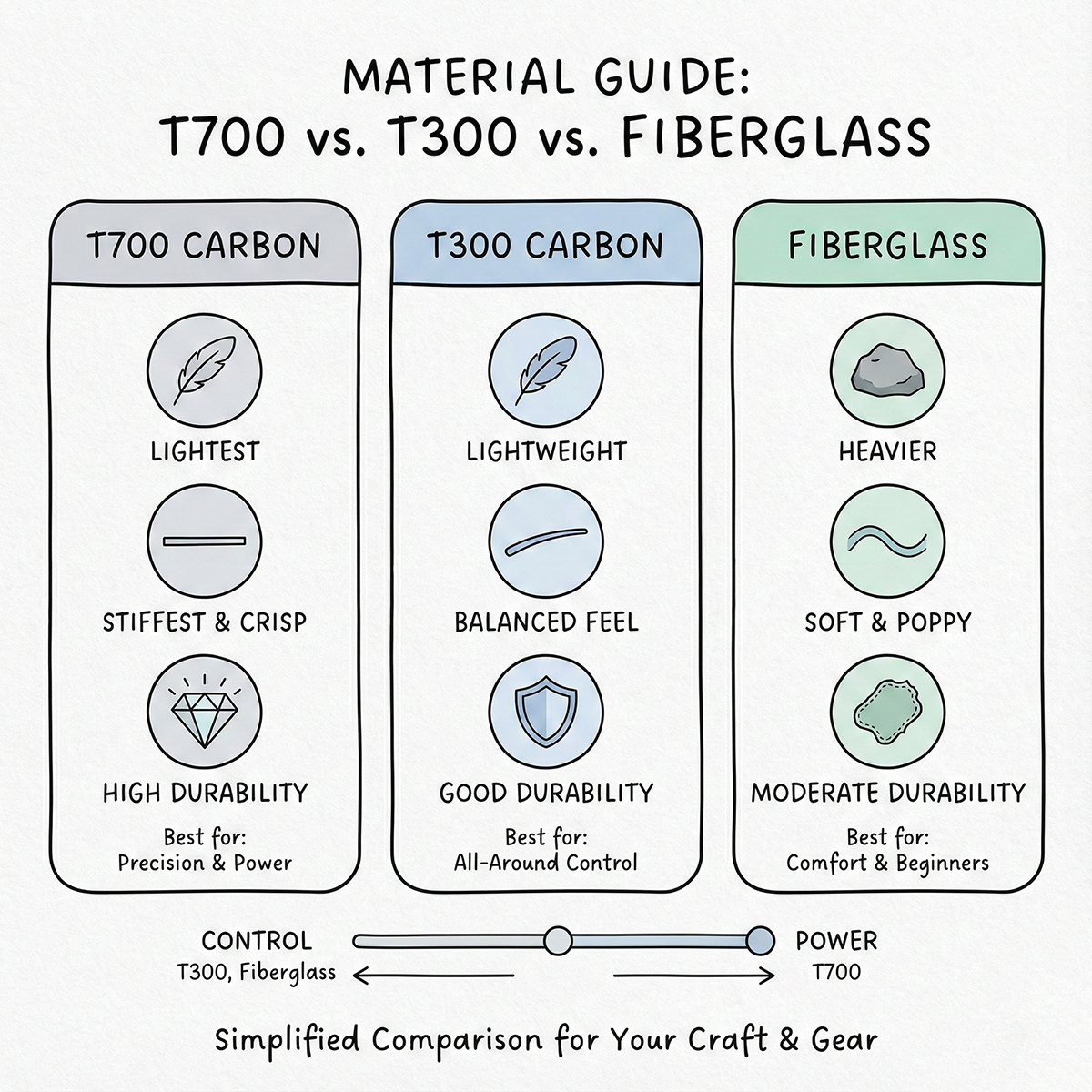
If your main concern is paddle construction, compare core and face options in Lumo’s pickleball paddle materials guide. For a small-hand buyer, materials still matter, but they should not override the grip and handle fit.
How to measure your hand before buying online
Online paddle shopping is harder for small hands because you cannot always test the handle first. A simple measurement routine will not guarantee a perfect fit, but it can reduce guesswork.
Step-by-step hand check
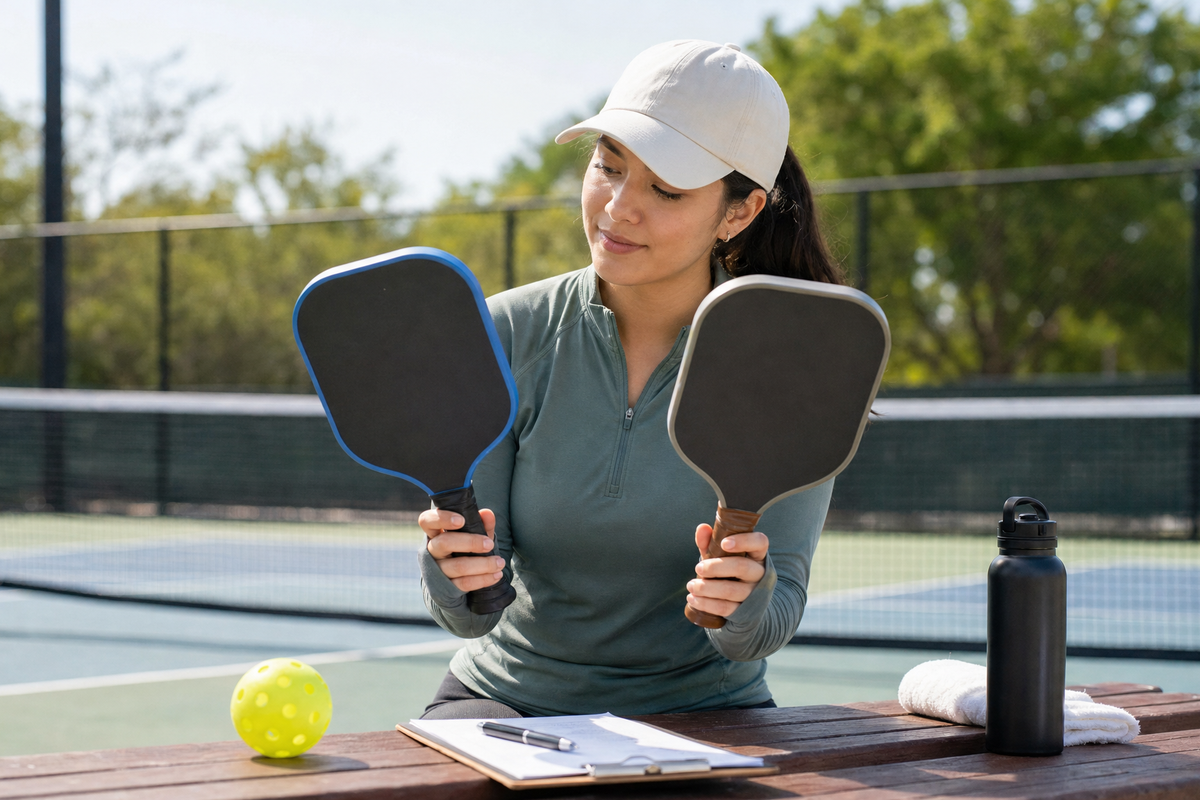
- Measure hand length: Measure from the base of your palm to the tip of your middle finger. This gives a general sense of hand scale.
- Measure palm width: Measure across the widest part of the palm, excluding the thumb. This helps explain why two players with similar hand length may prefer different grip feels.
- Compare with your current paddle or racquet: If you already own a paddle, note whether the handle feels too thick, too thin, too slick, or too long.
- Test with a towel or wrap: Wrap a thin towel around a familiar handle to feel how small increases in circumference affect control.
- Decide your adjustment room: If you plan to add overgrip, start with a base grip that does not already feel large.
Practical decision: When buying online, choose the paddle that gives you adjustment room. A handle that starts slightly manageable can be customized; a handle that already feels too large is harder to reduce without changing the grip system.

Fit audit: signs your paddle grip is too big
Small-hand fit problems often show up during play, not while holding the paddle in a store. Watch for these signs over several games rather than one rally.
- You squeeze during soft shots. If dinks and resets feel tense, the handle may be forcing your hand open.
- Your paddle face arrives late. A handle that feels bulky can slow grip changes in quick exchanges.
- Your wrist feels locked. You should not need excessive wrist tension to keep the paddle stable.
- Your fingers feel stretched after play. Mild fatigue is normal; repeated strain from gripping is a warning sign.
- You avoid grip changes. If the handle makes transitions awkward, you may compensate with limited shot selection.
For newer players, grip discomfort can be confused with general learning curve. If you are buying your first paddle, Lumo’s beginner pickleball paddle buying guide can help separate basic paddle decisions from true fit problems.
Fit audit: signs your grip is too small
Small hands do not always need the smallest possible grip. A grip that is too small may feel easy to hold at first but unstable during contact.
- The handle twists on off-center hits. This usually means you are losing face stability.
- You overuse your fingers. If you pinch instead of hold, your hand may tire quickly.
- You keep adding pressure mid-rally. A thin or slick grip can make you squeeze more as points get faster.
- Your contact feels inconsistent. A handle that moves inside your hand can make the face angle less predictable.
Mistake to avoid: Do not treat “smallest grip available” as the automatic best paddle for small hands. The goal is controlled relaxation, not minimum circumference.
Customization path: how to make a paddle more comfortable for small hands
Customization can help small-hand players, but it should be done in the right order. Start with changes that affect feel without dramatically increasing handle size.
1. Change grip texture before adding bulk
If the handle feels slippery but not too thin, a tackier replacement grip may be better than stacking overgrips. Sweat control, texture, and confidence can change how large a handle feels. The Pickler’s pickleball education articles often discuss practical player adjustments and court habits; their pickleball blog is a useful outside reading source for player-oriented tips.
2. Add one overgrip only if the base grip is too thin
An overgrip can improve feel, but it increases circumference. For small hands, one clean wrap is usually more sensible than multiple layers. If the handle becomes rounded, bulky, or difficult to rotate, remove the wrap and try a different base grip solution.
3. Use edge tape for protection, not as a hand-fit fix
Edge tape can protect the paddle edge and support a personalized look, but it does not solve handle fit. If you are customizing a paddle visually, see Lumo’s personalized pickleball paddle edge tape guide for design and protection considerations. Keep the grip decision separate from the edge design decision.
4. Keep accessories light and intentional
Accessories can change feel. Tape, grips, and protective additions may affect total weight and balance, even if the change seems small. Lumo’s pickleball paddle accessories guide is useful when deciding which add-ons actually help your setup.
Choosing a Lumo custom paddle for small hands
If you are researching before buying or customizing a Lumo paddle, use the design process to support fit rather than distract from it. Graphics, colors, names, and themed artwork matter, especially for gifts or team paddles, but comfort should still come first.
Start with the paddle characteristics that affect play: handle feel, weight preference, and material category. Then move into visual personalization. Lumo’s complete guide to customizing a pickleball paddle explains the broader customization process, while the custom pickleball paddle buyer’s guide covers rules, materials, spin, and setup considerations in more detail.
Best-fit Lumo customization sequence
- Define the player: Adult, junior, beginner, competitive player, gift recipient, or club member.
- Confirm hand-fit risk: Small hands, short fingers, grip sensitivity, sweat concerns, or two-handed backhand needs.
- Choose the paddle setup: Prioritize controllable weight and manageable handle feel before artwork.
- Select the design: Add names, colors, team identity, or artwork after the functional setup is clear.
- Plan accessories: Add grip or protection only if it supports comfort and does not create excess bulk.

Gift buying guide: how to choose when you cannot measure the player
Buying a paddle as a gift is tricky because hand fit is personal. When the recipient has small hands, avoid over-specializing unless you know their preferences. A safe gift decision leaves room for adjustment.
Choose safer defaults
- Pick a paddle setup that is not extremely heavy or handle-heavy.
- Avoid building up the grip before gifting.
- Include an overgrip separately rather than installing multiple layers.
- Choose a design the player will enjoy, but do not let graphics override comfort.
- If the player is new, prioritize forgiveness and control over an advanced-only feel.
Pickleheads publishes beginner-friendly pickleball content and community resources on the Pickleheads blog, which can help newer players understand basic equipment and play concepts. For a personalized gift, Lumo’s designer pickleball paddles guide can help you balance appearance with usability.
Myth vs. reality: small hands and paddle selection
| Myth | Reality | Better decision |
|---|---|---|
| Small hands always need the smallest grip. | Too small can twist and cause over-squeezing. | Choose the smallest grip that still feels stable. |
| A lighter paddle is always better. | Light weight can help speed, but some players need stability through contact. | Test quick hands and solid contact, not weight alone. |
| Overgrip fixes every handle problem. | Overgrip improves feel but adds circumference. | Use one wrap only when it solves a specific problem. |
| Custom design is only cosmetic. | Customization can include setup choices, accessories, and personalization. | Make fit decisions before visual decisions. |
Pre-buy checklist for pickleball paddles for small hands
Before you buy, run through this checklist. It is especially useful when comparing several paddles that look similar online.
- Can I hold the grip without forcing my fingers open?
- Can I switch between forehand and backhand quickly?
- Does the handle feel secure without a tight squeeze?
- Will an overgrip make the handle too large?
- Do I need handle length for a two-handed backhand?
- Is the paddle weight manageable for fast kitchen exchanges?
- Am I choosing materials for my play style, not just for trend value?
- If this is a gift, have I avoided permanent grip buildup?
Practical decision: If two paddles seem equal, choose the one that gives you better relaxed control and more adjustment room. Comfort is not a luxury feature; it is what allows the paddle’s materials and design to work in your hand.
Short references and further reading
- USA Pickleball Official Rules for equipment and play rule context.
- Pickleball Central Blog for paddle buying education and equipment context.
- Selkirk Pickleball Education for paddle and player learning resources.
- Pickleheads Blog for beginner and community pickleball guidance.
FAQ: small hands, grip size, and paddle comfort
What grip size is best for small hands in pickleball?
The best grip size is the one you can hold with relaxed control. Small-hand players often prefer a smaller circumference, but the grip should not be so thin that the paddle twists during contact.
Should I use an overgrip if I have small hands?
Use an overgrip only if it solves a specific problem, such as slick texture or a slightly thin handle. Remember that overgrip adds circumference, so it can make a small-hand fit worse if the base grip is already large.
Is a short handle better for small hands?
Not always. A shorter handle may feel easier for some one-handed players, but handle length also affects grip position and playing style. If you use a two-handed backhand, you may need enough handle room even with small hands.
Are lightweight paddles better for small hands?
They can be, especially if you struggle with quick hand exchanges. But weight is only one factor. A paddle that is too light for your contact style may feel unstable, so compare speed and stability together.
Can I customize a Lumo paddle for a small-hand player?
Yes. The best approach is to decide the functional setup first, then personalize the artwork and accessories. Avoid adding grip bulk unless you know it improves the player’s handle control.
Final next step
If you are choosing a Lumo paddle for yourself, measure your hand, identify your grip problem, and choose a setup with adjustment room. If you are buying for someone else, keep the handle comfortable, avoid permanent grip buildup, and use personalization to make the paddle feel special without compromising control.


Leave a comment
This site is protected by hCaptcha and the hCaptcha Privacy Policy and Terms of Service apply.