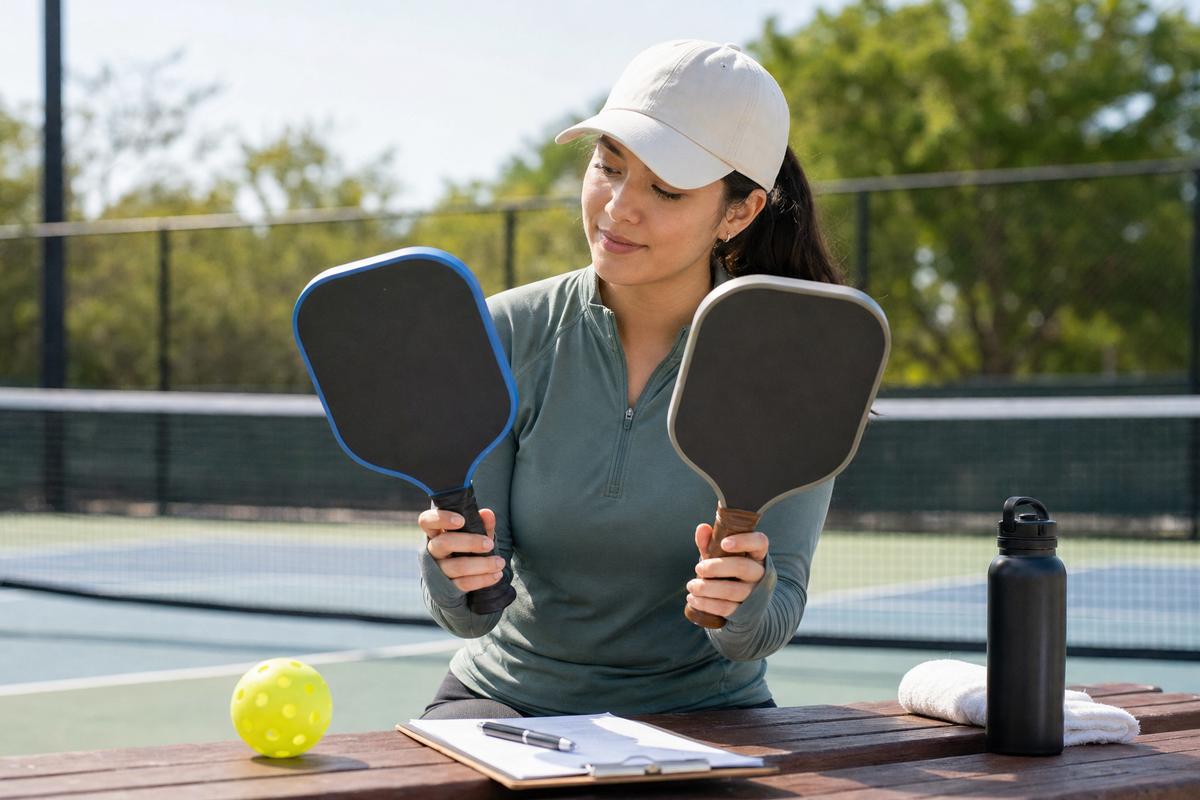
If you are wondering how to choose a pickleball paddle for beginners, start with fit and forgiveness, not the most expensive pro model. A good first paddle should be easy to swing, comfortable to grip, legal for normal play, and predictable on off-center hits. Beginners often overbuy because they chase power, carbon buzzwords, or tournament-level specs before they know their swing. Use five decision criteria first: approval, weight, grip size, paddle shape, and core thickness. After those are right, customization and design can make the paddle feel personal without pushing you into features you do not need yet.

The short answer: choose the paddle that helps you learn faster
Your first paddle is not supposed to solve every future problem. It should help you build clean contact, repeatable control, and confidence at the kitchen line. That means the best beginner paddle is usually the one that feels neutral in your hand and does not punish every imperfect shot.
Before comparing brands, make sure the paddle fits the basic rules of the game. The USA Pickleball official rules include equipment requirements for paddle dimensions and surface characteristics, which matters if you plan to join leagues, tournaments, or organized club play. For casual play, you still benefit from staying close to mainstream paddle formats because your practice transfers more easily.
Source-worthy takeaway: A beginner paddle should reduce learning friction before it maximizes any single performance trait. If a paddle makes you grip harder, swing late, or miss the center more often, it is not a beginner upgrade.
If you want a broader beginner overview before choosing between models, Lumo has a deeper pickleball paddle for beginners buying guide. This article focuses more narrowly on avoiding overbuying while still choosing a paddle you will enjoy using.
The beginner paddle decision matrix: default to balanced specs
Most beginner buyers do not need the lightest, heaviest, longest, thickest, or most aggressive paddle. Extreme specs can be useful for experienced players with defined preferences, but they often make the learning curve harder for new players.
| Decision area | Beginner-friendly direction | What to avoid when you are new | Practical decision |
|---|---|---|---|
| Weight | Moderate, comfortable to swing for a full session | Choosing very heavy for power or very light only because it feels fast in the store | Pick the paddle you can swing without tightening your wrist or forearm |
| Grip | Comfortable circumference and handle length for your hand | Ignoring grip feel because the face material sounds premium | If the grip feels wrong, keep shopping or plan for a grip adjustment |
| Shape | Standard or balanced shape with an accessible sweet spot | Buying elongated shapes only because advanced players use them | Prioritize easy contact before reach |
| Thickness | Choose based on desired control and feel, not hype | Assuming thicker always means better or thinner always means faster | Use thickness as a feel choice, then test if possible |
| Customization | Personalize visuals after the playing specs make sense | Designing a beautiful paddle that is uncomfortable to play | Fit first, artwork second |
Weight, grip, and shape are easy to underestimate because they do not look as exciting as surface materials. But beginner comfort usually comes from the handle and swing feel. Pickleball education resources from brands and retailers, including Pickleball Central and Selkirk pickleball education, commonly explain paddle selection through tradeoffs such as power, control, maneuverability, and feel. That tradeoff mindset is the right lens for beginners.
Step 1: decide where you will actually play
Do not buy a paddle for a version of pickleball you are not playing yet. A first-time recreational player, a weekly social player, and a soon-to-be league player may all make slightly different choices.
- Casual driveway or park play: prioritize comfort, durability, and value. You do not need to chase advanced tournament language.
- Community center or club play: choose a mainstream paddle style that will not feel out of place during drills or rotating games.
- Beginner leagues or tournaments: check whether the event expects approved equipment and stay within official paddle rules.
- Gift purchase: avoid extreme specs. Choose balanced dimensions and a design the recipient will actually like.
This first step prevents a common overbuying trap: buying for a hypothetical advanced future. If you become more competitive later, you can upgrade with real preferences. At the start, the better goal is to choose a paddle that encourages more play.
Step 2: choose a weight you can control, not just swing once
Paddle weight is one of the most important comfort variables. A paddle can feel fine for ten practice swings and still feel tiring after several games. Beginners should pay attention to how relaxed the hand, wrist, elbow, and shoulder feel during repeated swings.
A heavier paddle can feel stable and powerful, but it may slow down hand speed at the kitchen or encourage late contact. A lighter paddle can feel quick, but some players find it less stable on blocks and off-center hits. The safer beginner decision is usually a comfortable middle ground rather than an extreme.
Quick weight self-test
- Hold the paddle with a relaxed grip, not a clenched fist.
- Make ten slow forehand and backhand shadow swings.
- Then make ten quick volley motions in front of your body.
- If your wrist tightens or your timing feels late, the paddle may be too demanding.
- If the paddle twists easily in your hand, check both weight and grip fit.
This is also where a custom purchase should stay practical. A custom design is worth it when the paddle is comfortable enough to become your regular paddle. If you are considering a Lumo design, start from the playing fit, then move to the custom pickleball paddle options so the final result is both playable and personal.
Step 3: treat grip fit as a performance feature
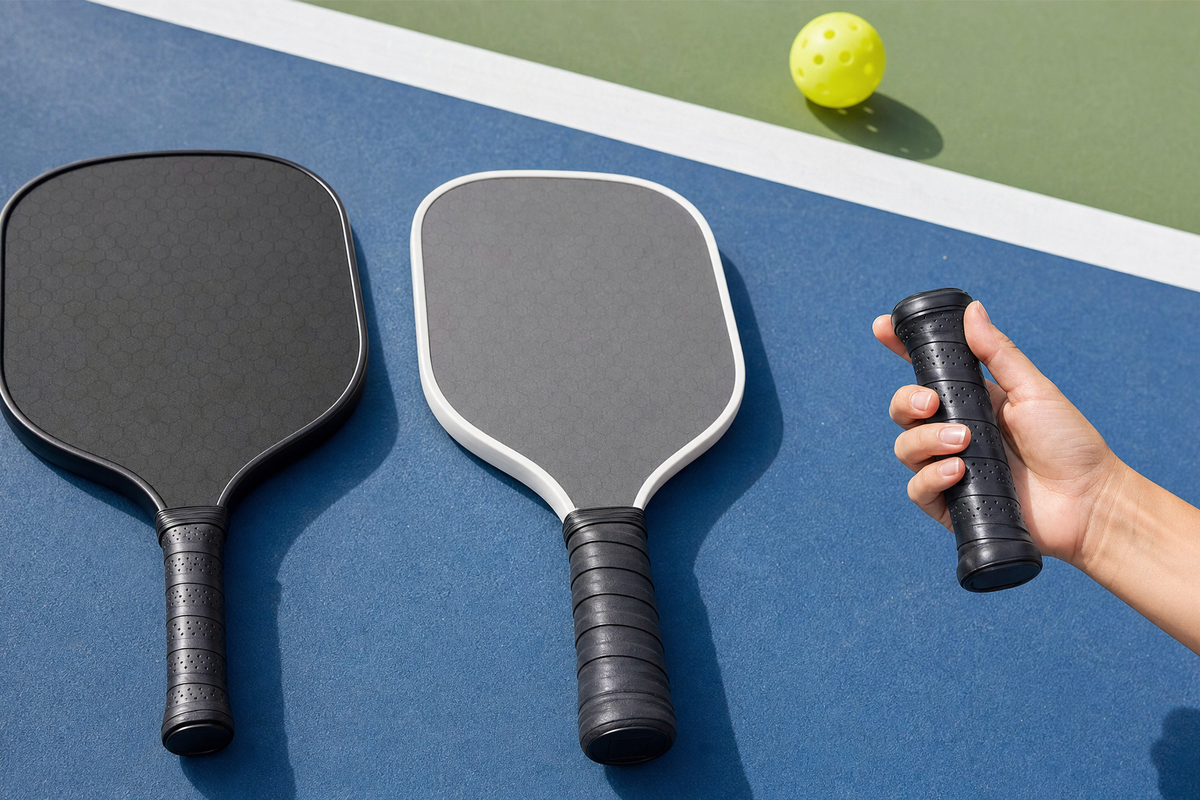
Beginners often obsess over the paddle face and ignore the handle. That is backwards. The grip is the only part of the paddle you touch on every shot. If it feels too large, too small, too slick, or too short, you may compensate with tension, and tension makes soft shots harder.
Grip preferences are personal, so avoid pretending there is one perfect size for everyone. A more reliable rule is this: the grip should let you hold the paddle securely without squeezing. You should be able to adjust between ready position, volleys, dinks, and serves without feeling like you are fighting the handle.
Grip warning signs
- You feel the paddle rotating during off-center hits.
- You have to squeeze hard to keep control.
- Your hand feels cramped after a short session.
- You cannot comfortably use a two-handed backhand if that is part of your natural motion.
- You keep adjusting your hand position between shots.
Grip can sometimes be adjusted with overgrips, but do not use that as an excuse to buy a paddle that feels clearly wrong. A beginner-friendly paddle should feel approachable from the first session.
Step 4: pick paddle shape for consistency before reach
Elongated paddles can appeal to shoppers because they suggest extra reach and a more advanced look. That does not automatically make them wrong for beginners, but it does make the decision more specific. A longer shape may change balance and sweet spot feel. If you are still learning clean contact, a more standard or balanced shape may be easier to manage.
The key question is not whether a shape is advanced. The key question is whether it helps you make repeatable contact. A beginner who keeps missing the center of the paddle usually benefits more from forgiveness than from a little extra reach.
| Paddle shape direction | May fit you if... | May not fit you if... |
|---|---|---|
| Standard or wide-body feel | You want easier contact, forgiveness, and a stable learning paddle | You already know you need extra reach or a specific singles style |
| Balanced hybrid feel | You want a middle path between reach and forgiveness | You are buying only because it sounds more technical |
| Elongated feel | You have a clear reason, such as reach preference or two-handed handle comfort | You are new and still struggling with center contact |
If you want to compare beginner-ready options without getting lost in jargon, Lumo also maintains a guide to best pickleball paddles for beginners. Use it as a shortlist tool, not as a reason to skip the fit checks above.
Step 5: understand thickness without turning it into a status symbol
Paddle thickness affects feel, but it should not be treated as a simple better-or-worse ranking. Many shoppers hear numbers such as 13 mm, 16 mm, or 20 mm and assume one must be the correct upgrade. The more useful question is how the paddle responds during soft shots, blocks, resets, drives, and serves.
As a beginner, you likely want a paddle that gives enough feedback to learn from your contact while still offering control. Some players prefer a thinner, quicker feel. Others prefer a thicker, more stable response. Neither preference is automatically more beginner-friendly without considering your swing and comfort.

For a focused explanation, read Lumo's guide to pickleball paddle thickness: 13 mm vs 16 mm vs 20 mm. The practical takeaway is simple: choose thickness based on the shots you are trying to make more consistent, not because a spec sheet makes one number sound more premium.
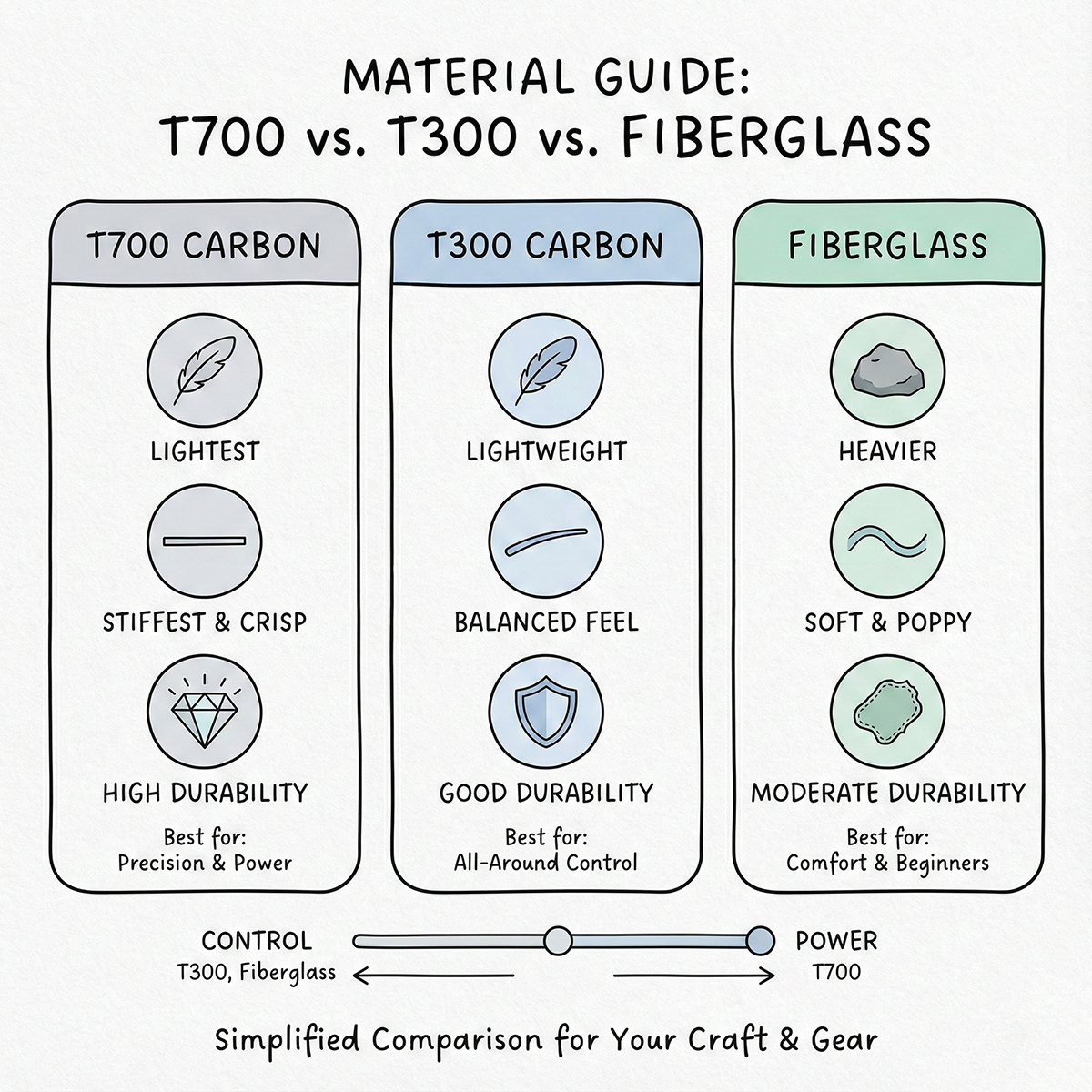
Material choices: avoid the cheapest learning dead end
Beginners do not need the most expensive paddle on the wall. But they should also be careful with paddles that are so basic they hold back feel, control, or consistency. The cheapest paddle can be fine for a one-day picnic. It may be a poor value if you plan to play every week.
Wood paddles and very basic composite paddles can look budget-friendly, but they may not give the same learning experience as a more modern paddle. The issue is not that every inexpensive paddle is unusable. The issue is that beginners need feedback and comfort. If a paddle feels harsh, heavy, or unpredictable, it can make the sport feel harder than it needs to be.
Lumo's article on why wood or basic composite pickleball paddles may not be the best long-term beginner choice goes deeper into this buying trap. A reasonable beginner purchase is usually not the cheapest possible paddle; it is the least expensive paddle that still supports repeatable practice.
Customization without overbuying: personalize what matters first
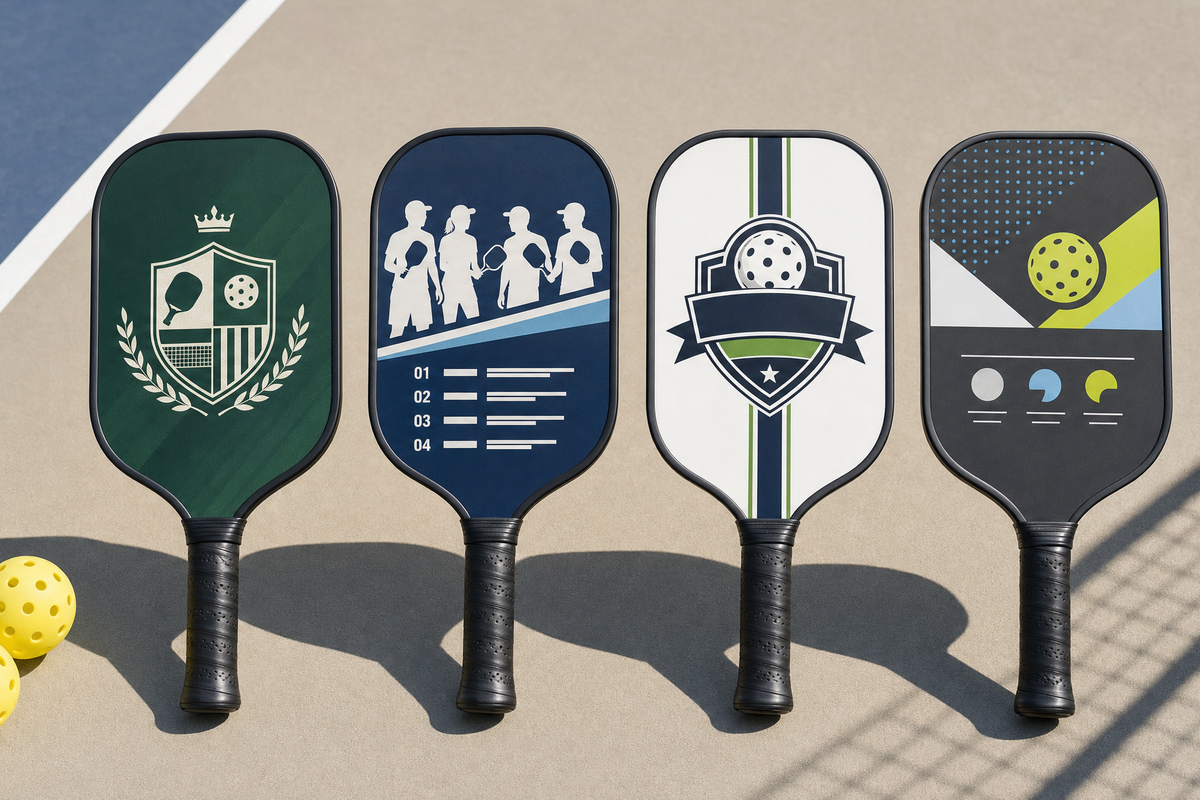
Custom paddles are especially attractive for beginners because pickleball is social, visual, and giftable. A custom design can make the paddle feel like yours, which may encourage you to play more often. But customization should not distract from fit.
The right order is:
- Choose a playable foundation: weight, grip, shape, and thickness should match your current level.
- Decide the purpose: personal paddle, couple set, team event, birthday gift, or business gift.
- Keep the design readable: names, initials, simple artwork, or a clean theme often work better than overcrowded graphics.
- Avoid changing play specs for aesthetic reasons: a beautiful paddle that feels wrong will stay in the bag.
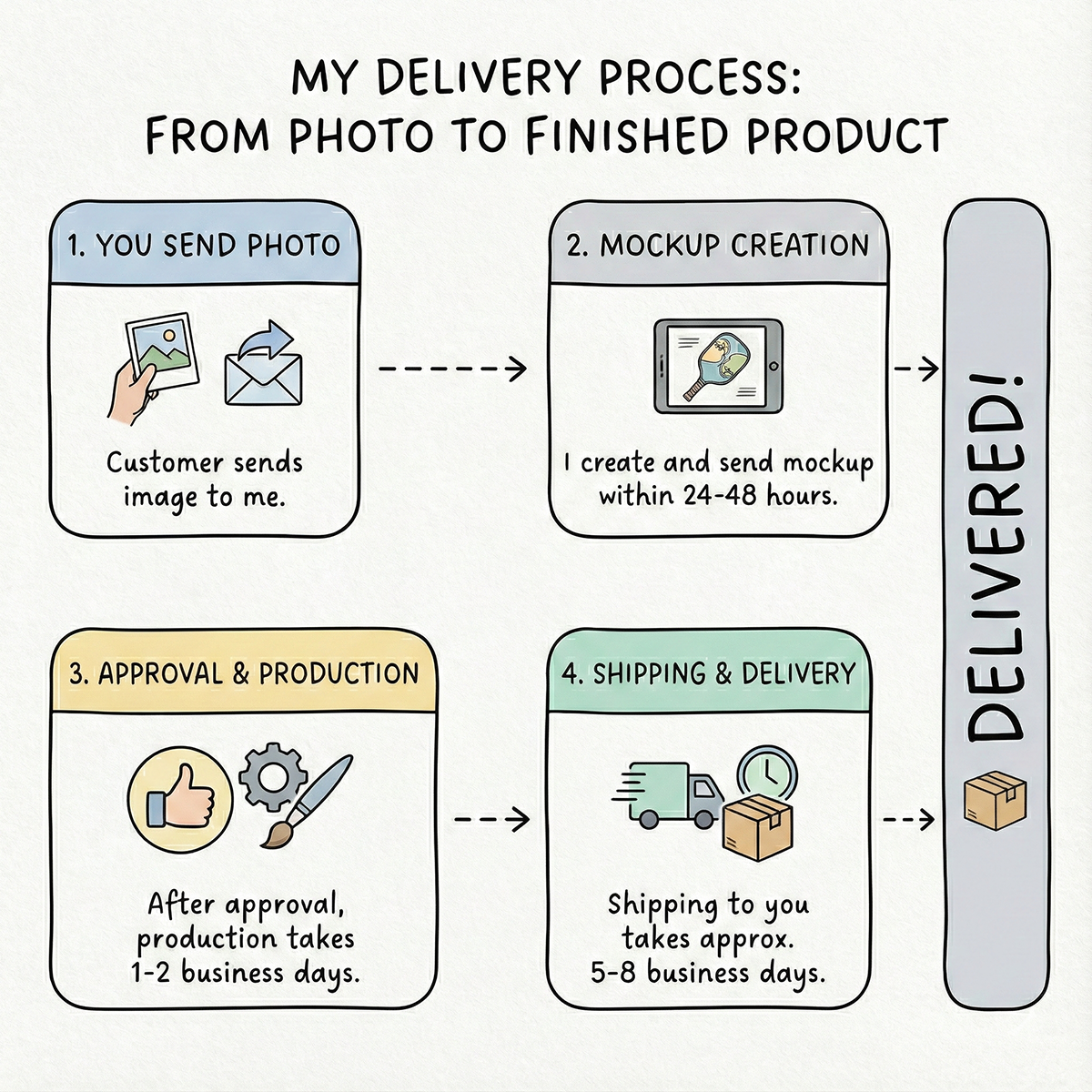
- Confirm timing: custom products may need more planning than off-the-shelf purchases.
If you are buying for yourself, start with how you play. If you are buying for someone else, choose safer balanced specs unless you know their preferences. Lumo's guide to what beginners should personalize first on a custom pickleball paddle can help you separate meaningful design choices from decorative extras.

Overbuying mistake audit: the traps that cost beginners money
Overbuying does not always mean spending too much. It means paying for features that do not solve your current problem. A beginner can overbuy a premium paddle, a power paddle, a too-specialized shape, or even a custom design built on the wrong foundation.
Mistake 1: buying for power before control
Power feels exciting during the first few drives, but early pickleball improvement often comes from placement, resets, dinks, and volleys. If your paddle makes the ball fly long when you are trying to soften your hands, it may slow your progress.
Mistake 2: copying the best player in your group
Experienced players often choose paddles based on developed technique. Their paddle may complement a specific serve, drive, hand speed, or spin preference. That does not mean it is the right beginner paddle for you.
Mistake 3: treating price as proof of fit
A higher price can reflect materials, construction, branding, or customization, but it does not guarantee comfort. The paddle still needs to match your hand and swing.
Mistake 4: buying a gift that looks great but plays awkwardly
Gift paddles should be safe and playable. Unless the recipient has strong preferences, choose balanced specs and put the personality into the visual design.
For a broader buyer-error breakdown, see Lumo's guide to paddle buying mistakes that cost players money. The central idea is to buy around use, not around impulse.
A practical 10-minute buying checklist
Use this checklist before adding a paddle to cart. It works for a standard paddle, a custom Lumo paddle, or a gift purchase.
- Playing context: Am I buying for casual play, regular rec play, league play, or a gift?
- Rules comfort: Does the paddle fit normal pickleball equipment expectations and any event requirements I care about?
- Weight: Can I swing it repeatedly without wrist or forearm tension?
- Grip: Can I hold it securely without squeezing?
- Shape: Does it help me find the center, or am I chasing reach too early?
- Thickness: Do I understand the feel tradeoff, or am I choosing a number because it sounds premium?
- Material value: Is it good enough for regular learning, not just a one-time outing?
- Customization: Have I chosen the playing foundation before the artwork?
- Upgrade timing: Am I buying for the player I am now or for a future style I have not developed yet?
Community and coaching blogs such as Pickleheads and The Pickler can also help new players understand how paddle choice connects to real play situations, rules, positioning, and shot selection. Use those resources to learn the game, then use your own comfort tests to choose the paddle.
Fit / not-fit guide for common beginner situations
Fit: you are brand new and want one safe paddle
Choose balanced specs, a comfortable grip, and a design you will enjoy using. Do not chase specialty shapes or extreme power. Your goal is more court time and cleaner contact.
Fit: you are buying a custom gift
Choose a safe playing foundation and use personalization for the emotional value. Names, dates, team phrases, pet illustrations, or simple artwork can make the gift feel thoughtful without making the paddle hard to play.
Fit: you already play weekly and know what bothers you
Now you can be more specific. If your current paddle feels too harsh, too slow, too unstable, or too small in the grip, use that frustration as the buying brief.
Not fit: you want one paddle to guarantee faster improvement
No paddle replaces practice, lessons, or thoughtful play. The right paddle can remove friction; it cannot create technique by itself.
Not fit: you are buying only because a spec sounds advanced
If you cannot explain how the spec helps your current game, it is probably not the first feature to pay for.
FAQ: beginner pickleball paddle questions
What is the most important paddle feature for a beginner?
Comfort is the first priority. Weight, grip size, and swing feel affect every shot. Surface and core features matter, but they should support a paddle that you can control for a full session.
Should a beginner buy an expensive pickleball paddle?
Not automatically. A beginner should avoid paddles that are so cheap they feel harsh or inconsistent, but the most expensive paddle is not necessary unless it clearly fits your comfort, playing plans, and preferences.
Is a custom pickleball paddle a good idea for beginners?
Yes, if the playing foundation is beginner-friendly. Custom artwork can make the paddle more personal and giftable, but weight, grip, shape, and thickness should be chosen before the visual design.
Should beginners choose control or power?
Most beginners are better served by control and forgiveness first. Power becomes more useful when you can already place the ball consistently and manage soft shots.
How do I avoid overbuying my first paddle?
Buy for your next three months of play, not an imagined advanced identity. Choose comfortable, balanced specs; avoid extreme shapes or weights; and personalize only after the paddle makes sense as a learning tool.
Final decision: buy the paddle you will actually use
The best beginner paddle is not the one with the most impressive spec list. It is the paddle that makes you want to play again, helps you feel the ball, and does not force your hand, wrist, or timing into awkward adjustments.
If you are ready to customize, start with the fit checklist above, then build your design on a playable foundation through Lumo's custom pickleball paddle page. If you are still comparing fundamentals, read the beginner buying guide and thickness guide first. That sequence keeps the purchase practical: learn what you need, choose the paddle that fits, then make it yours.
References and useful reading
- USA Pickleball official rules for equipment and rule context.
- Pickleball Central blog for paddle education and player buying guidance.
- Selkirk pickleball education for learning paddle and performance concepts.
- Pickleheads blog for beginner-friendly pickleball learning resources.
- The Pickler blog for game education, rules discussion, and player tips.


Leave a comment
This site is protected by hCaptcha and the hCaptcha Privacy Policy and Terms of Service apply.