
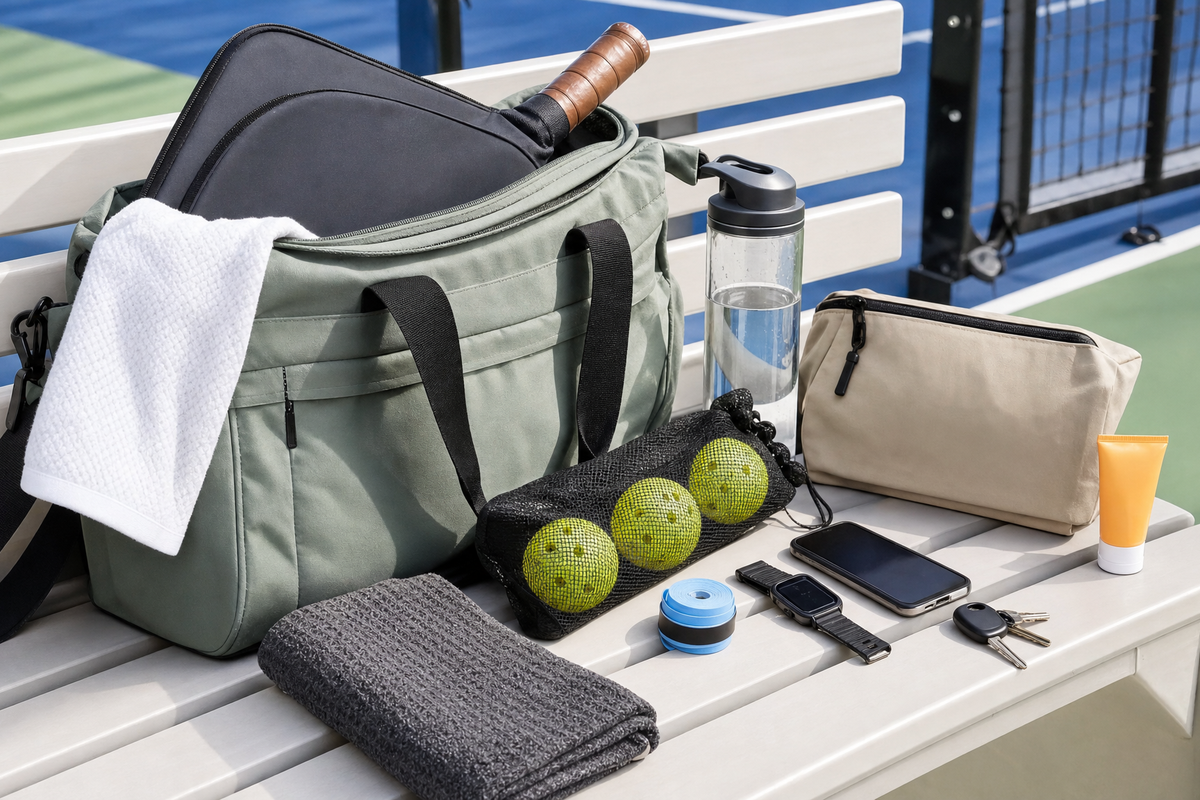
The best pickleball bag accessories are the small add-ons that solve game-day friction: protecting your paddle, finding gear quickly, staying dry, separating clean and sweaty items, and having a backup when something breaks. Most shoppers overpack because every accessory sounds useful. A better approach is to choose accessories by three criteria: what protects your gear, what saves time at the court, and what fits your actual playing routine. This guide walks through the useful add-ons, the ones you can skip, and a simple packing system for casual play, league nights, travel, and pickleball gifts.

Start With the Real Job of Pickleball Bag Accessories
A pickleball bag is not just storage. On game day, it is a portable staging area. The right accessories help you do four jobs before, during, and after play:
- Protect equipment: reduce avoidable paddle face scuffs, edge bumps, loose items rubbing against the surface, and sun exposure when the bag sits courtside.
- Control mess: keep balls, keys, phone, sunscreen, snacks, and used towels from turning into one pile.
- Prepare for small failures: have a spare overgrip, towel, bandage, or extra ball when something becomes uncomfortable mid-session.
- Make transitions faster: move from car to court, court to bench, and bench to home without repacking everything from scratch.
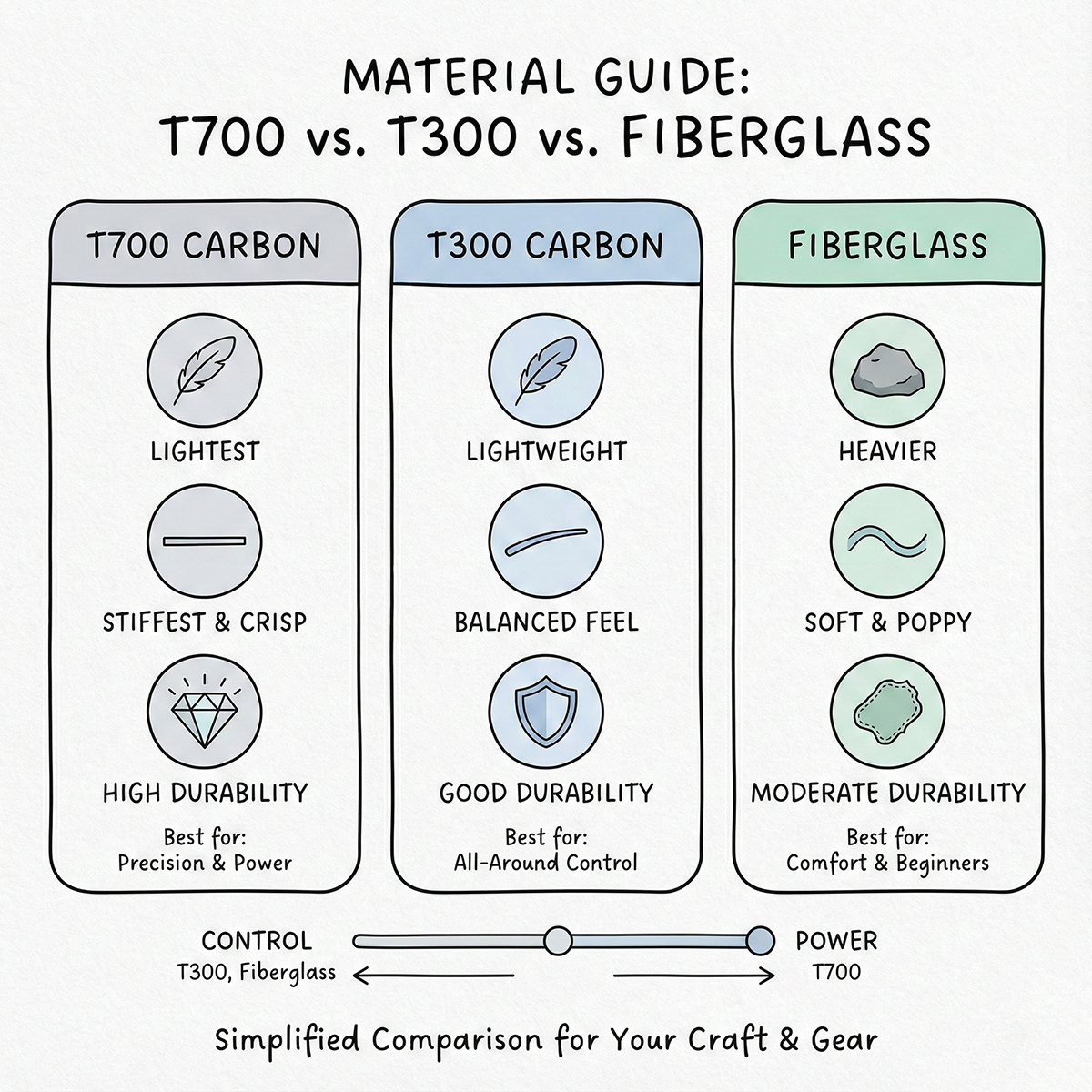
This matters even more if you are customizing a Lumo setup as a gift. A custom paddle may be the centerpiece, but the supporting accessories decide whether the recipient can actually show up ready to play. If you are still comparing paddle choices, start with Lumo’s guide to pickleball paddle materials and features, then use this bag-accessory checklist to complete the kit.
Source-worthy takeaway: The best pickleball bag setup is not the one with the most items; it is the one where every accessory either protects gear, speeds up play, improves comfort, or prevents one predictable game-day problem.
The Core Accessory List: What Most Players Actually Use
If you want a reliable default kit, begin with accessories that earn their space every week. These are useful for new players, social players, and regular league players without turning the bag into a travel suitcase.
1. Paddle Cover or Sleeve
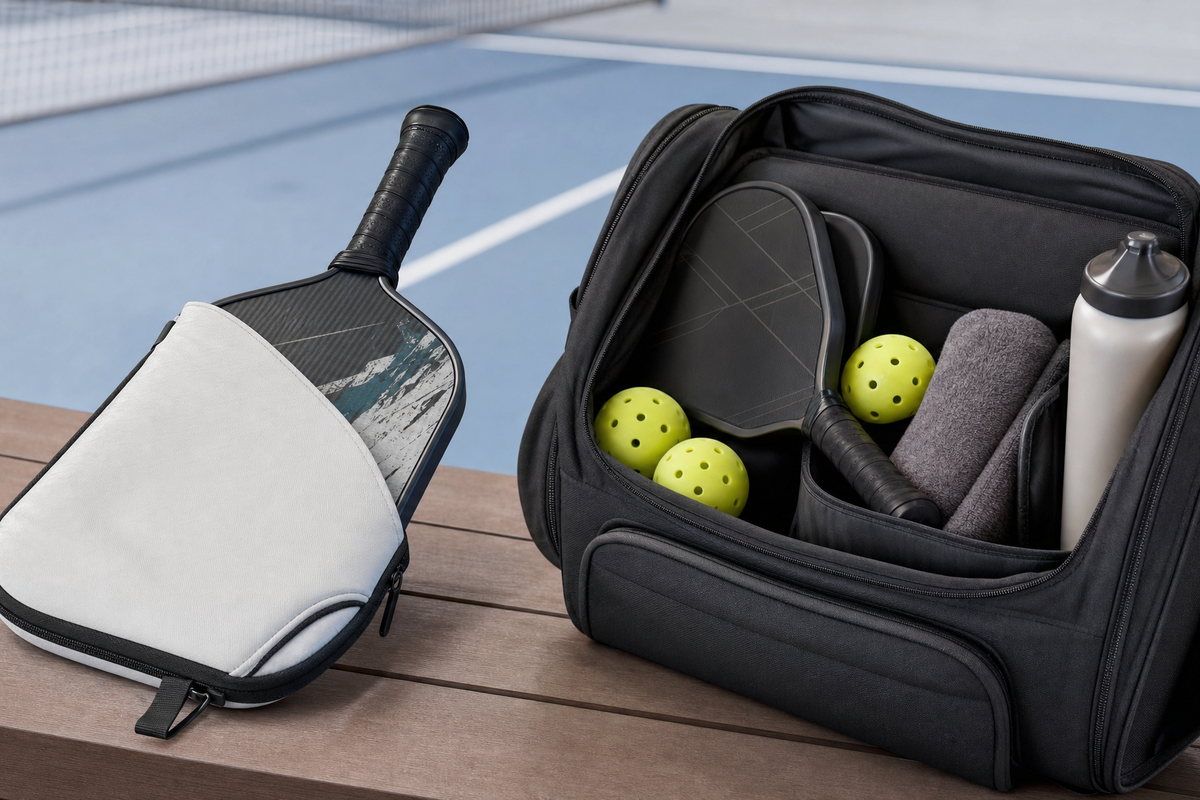
A paddle cover is one of the simplest ways to protect the part of your kit that usually costs the most. It helps separate the paddle face from keys, water bottles, snacks, and loose balls. It also makes the bag easier to organize because the paddle becomes its own protected unit.
If you are deciding whether you need a separate cover when you already carry a bag, Lumo has a focused comparison here: pickleball paddle cover vs. bag. The short version: a bag carries the whole kit; a cover protects the paddle inside the kit.
2. Ball Pouch or Small Mesh Organizer
Loose balls are annoying because they roll under towels, wedge into side pockets, and make it harder to find smaller items. A small mesh pouch or dedicated ball pocket keeps them visible and lets dust or court grit fall away instead of spreading through the bag. For most players, two to four balls is enough for casual games; more may be useful for drilling or group play.
When choosing balls, remember that indoor and outdoor balls are often designed differently. Brand education pages such as Selkirk’s pickleball education blog explain common equipment differences in player-friendly language. For bag organization, the key is simple: do not let balls share a pocket with items that can scratch or stain your paddle.
3. Grip and Overgrip Backup
A spare overgrip is small, light, and easy to forget until your handle feels slick. It is especially useful in warm weather, long sessions, or shared-family bags where different people use the same kit. Grip comfort also affects how confidently you hold the paddle, so do not treat it as a decorative add-on.
If hand size is part of your buying decision, Lumo’s pickleball grip size guide for small hands is a better starting point than guessing from photos. A backup overgrip belongs in the bag only after the handle size and feel make sense for the player.
4. Quick-Dry Towel
A towel does more than wipe sweat. It gives you a clean surface for your hands, paddle handle, sunglasses, or phone. A compact quick-dry towel is usually easier to pack than a bulky gym towel. If you play outdoors, consider keeping one towel for hands and one small cloth for gear so sweat, sunscreen, and court dust do not all go onto the paddle face.
5. Water Bottle and Leak Control
Hydration is a basic game-day need, but the accessory decision is about bag safety: use a bottle that closes reliably and keep it away from valuables and paddle surfaces. If your bag has an external bottle pocket, use it. If not, place the bottle upright in a pouch or compartment where a leak will not soak grip tape, clothing, or electronics.
For longer play days, weather and personal needs matter. The CDC’s practical guidance on hydration and heat stress is workplace-focused, but the general reminder is useful for outdoor sports: heat, exertion, and inadequate fluids can create avoidable risk. For this article, we are not making medical recommendations; the practical bag takeaway is to make water easy to reach, not buried under gear.
6. Small Personal Items Pouch
Keys, wallet, lip balm, sunscreen, phone, hair ties, and medication should not float around the main compartment. A zip pouch keeps small items searchable. This is also the place for a mini first-aid item such as adhesive bandages. Do not overbuild this pouch; if it becomes a junk drawer, it stops helping.
Accessory Decision Matrix: What to Pack by Player Type
Different players need different pickleball bag accessories. A beginner’s best kit is not the same as a tournament player’s kit, and a gift buyer should not assume that more accessories make the gift better. Use this matrix to choose based on routine.
| Player situation | Best accessory priorities | Nice to have | Usually skip at first |
|---|---|---|---|
| New player learning the basics | Paddle cover, 2 balls, towel, water bottle, small pouch | Beginner-friendly overgrip, simple accessory checklist | Large tournament organizers, multiple specialty pouches |
| Casual weekly player | Ball pouch, towel, overgrip, sunscreen, phone/key pouch | Extra socks, snack, small first-aid item | Heavy gear extras that make the bag annoying to carry |
| League or club player | Backup overgrip, extra balls, towel system, labeled pouch | Club-color accessories or personalized tags | Unlabeled shared gear that gets mixed up after play |
| Gift recipient | Paddle cover, ball set, towel, simple pouch, personalization | Custom paddle or coordinated accessory color | Highly specific items unless you know their routine |
| Traveling player | Compact packing cubes, secure bottle plan, extra grip, laundry pouch | Lightweight sling or packable tote | Bulky add-ons that do not fit car or luggage space |
If you are building a first-time kit, Lumo’s custom pickleball paddle accessories for new players guide pairs well with this matrix because it focuses on what beginners actually need rather than every possible product.
Protect the Paddle First: The Bag Accessory Rule Many Shoppers Miss
The most common packing mistake is putting the paddle in the bag and then treating every pocket around it as harmless. Keys, metal water bottles, sunglasses cases, snack wrappers, and loose balls can all create friction or pressure. A paddle cover, dedicated paddle compartment, or soft sleeve reduces that problem.
Official equipment rules matter most when you are entering sanctioned play or checking whether a paddle meets competition requirements. USA Pickleball publishes the official rulebook and equipment-related resources on its rules page. For a bag-accessory buyer, the practical point is not to modify a paddle in a way that could create questions later. Covers, pouches, towels, and standard grip maintenance are different from altering the paddle surface.
If paddle surface and texture are part of your research, read Lumo’s article on how texture impacts pickleball paddle surfaces. It will help you understand why the paddle face deserves a little more protection inside the bag.
Practical decision
- If your paddle shares space with hard objects, add a cover.
- If your bag has a separate paddle sleeve, still avoid packing keys or bottles against that sleeve.
- If the paddle is a gift or custom design, include protection from day one.
- If you play in events, check current official rules before making equipment changes.

Organization Accessories: Small Pouches Beat One Big Compartment
A single large compartment looks convenient until you need to find one overgrip between games. The better system is two or three small zones. You do not need a complicated organizer; you need repeatable locations.
The 3-Zone Bag System
- Clean gear zone: paddle, cover, spare shirt, eyewear, clean towel.
- Fast-access zone: balls, water, current towel, sunscreen, phone, keys.
- After-play zone: sweaty towel, used socks, empty snack wrapper, damp items.
This system prevents the common “everything is damp” problem. It also makes it easier to unpack when you get home. The after-play zone can be as simple as a washable drawstring pouch or a reusable bag. The point is not luxury; it is separation.
Community and education sites such as Pickleheads, Pickleball Central’s blog, and The Pickler regularly publish player-focused advice around gear, play habits, and pickleball culture. When you read gear advice, look for the same pattern: useful accessories reduce friction before or during play. If an item only looks good in a product photo but does not solve a repeated problem, it can wait.
Labeling Helps More Than It Seems
For families, clubs, and group play, labels or personalized tags can prevent mix-ups. This is especially useful when several players have similar paddles, towels, or ball pouches. If you are planning club or team gear, Lumo’s pickleball club merch ideas article can help you think beyond one-off accessories and build a coordinated set.
Comfort Accessories: Useful, But Easy to Overpack
Comfort items can improve the playing day, but they are the easiest category to overdo. The decision rule is simple: pack the item if you have needed it more than once. Do not pack it just because another player carries it.
Worth considering
- Hat or visor: useful for outdoor courts and sun glare.
- Sunglasses case: protects lenses from keys and ball scuffs.
- Sunscreen: choose a size that will not leak or dominate the bag.
- Extra socks: helpful for long sessions, travel, or hot weather.
- Light snack: useful for multi-hour sessions, especially if courts are away from stores.
- Elastic bands or hair ties: tiny, easy, and frequently forgotten.
Be cautious with
- Large towels: they take space and stay damp longer.
- Multiple water bottles: helpful only if you truly need them; otherwise they add weight.
- Bulky recovery tools: better kept in the car or at home unless you routinely use them courtside.
- Too many backup grips: one spare is practical; five is usually clutter.
The goal is not to pack for every possible scenario. The goal is to pack for your real session: one hour of open play, a two-hour league night, a morning clinic, or a full tournament day.
Gift-Buyer Framework: Accessories That Make a Custom Lumo Gift Feel Complete
If you are buying for someone else, bag accessories can make a custom pickleball gift more useful without guessing every preference. The safest choices are practical, low-risk, and easy to use regardless of skill level.
A strong gift bundle might include a custom paddle, paddle cover, two or three balls, a small towel, and a pouch for personal items. This feels complete but not overwhelming. If you are shopping within a budget, Lumo’s custom pickleball paddles gift guide under $100 can help you prioritize the main gift before adding small accessories.
Fit / not-fit guide for gifting accessories
| Accessory | Good fit when... | Not the best fit when... |
|---|---|---|
| Paddle cover | The recipient has or will receive a paddle they care about protecting | You are not sure what paddle shape or size they use |
| Ball pouch | They play casually or bring balls to group games | They only attend sessions where balls are provided |
| Overgrip | You know they play often or mention sweaty hands | You do not know their grip preferences at all |
| Towel | You want a universal, practical add-on | The gift already includes several textile items |
| Personalized tag | They play with clubs, family, or shared gear | They prefer very minimal gear with no decoration |
Personalization works best when it supports function. A name, initials, simple graphic, or coordinated color can help the player identify their gear. It should not make the accessory harder to clean, carry, or replace.
Common Mistake Audit: What Makes a Bag Feel Messy by the Second Game?
If your bag is organized at home but chaotic at the court, one of these mistakes is probably happening.
Mistake 1: Putting wet and clean items together
A used towel, sweaty shirt, or damp socks can make the whole bag feel stale. Use a simple after-play pouch. Empty it when you get home. This one habit keeps the rest of the accessories cleaner.
Mistake 2: Carrying accessories for the player you wish you were
If you play one casual session a week, you probably do not need a tournament-level packing system. Start with the smallest kit that solves your real problems. Add items only after a repeated need shows up.
Mistake 3: Letting the water bottle share space with valuables
Even a good bottle can leak if it is not closed properly. Keep water outside the main compartment when possible. If that is not possible, use a pouch or upright position and keep electronics separately.
Mistake 4: Buying accessories before choosing the paddle
The paddle determines cover fit, grip needs, and how protective your storage should be. If you are still choosing the main paddle, compare materials, shape, handle feel, and intended use first. Then buy the accessories that support that choice.
Mistake 5: Treating a shared bag like a personal bag
Family and club bags need labels, separate pouches, and clear ownership. Otherwise, one player’s towel becomes another player’s missing towel, and balls disappear between sessions.
A Simple Packing Checklist for Game Day
Use this as a practical pre-court check. You can copy it into your phone notes and remove anything that does not match your routine.
- Paddle: protected in a cover or dedicated sleeve.
- Balls: two to four in a pouch, more if drilling or hosting.
- Water: closed tightly and stored away from valuables.
- Towel: one compact towel for sweat; optional small cloth for gear.
- Grip backup: one overgrip if you play often or sweat heavily.
- Personal pouch: keys, phone, wallet, lip balm, sunscreen, hair ties.
- Comfort items: hat, sunglasses, snack, extra socks as needed.
- After-play pouch: used towel, damp clothing, trash, or empty wrappers.
- Event check: if playing organized competition, confirm current rules and venue requirements before modifying equipment or packing restricted items.

How to Choose Accessories When Customizing a Lumo Setup
When shoppers customize a Lumo product, the bag accessories should support the same use case as the paddle. A playful custom design for casual doubles may pair well with a simple cover and bright ball pouch. A more performance-minded setup may call for grip backups, a towel system, and a cleaner separation between paddle, balls, and damp gear.
Use this three-step process:
- Define the play situation: beginner lessons, weekly open play, club nights, family games, gift bundle, or travel.
- Protect the main item: choose a paddle cover or sleeve before adding decorative extras.
- Add only problem-solvers: ball pouch for loose balls, towel for sweat, overgrip for handle comfort, personal pouch for valuables, after-play pouch for damp gear.
If the recipient is new, keep the accessories intuitive. If the player is experienced, give them room to choose personal comfort items like grips, towels, and bag layout. The more personal the item touches fit or feel, the more careful you should be about guessing.
Quick References for Rules and Gear Research
For official equipment and rule questions, use USA Pickleball’s rules resources as the starting point. For broader player education and gear discussion, compare advice from multiple pickleball-focused sources such as Pickleheads, Pickleball Central, Selkirk’s education blog, and The Pickler. Gear advice is most useful when it connects to a real playing situation rather than a generic must-have list.
FAQ: Pickleball Bag Accessories
What pickleball bag accessories should a beginner buy first?
A beginner should start with a paddle cover, two to four balls, a compact towel, water bottle, and one small pouch for keys and phone. A spare overgrip is useful if the player practices often or notices the handle getting slippery.
Do I need both a paddle cover and a pickleball bag?
Often, yes. The bag carries the full kit, while the cover protects the paddle inside the bag. If your bag has a padded paddle compartment and you carry very few hard items, a separate cover may be less urgent, but it is still useful for custom paddles or shared gear bags.
How many pickleballs should I keep in my bag?
For casual play, two to four balls is usually practical. If you drill, host games, or play with a group that expects players to bring balls, pack more. Keep them in a pouch so they do not roll around the main compartment.
Are personalized bag accessories a good gift?
Yes, if they remain practical. Personalized tags, covers, towels, and pouches can help identify gear and make a custom gift feel complete. Avoid highly specific fit or feel items unless you know the recipient’s preferences.
What should I remove from my pickleball bag?
Remove duplicates, damp items, expired sunscreen, crushed snacks, extra grips you never use, and anything that could leak onto gear. A lighter bag is easier to carry and easier to keep organized.
Next Step: Build a Bag Around Your Real Game Day
Before buying more pickleball bag accessories, empty your bag and sort every item into four groups: protects gear, speeds up play, improves comfort, or solves an after-play mess. Keep the items that pass one of those tests. Remove the rest. If you are building a Lumo gift or custom setup, start with the paddle, protect it with a cover, then add only the accessories that match the player’s routine. That approach creates a cleaner bag, a better gift, and a smoother day at the court.


Leave a comment
This site is protected by hCaptcha and the hCaptcha Privacy Policy and Terms of Service apply.