
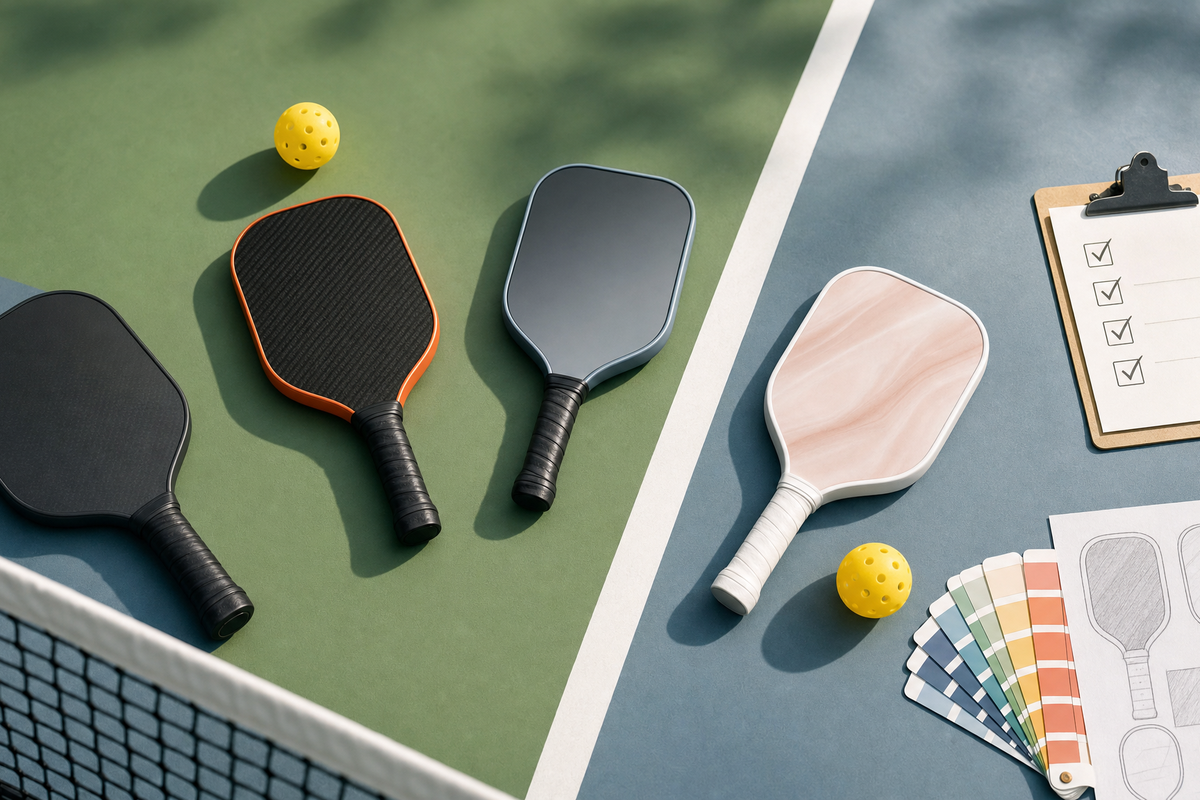
If you are searching for pro pickleball paddles, you are probably not just asking which paddle looks good. You are trying to understand what makes a paddle feel more precise, more powerful, more controllable, and more worth customizing. The right answer depends less on one magic material and more on how the paddle fits your level, your play style, and the type of games you actually play.
This guide is written for shoppers who are comparing paddles before buying or personalizing a Lumo product. It will help you separate serious buying criteria from vague marketing language, decide when a custom paddle makes sense, and avoid common mistakes that lead to buying a paddle that is too advanced, too harsh, or simply wrong for your game.
Quick answer: A pro-style paddle should be evaluated by approval status, face material, core feel, weight and balance, shape, handle comfort, control versus power, and whether the design supports your actual use. If you plan to customize, start with the play characteristics first, then add graphics, edge tape, display, or gift details around that choice.

What shoppers usually mean by pro pickleball paddles
The phrase pro pickleball paddles can mean several things. Some shoppers mean paddles used by professional players. Others mean advanced paddles with higher-end materials, more refined control, or a performance-focused shape. Some simply mean a paddle that does not feel like a beginner starter set.
That distinction matters because a paddle can look professional without being the best choice for your hand, your swing, or your league. A more realistic definition is this: a pro-style paddle is one built for intentional play. It should help you place the ball, manage pace, reset under pressure, and attack when the opening is there. It should not only look premium on a product page.
For Lumo shoppers, the buying question is often slightly different: What kind of performance base should I choose before adding a custom design? If that is your question, you can start by reviewing Lumo’s custom pickleball paddle option, then use the framework below to decide whether the paddle direction matches the way you play.
The pro-paddle decision framework: 7 checks before you buy
Instead of ranking paddles by hype, work through these seven checks. They help you make a choice that is practical for both play and customization.
- Approval needs: Will you use the paddle in sanctioned or competitive events?
- Control versus power: Do you win more points by placement and resets, or by driving and finishing?
- Face feel: Do you prefer a softer, more controlled response or a livelier pop?
- Weight and balance: Can you swing it repeatedly without late contact or wrist fatigue?
- Shape: Do you need reach, forgiveness, or faster hands at the kitchen?
- Handle fit: Does the grip length and circumference support your hand and backhand style?
- Customization fit: Will the design, edge tape, or gift presentation improve ownership without distracting from play?
1. Check approval before falling in love with a design
If you plan to play tournaments or organized events, do not assume every attractive paddle is eligible. The safer move is to verify requirements through official resources. USA Pickleball maintains information about equipment standards and an approved paddle list. Rules and lists can change, so check the current source before buying for sanctioned play.
For casual play, approval may not matter as much. For league play, club play, or tournaments, it can matter a lot. The more competitive the environment, the more you should verify first and customize second.
2. Decide whether you need control, power, or a balanced feel
Most paddle descriptions eventually come back to control and power. A control-oriented paddle can help with dinks, drops, resets, and placement. A power-oriented paddle can feel more explosive on drives, counters, and put-aways. A balanced paddle tries to give a usable mix of both.
Beginners often think power is the professional choice. More advanced players often value the ability to keep the ball low, absorb pace, and choose the right target. The more reasonable judgment is that a pro-style paddle should match your point construction. If your game breaks down because you pop up resets, choose control. If you create openings but cannot finish, consider more power. If you are still developing, a balanced direction is usually easier to live with.
3. Treat material labels as clues, not guarantees
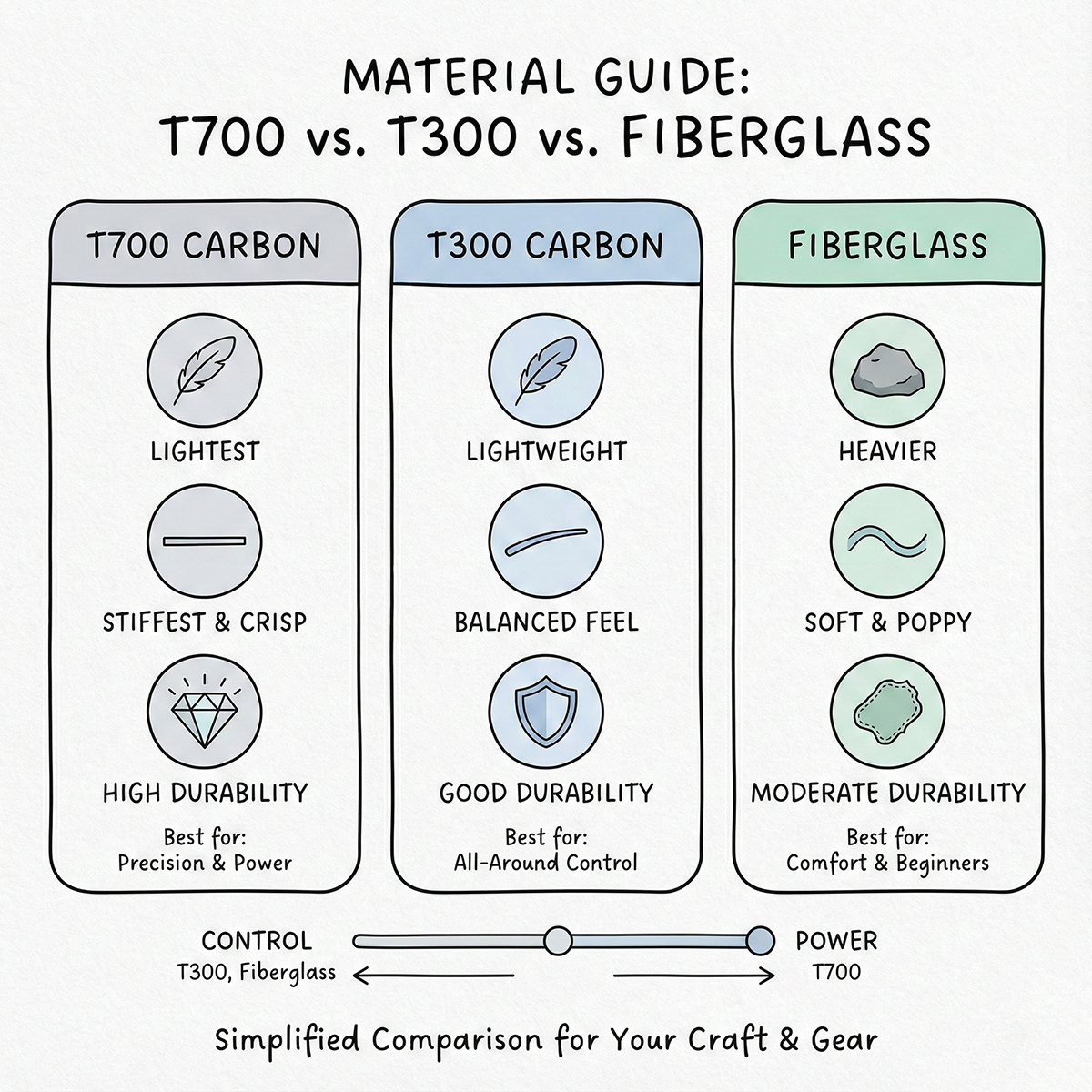
Face materials are important, but a label alone does not tell the whole story. Shoppers often see terms such as carbon fiber, fiberglass, composite, raw texture, or different carbon grades and assume one word automatically means better. That is too simple. Construction, core, thickness, shape, and quality control can all affect feel.
If you are comparing affordable options, Lumo’s article on cheap carbon fiber paddles is a useful next read because it focuses on how to think about value rather than treating the material name as the entire answer. If you are specifically comparing entry-level upgrade paths, the guide to fiberglass vs T300 and T700 carbon paddles can help you frame the material decision in a more practical way.
4. Think about weight as repeatability, not just power
A heavier-feeling paddle may feel stable and strong, but it can also be harder to get into position during fast exchanges. A lighter-feeling paddle may feel quick, but some players want more stability through contact. The key question is not simply whether the paddle is light or heavy. It is whether you can repeat your swing, defend quickly, and make clean contact late in a match.
If possible, imagine three common moments: a fast hand battle at the kitchen, a third-shot drop under pressure, and a defensive reset from the transition zone. A good paddle for you should not only feel good during one clean forehand drive. It should stay manageable across the messy parts of a point.
5. Match shape to your real court habits
Elongated shapes may appeal to players who want more reach and leverage. Wider-body shapes may appeal to players who want a more forgiving contact area. Standard or hybrid shapes may work well for players who want a balanced setup. The best choice depends on where you miss.
- If you miss near the edge often, forgiveness may matter more than reach.
- If you are late in hand exchanges, maneuverability may matter more than extra length.
- If you rely on two-handed backhands, handle length may become more important.
- If you play mostly casual doubles, comfort and consistency may matter more than maximum aggression.
This is where a pro-style mindset helps: choose the tool that solves your actual miss, not the shape that sounds most advanced.
Comparison matrix: which pro-style paddle profile fits you?
The table below is not a ranking. It is a buyer’s shortcut. Use it to identify the paddle profile that best matches your current game before you choose graphics or accessories.
| Paddle profile | Best fit | Possible tradeoff | Customization note |
|---|---|---|---|
| Control-first | Players who value dinks, drops, resets, placement, and fewer pop-ups | May feel less explosive on drives and put-aways | Good for players who want a clean, confident design that reflects precision |
| Power-first | Players who attack often, counter hard, and want more finishing ability | Can be harder to tame if your touch game is still developing | Bold graphics can match an aggressive style, but playability should still come first |
| Balanced | Developing players, all-court doubles players, and gift buyers who want lower risk | May not maximize one specialty | Often the safest direction for a custom gift paddle |
| Reach-focused | Players who like extended coverage, leverage, or singles-style attacking | Can feel slower in quick exchanges depending on balance | Works well with vertical or elongated artwork concepts |
| Forgiveness-focused | Players who want a larger comfortable contact area and fewer mishits | May not feel as specialized as aggressive shapes | Great for recreational players who still want a premium custom look |
When a custom paddle makes sense, and when it does not
Customization is not only decoration. A personalized paddle can make the product feel more intentional, easier to identify, and more meaningful as a gift. But customization should not be used to hide a poor performance fit.
A custom pro-style paddle is a good fit if...
- You already know the general feel you like and want a design that matches your identity.
- You are buying for someone who plays regularly and would appreciate a personal detail.
- You want a team, couple, family, pet, nickname, or event-inspired paddle.
- You are choosing a balanced paddle for a player who wants something more personal than a stock design.
- You want the paddle to be part of a larger gift package or display setup.
A custom paddle may not be the right first step if...
- You have no idea whether the player prefers control, power, or balance.
- The buyer needs a tournament-eligible paddle and has not checked current approval requirements.
- The player changes paddle styles frequently and is still experimenting.
- The design goal conflicts with usability, such as artwork that makes the paddle harder to identify quickly or does not suit the recipient.
If you are unsure, read Lumo’s guide on custom vs stock pickleball paddles. It is especially useful when the decision is less about performance specs and more about whether personalization is worth it for the player or recipient.

The pro paddle mistake audit
Before you buy, run through this short audit. It is designed to catch the most common purchasing errors.
Mistake 1: Buying the most aggressive paddle before your soft game is ready
A paddle that feels powerful in warmups can be difficult to manage in a real doubles point. If you are still learning drops, blocks, and resets, a more controllable paddle may help you improve faster than a paddle that amplifies every swing.
Mistake 2: Treating a material word as proof of quality
Carbon fiber, fiberglass, and composite labels can be useful starting points, but they are not complete buying decisions. Look at the full paddle concept and the player fit. If you want a deeper material-focused perspective, Lumo’s article on composite pickleball paddle labels explains why broad labels can be confusing for shoppers.
Mistake 3: Ignoring the handle
Many shoppers focus on the face and forget the grip. A handle that feels wrong can affect comfort, wrist position, backhand confidence, and long-session enjoyment. If the player uses a two-handed backhand, handle length becomes an even bigger part of the decision.
Mistake 4: Customizing for the buyer instead of the player
This matters for gifts. A paddle design that looks funny to the buyer may not be something the player wants to bring to open play every week. If the paddle is a surprise, choose design elements that reflect the recipient’s style, not only the giver’s sense of humor.
Mistake 5: Forgetting how the paddle will live off court
A paddle is not always in play. It may sit in a bag, hang in a home gym, or become a keepsake after a tournament, birthday, or team event. If presentation matters, consider pairing a custom paddle with a no-drill pickleball paddle wall display hook. For smaller keepsakes, a custom pickleball paddle replica keychain can echo the main design without needing another full-size paddle.
Design guidance for custom pro pickleball paddles
Once the play profile is chosen, design becomes easier. A good custom design should make the paddle feel personal without making the product feel chaotic. The safest approach is to build the design around one main idea, then support it with two or three secondary details.
For competitive players
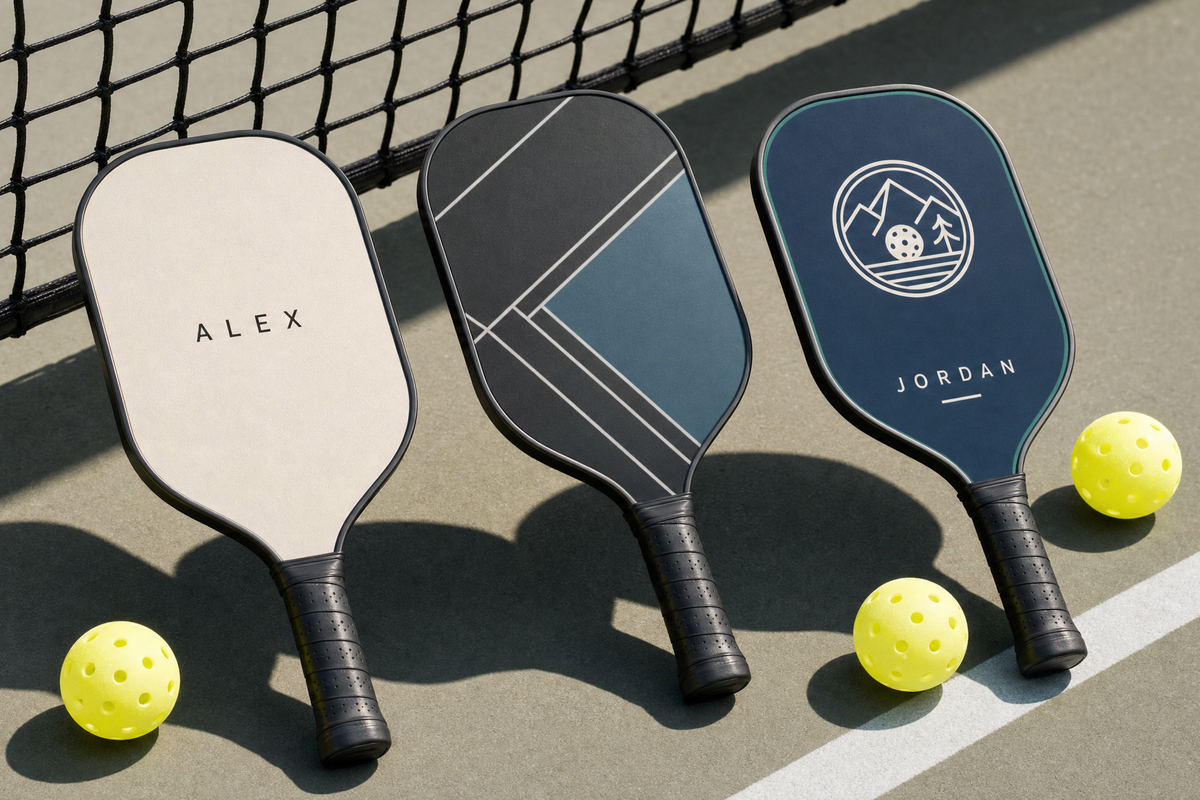
Keep the design confident and readable. Names, initials, team marks, simple patterns, or restrained graphic themes usually work better than overloaded collages. Competitive players often prefer something that feels intentional, not novelty-only.
For recreational players
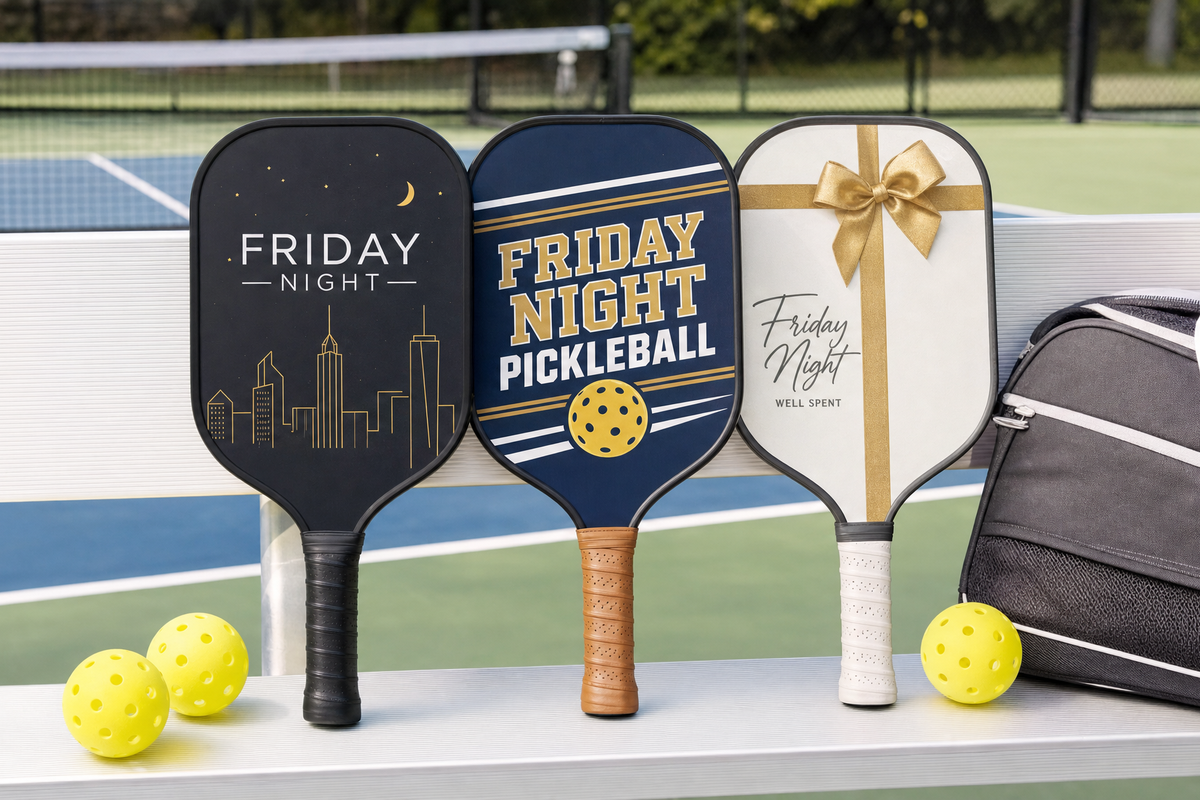
You have more room for personality. Pet artwork, bright motifs, inside jokes, vacation themes, or club memories can work well. The key is to keep the design tied to the player’s identity, not just a random pickleball phrase.
For gifts
If the paddle is a gift, the best design is usually personal but not embarrassing. A name, favorite color direction, pet, meaningful date, family reference, or club nickname can make the paddle memorable. Lumo’s article on custom pickleball paddles as gifts is a helpful companion if your main goal is gift selection rather than equipment research.
For team or event paddles
Prioritize consistency. Use a shared layout, then vary names or numbers. This keeps the set cohesive and makes the paddles feel more intentional. If you want to add a small accessory to a team gift bag, Lumo’s kawaii pickleball keychains are a lighter add-on than another full custom item.
How to choose a pro-style paddle as a gift
Buying for yourself is hard enough. Buying for someone else adds uncertainty. The goal is not to perfectly predict every technical preference. The goal is to reduce the risk of choosing something unusable while increasing the chance that the gift feels personal.
- Find out where they play. Casual open play, club ladders, and tournaments have different expectations.
- Observe their current paddle. Look for shape, handle length, and general style. You do not need to know every spec to spot obvious preferences.
- Choose balanced if uncertain. A balanced profile is usually less risky than an extreme power or specialty shape.
- Personalize around identity. Use a name, pet, team, color direction, or meaningful visual idea.
- Add a storage or display detail. If the paddle is sentimental, a display hook can make the gift feel complete.
If the recipient already owns a favorite paddle, another route is to customize accessories around it. For example, custom pickleball edge tape can refresh the look of a paddle without replacing the entire setup.
Myth vs reality: pro pickleball paddles
| Myth | Reality |
|---|---|
| Pros only use maximum-power paddles. | Power matters, but control, consistency, and placement are often just as important for serious play. |
| A carbon label automatically makes a paddle better. | Material labels help, but construction and fit matter. A poorly matched premium paddle can still be wrong for you. |
| Custom paddles are only for beginners or gifts. | Customization can be useful for serious players too, as long as the performance base is chosen first. |
| The best paddle is the one used by a famous player. | A pro’s setup reflects that player’s technique, preferences, and sponsorship context. Your best paddle should solve your game’s needs. |
| If it looks professional, it will play professional. | Visual design and paddle performance are separate decisions. A good purchase respects both. |
A practical buying checklist before you customize
Use this checklist before placing an order or sending design details. It keeps the purchase focused and reduces second-guessing.
- Have I confirmed whether approval matters for where I play?
- Do I know whether I want control, power, or balance?
- Have I considered weight, balance, and hand speed, not just face material?
- Does the shape match my real misses and strengths?
- Does the handle support my grip and backhand style?
- Is the design personal without being distracting?
- If this is a gift, does the design reflect the recipient more than the buyer?
- Have I considered whether an accessory, display, keychain, or edge tape would complete the purchase?
For official rules context, you can also review the current USA Pickleball official rules. The rules resource is useful when you are buying for organized play and want to avoid relying only on product-page assumptions.
Where Lumo fits in the pro-style paddle buying process
Lumo is a good fit for shoppers who want the paddle to feel personal, giftable, and visually intentional while still making a thoughtful equipment choice. The most practical path is not to start with the artwork. Start with the player profile, then build the design around it.
Here is a simple Lumo buying path:
- Choose the paddle direction. Decide whether the player needs control, power, balance, reach, or forgiveness.
- Choose the customization concept. Name, pet, team, color theme, event, couple design, club identity, or personal artwork.
- Decide whether it is for play, display, or both. A daily-use paddle may need a cleaner design than a commemorative gift paddle.
- Add supporting accessories only if they help. Display hooks, replica keychains, or edge tape should make the ownership experience better, not just add clutter.
If you are ready to explore the custom route, start with the custom pickleball paddle page. If you are still deciding whether a material upgrade is worth it, the article on why T300 can be a smart first choice for custom pickleball paddles may help you compare upgrade logic without jumping straight to the most expensive-sounding option.

Concise FAQ
Are pro pickleball paddles always better for beginners?
Not always. A beginner may benefit more from a forgiving, controllable paddle than from an aggressive pro-style setup. The better question is whether the paddle helps the player make repeatable contact and learn touch, placement, and timing.
Should I choose power or control first?
If you are unsure, start with control or a balanced profile. Power is useful, but many errors in doubles come from balls popping up, missed resets, or poor placement. If you already control points well but lack finishing ability, then a more powerful feel may make sense.
Can a custom paddle still be serious enough for regular play?
Yes, as long as the performance base fits the player. Custom artwork does not automatically make a paddle less serious. The mistake is choosing design first and ignoring approval needs, feel, shape, and handle comfort.
What should I check if I plan to play tournaments?
Check current event requirements and verify paddle approval through official resources such as USA Pickleball’s equipment standards and approved paddle list. Do this before ordering or customizing for sanctioned play.
What is the safest custom paddle gift choice?
For many gift buyers, a balanced paddle profile with a personal but clean design is the lowest-risk option. If you are not sure about the recipient’s paddle preferences, consider pairing the gift with a display hook, replica keychain, or custom edge tape rather than choosing an extreme paddle style.
References and further reading
- USA Pickleball Equipment Standards
- USA Pickleball Approved Paddle List
- USA Pickleball Official Rules
Final takeaway
The best pro pickleball paddles are not defined by one label, one sponsored player, or one visual style. They are defined by fit. Start with where you play, how you win points, what you need more of, and whether approval matters. Then choose the face feel, shape, handle, and design that support that decision.
If you want a paddle that feels personal as well as practical, customization can be the right move. Just keep the order clear: play profile first, design second, gift or display details third. That approach gives you a paddle that is easier to use, easier to love, and easier to give with confidence.


Leave a comment
This site is protected by hCaptcha and the hCaptcha Privacy Policy and Terms of Service apply.